We all live with computers… but getting the most out of them… getting them to do what you need… can be kind of difficult.
But if you can understand how they process things, a computer can be the most useful housemate you’ll ever have.
The web is full of amazing information. But with literally billions of web pages out there, finding what you need can be… difficult.
Search engines are programs that search the internet for us. But you have to know how to tell it what to look for!
Ada:
Yes. Yes - didn’t think I’d ever find that…
Voice over:
Let’s say you’re in need of some new tops to wear.
Ada:
Oh no!
Voice over:
How can you get a search engine to help you find a new one? You have to tell it what to look for by giving it a keyword. And off it goes…
Searching billions of pages for items that match your keyword. But with so much out there a search engine is bound to come back with results that are completely unsuitable – so you need to know how to refine your search.
To do that you can use what we call Boolean Operator.
Ada:
This is huge – you could fit two of me in here.
Voice over:
That sounds complicated but it’s not. Let’s start with AND. If you have AND between keywords then the search engine will look for pages that match all the keywords that you write.
In fact when you put two or more keywords into a search engine they normally assume that you’ve put AND between them so you’re probably using AND without realising. It’s a powerful way to narrow down search results. But it can still include unsuitable results.
Ada:
[Laughs]… Not really everyday wear… but at least it’s the right size.
Voice over:
Now sometimes you also need to tell the search engine what you don’t want! So another useful Boolean operator is NOT.
Ada:
Nice but let’s try something else…in a different colour.
Voice over:
But what if you are interested in more than one thing? That’s where the third Boolean operator comes in - “OR”. Now the search engine will search for any pages that contain either one of your key words.
Ada:
Yay!
Voice over:
Search engines are only as good as the keywords you give them.
Ada:
“Which one do you prefer?”
Voice over:
And they’re not so good at helping you choose.
Search Engines - good outcomes, need good inputs.
Video summary
The term 'Search Engine' is explained through everyday activities/events.
Computer Head is trying to find a single item in a pile of hay and is doing this by going through all the individual strands of hay.
His friend, Ada, suggests that a search engine would be the best way to search through lots of items to find the item for which he is looking.
She then teaches her friend about Boolean Operators and shows how they help to make searches effective.
This clip is from the series How to Think Like a Computer.
Teacher Notes
This clip could be used to discuss AND, OR, NOT in relation to Logic Gates and Circuits, then relate to programming.
You could use it to discuss Truth tables, conditional operators and George Boole and his connection with Boolean operators.
You could also discuss the contributions of women in IT, such as Ada Lovelace, as the main character is called Ada.
This clip will be relevant for teaching Computer Science at KS3 and KS4 in England, Wales and Northern Ireland and National 4 and 5 in Scotland.
What is decomposition? video
A teenage programmer discovers how decomposition works through trial and error.

Pattern Recognition. video
A teenage programmer is giving her computer instructions on making a sandwich.
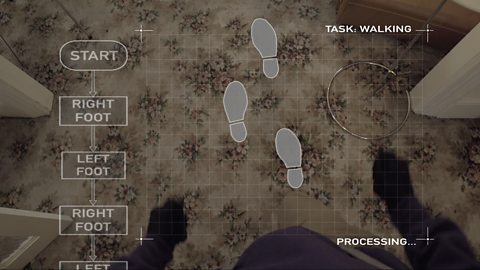
Bias & Reliability. video
A teenage programmer (Ada) asks her computer friend an everyday question to test any bias from the search results offered.