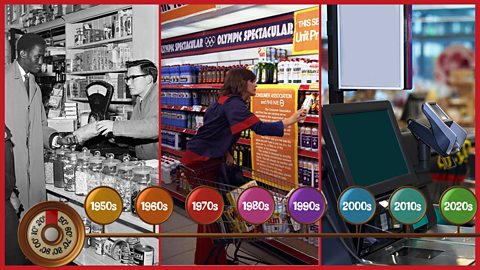
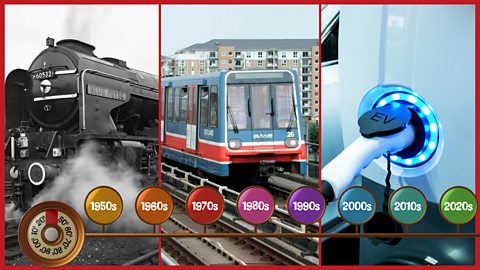
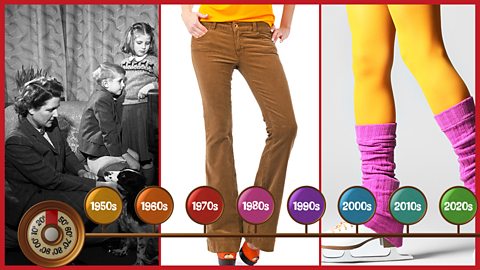
This episode explores some of the changes in toys which have happened within living memory in the UK.
The video
Changes within living memory: Toys
There are lots of different types of toys.
This is a toy…
And these are all toys!
But how are toys now different from the past?
Here’s our timeline! Let’s look at toys from the 1950s to the 2020s and find out more…
Most toys that children played with in the 1950s were made from materials like wood, metal, and fabric. Board games and wind-up toys that moved were also popular.
Then in the 1960s, toys made from plastic, like dolls, building blocks and cars, became popular.
By the 1980s, there we many more toys to play with, including figures based on favourite films and television programmes.
Battery-powered toys like racing car games, memory games and computer games were all popular!
There have been lots of different computer games since the 1980s. And now, they can be played almost anywhere; at home, on a journey, or even online, playing with friends using the internet.
Many toys from the past are still popular now. But in comparison to the 1950s, more children today play with plastic and electronic toys.
Toys have changed a lot over time…
They have! Can you remember what a popular 1950s toy looked like?
Let’s compare these photographs. Is the 1950s toy A, B or C?
The toy in this photo is made of metal and it moves when you wind it up with a special key.
This toy in this photo is a battery powered remote-control truck made of plastic.
The toy in this photo is for playing computer games on, which you can use at home, with friends, or on a journey.
I think the photo from the 1950s decade is…
A!
That’s right!
This is Tracy…
She has lots of stories to share about toys.
So, what would you like to know?
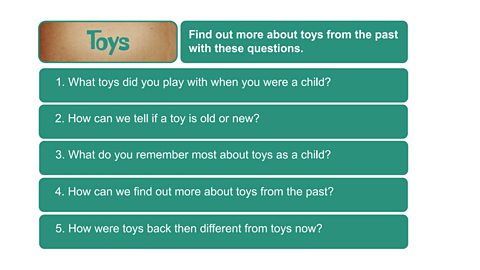
When you were a child, which toys did you play with?
I was born in the 1970s and played with plastic knights on horseback and little metal cars. Then when I was a little bit older in the 1980s, I started playing with fashion dolls because I loved changing their clothes.
How can we tell if toys are old or new?
You can tell if toys are old or new by looking at what they’re made of. Older toys weren’t electric, some were made of wood, fabric, and metal, where most newer toys are made of plastic. There is also more choice of toys now.
What do you remember most about toys as a child?
When I was a child, I used my imagination a lot and my favourite thing to do was go to the toy shop with my dad.
How can we find out more about toys from the past?
You can find out lots about toys from the past by visiting museums, and ask your grown-ups in your family if they still have any of their own old toys that you can have a look at.
How were toys back then, different to toys now?
Most toys back then were non-electric, but in the 1980s, electronic toys started to appear. Nowadays, most children have access to game consoles, or toys that move, make noises and light up.
Toys have changed a lot since the 1950s. Toys now are much more interactive and people play with them in different ways.
Now it’s your turn… Can you describe what your toys are like… and find out how they’ve changed?
Overview
Archive section
This episode explores some of the changes in toys which have happened within living memory in the UK, ie within about the last 75 years. It covers:
- changes in the materials used to make toys - older toys being made from metal, wood and fabric whereas newer toys are often made from plastic
- the variety of toys since plastic became widespread
- that some toys become popular because they are characters from TV series and films
- changes in technology and how these have influenced toys - eg batteries allowing movement / computer chips offering a huge range of opportunities
- the popularity of computer consoles which can connect players using the internet.
Quiz
The quiz shows toys from three contrasting decades and invites the children to use what they have learned in the archive section to identify the toy from the 1950s.
Interview
The interview is with toy enthusiast, Tracy Martin.
Tracy recalls the toys she played with when she was a child. She remembers playing with small figures and metal cars in the 1970s. When she was older, in the 1980s, she played with fashion dolls because she loved to change their clothes.
Tracy considers old and new toys. She explains that older toys were made from wood, metal and fabric and were not powered by batteries. Newer toys are more likely to be made of plastic and are more interactive, with games consoles being very popular at the current time.
Tracy explains that we can find out about toys from the past by visiting museums that have toy collections and by asking adults about toys from their childhood.
Follow-up activities
Questions sheet
Use the questions sheet and invite some parents or grandparents to visit your classroom. Practise the questions with the children before the interview day and ask the visitors about their memories of toys from their childhood.
You might be able to ask the visitors to bring a toy from their childhood to show to the class. You could use this to identify the features that reveal they are older toys - eg they might not have parts that move, they might be made from metal, fabric or wood, they may not be electronic.
Sorting worksheet
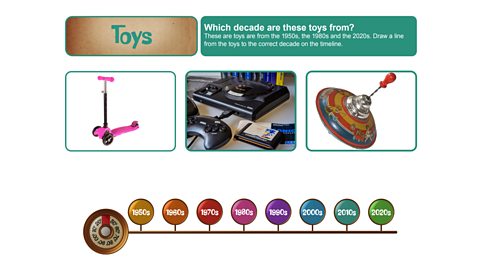
Use the sorting worksheet to match the toys to the correct decade in the timeline. Talk about old toys that are still popular in the 2020s, like teddy bears and small toy cars - you might want to talk about being able to match some toys with lots of different decades and not just one.
Resources
Teacher Notes
Click to download / print the Teacher Notes

Sorting worksheet. document
Click to download / print the sorting worksheet
Questions sheet. document
Click to download / print the questions sheet