Speaker:
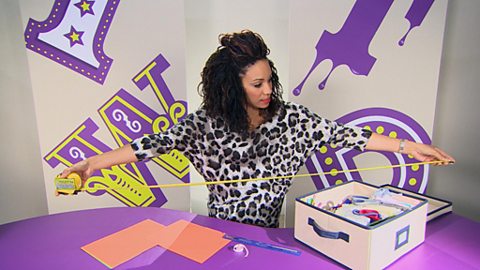
Now the great thing about designing is that you can make things that are personal to you. Take an old cushion for example it doesn't need to be dull and boring and thrown in the corner of your room. You can actually personalise it with your very own photographs. So, if you're going to do this first of all you need to take a photo. You could take one of yourself, youcould take one of your pets, your family, your friends, whatever you fancy and then you need to find a old cushion and measure it out so that you get the right size material to print on. Now, I've got a cushion here and this is about 40 centimetres by 40 centimetres.
Speaker:
And this is around the standard size. If you haven't got an old cushion you can always pick one up really cheaply from most home stores. All you need to do next is take your photo and your material to be printed on to a printing shop and you find these online and most high streets.
Speaker:
This is exactly what I did when I was helping an arts and crafts room with Freya and Hattie.
Speaker:
Who are mad about their cats Lola and Rose.
Speaker:
I have brought along some very special material with some people you might recognise.
Lydia:
Oh my god that's so cute.
Speaker:
So what we're going to do today is make some cushion covers.
Lydia:
[LAUGHS]
Hattie:
[LAUGHS]
Speaker:
And these are going to be put in your brand new room later on.
Lydia:
Yay.
Speaker:
Now that you have your material printed the first thing to do is cut it to size and this will be the front of your cushion. It's important to cut about one and a half centimetres or a fingers width extra on all sides. You will need this when sewing the front and the back together. Then cut a plan piece of fabric for the back of the cushion the same size as the printed fabric. Remember to keepthe one and half centimetres on all sides. Then with the image face down, IE inside out, sew together the two sides and the bottom of the cushion. This can be done on a sewing machine or hand sewn. Sew your line about one and half centimetres inside of the edge. Remember the extra fabric you measured, this is why. It creates a seam where the two fabrics are held together. Nowyou can turn your cushion covers the right way round and finally we need to attach a fastener. Cut two lengths of Velcro and sew these to the inside of the open end of the cover. Alternatively you could use buttons or a zip. Then stuff your cushion into your cover and ta-da.
Lydia:
It's really soft.
Speaker:
Should we go indoors and put them inside?
Lydia:
Yes.
Speaker:
Come on then.
Speaker:
And I think they add a great personal touch to the girls room.
Video summary
Two girls are shown how to make personalised cushion covers from specially printed fabric.
They learn how to measure fabric and the importance of leaving an allowance for the seam.
They are supervised using a sewing machine and hand sew sticky-fabric fastenings to finish off their cushion covers.
This short film is from the BBC series, I Want to Design.
Teacher Notes
Whilst watching this short film, pupils could make notes and create step-by-step instructions detailing how to make a cushion cover.
They could source different colours and types of fabric to use and then practice measuring, cutting and sewing (either by hand or on a sewing machine, if available) using some old fabric first (and whilst properly supervised).
Photographs taken by pupils could be printed on the fabric.
Alternatively, a batik design on fabric could be used, based on any topic work.
This short film will be relevant for teaching primary design & technology and art & design.
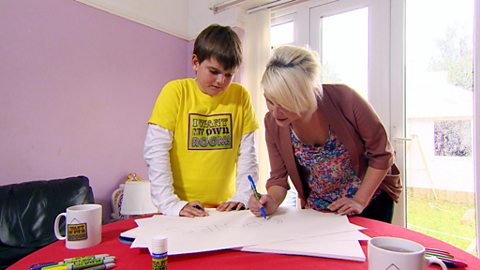
Designing a logo. video
A young entrepreneur is shown how to create and design his own company logo.
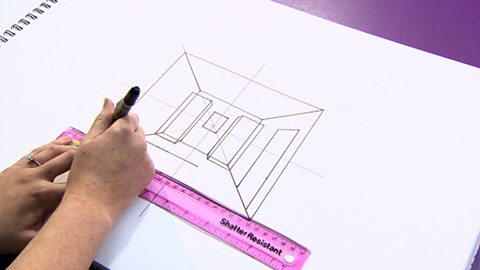
Drawing a 3D room plan and a floor plan from above. video
A step-by-step demonstration of how to draw a 3D and overhead room plan.
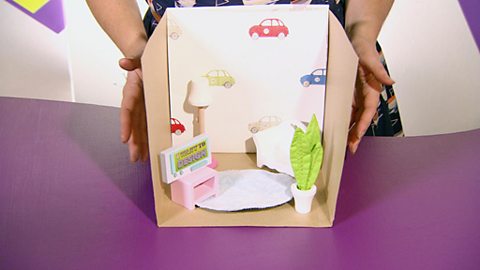
Making a 3D model of a room. video
This short film for primary schools offers a step-by-step guide to making a 3D room out of card.
Making a design box. video
A look inside a 'design box', which is made up of different tools for craft and design.
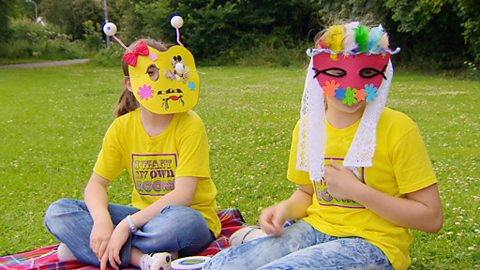
Making masks. video
This short film for primary schools offers step-by-step instructions demonstrating how to make a face mask.
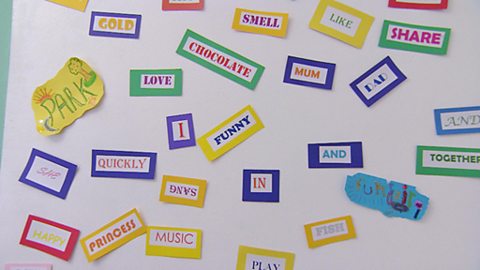
Making simple fridge magnets. video
Step-by-step instructions on how to design and make your own fridge magnets.
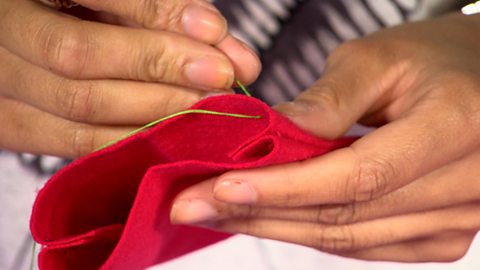
Sewing a mobile phone cover. video
A beginners guide to sewing by hand with instructions on how to make a mobile phone cover.
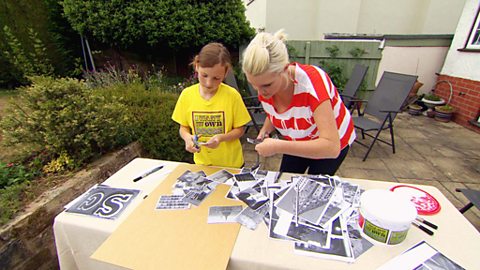
Making a paper collage. video
An introduction to making a collage using printed black and white pictures.