A great design and craftskill to have is sewing.You can sew by hand or machineand once you've mastered it,there are endless possibilitiesfrom creating something simplelike a present for a friendor designing and makingyour own clothes.
If you haven't sewn before,it's best to start by handand you'll need some needles,some material to sew and some thread.What people like to do is matchthe colour of the threadwith the material, which createswhat we call an invisible stitchand that basically meansyou can't see the join.
I've made my ownmobile phone holder here.If I pop my phone out,you can see inside that the colourof the thread matches the materialso you can't see any join.There's also what we calla feature stitchand that's where you usea contrasting coloured threadto your material, so I've usedblue material here,and I've got a bright red thread, andI've just sewn it all the way aroundand it just createsa really nice design touch.These are really simple to makeand it doesn't have to befor your mobile phone.You could use it for your MP3 playeror even just a pocketto keep your loose change in.
To make one of these,all you need is some material.Choose any colour you like, someneedles, different coloured threads,a marker pen, scissors and a ruler.
The first thing you need to dois grab your material.I've got some red felt here and I'mgoing to measure it against my phone.Just place my phone in the middleand then wrap the material over it.It's almost like you'rewrapping a present.Then grab your ruler and your penand about a finger space away,just mark a nice straight line.One on that sideand one on this side.Once you've drawn your lines in,you can take your mobile phone outand then all you need to dois cut either side of these linesabout a finger away.The same on the other side.
Brilliant. Now,it's time to thread my needle.As I've got the red material,I'm going to match it upwith some red thread and that's goingto create that invisible stitch.I'll just thread my needle.It's always good to make surethat you've got plenty of thread,more than you think you'll need,as that way you won't run outhalfway through sewing.To make sure that the thread doesn'tgo straight through the fabric,you need to make sure that youtie a knot right at the end.It's really simple. Just make sureit's nice and wet at the end.Wind it round your fingerand then just squeeze itso all the thread sticks togetherand pull it taut.There you have a knot.
Next, you need to sew all the way upthe line that you drew earlier.You need to push your needlethrough the back of the materialand then pull the thread allthe way along until you feel a tug.If you look on the other side,you can see that the knotis secure at the back.Then you're just going tofollow the lineall the way along the stitches,going in through the materialand then back down along the line.
Once you get to the endof your material,just double over your stitchesand then this means thatthe thread won't fray and yourmaterial will stay nice and secure.Now you just need to do the exactsame thing on the other side.
Once you've got all your stitchesalong the line,you can turn it inside outwhich will end up beingthe right way around.Just push it all the way through,right into the corners.Just like that, and then you can tryyour mobile phone in it for size.
There we go.It fits quite nicely.
That's the invisible stitch, but togive my cover a bit more detail,I'm going to add a feature stitch.For that, I'm going to choosea contrasting colour of threadwhich will really stand outagainst the red material.Again, I'm just goingto thread my needle and onthe top half of the material, I'mjust going to sew all the way along.As this is a feature stitch,you don't want to see a knoton either side of the material.A quick little tip is to putyour needle inside the coverand then bring it through and as youcan see, the knot is sitting inside.Then, like before, you're just goingto follow all the way around.
When you're doing your featurestitch, it's important to tryand keep in a straight line,as you haven't got those guidelinesthat you drew with a pen before.Again, I'm just doing a double stitchto secure the thread to the material.This is just on the inside of thecover so that you can't see it.
Once you've done that, you just needto cut your thread. Brilliant.
There you go.You've got a neat littlemobile phone coverwith an invisible stitchand a feature stitch.
Don't worry if your first attemptisn't that great.Just make sure thatyou persevere with itbecause the more practice you get,the better you will become.
It's great fun experimentingwith loads of different materialand different threads.Give it a go!
Video summary
Michelle Ackerley offers a beginners guide to sewing by hand, with instructions on how to make a mobile phone cover.
She demonstrates how to use feature stitching around the outside of the case to finish off the creation.
This short film is from the BBC series, I Want to Design.
Teacher Notes
For children who are developing their sewing skills for different purposes, this short film introduces some simple basic techniques:Measuring, matching thread and material colour, the use of contrasting colours for design impact, and basic stitching.
Pupils could consider how they would use these techniques within their own alternative design project.
This short film will be relevant for teaching primary design & technology and art & design.
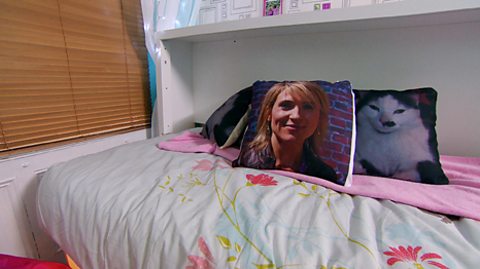
Designing and making cushion covers. video
Two girls are shown how to make personalised cushion covers from specially printed fabric.
Designing a logo. video
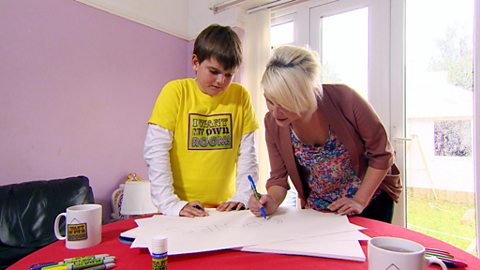
A young entrepreneur is shown how to create and design his own company logo.
Drawing a 3D room plan and a floor plan from above. video
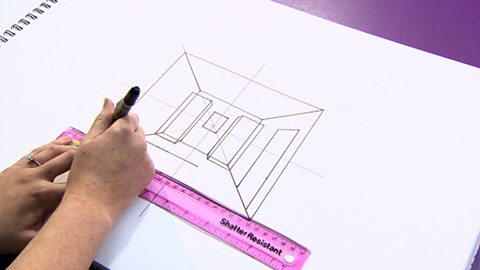
A step-by-step demonstration of how to draw a 3D and overhead room plan.
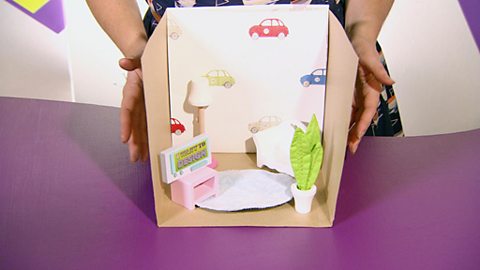
Making a 3D model of a room. video
This short film for primary schools offers a step-by-step guide to making a 3D room out of card.
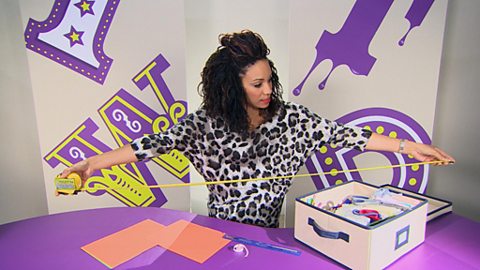
Making a design box. video
A look inside a 'design box', which is made up of different tools for craft and design.
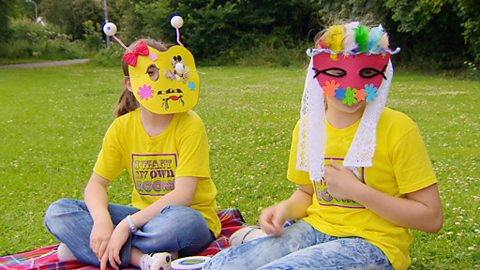
Making masks. video
This short film for primary schools offers step-by-step instructions demonstrating how to make a face mask.
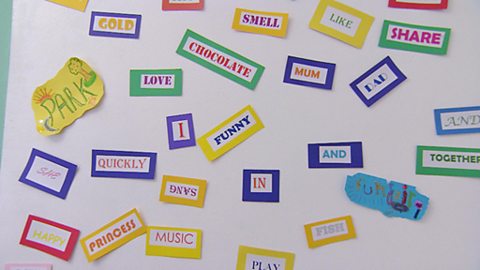
Making simple fridge magnets. video
Step-by-step instructions on how to design and make your own fridge magnets.
Making a paper collage. video
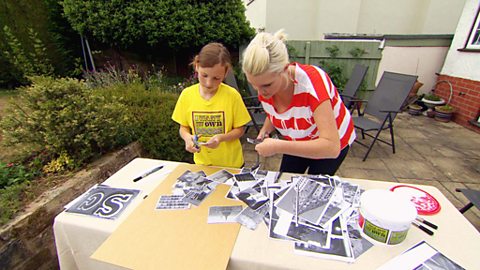
An introduction to making a collage using printed black and white pictures.