The Postoffice was really important during the war – making sure the post was sent between the people in Britain and those working or fighting abroad.
Over two thousand, five hundred staff handled over two billion letters and a hundred and fourteen million parcels.
Letters and postcards from the time are a great way of finding out what life was like then.
3792 – Private Percy Bale… Ist battalion Hampshire Regiment. 29 years of age.
I’m a Post Orderly. My job is to collect the mail from the unit post base and carry it up the line to the men. We use transport as far as we can but we usually have to lug the sacks up through these supply trenches ourselves. . It’s hard work.
FX: Explosion nearby.
Dangerous too. You never know what’s coming over next.
It’s an important job though. They say a nice letter from home does more for a man than a week of hot dinners. So my job’s to get this lot up there nice and safe.
This one’s had a bit of a journey. Posted in Leeds on Monday. It’s been on two trains, a ship and two lorries to get here. Today’s Wednesday so it’s taken just two days to get from the north of England to the front line here in France. Amazing when you think about it.
Parcel! Everybody loves a parcel.
Wonder what’s in it?
I reckon…a pair of socks, some smokes, couple of bars of chocolate…and a cake. Lucky chap eh?
Anyway… better press on. The boys’ll be waiting for this lot.
FX: Another explosion.
Yes… might have to go the long way round this morning. But I’ll get there. I always get there don’t I?
Video summary
This short film is for teachers and review is recommended before use in class.
Photographs, newsreel and commentary examine the role of the Post Office in conveying messages and parcels from home to British Tommies in the trenches.
An estimated two billion letters and parcels were delivered to the front during World War One.
A dramatic monologue introduces Percy Bale, a post orderly in the Hampshire Regiment.
He describes his daily duties at the front and the presents, such as woolly socks, chocolate, cigarettes and cakes, that friends and relatives put in their parcels.
This clip is from the series WW1 A to Z.
Teacher Notes
Pupils could search in books and online for examples of messages sent to soldiers in the trenches.
Institutions such as the Imperial War Museum and theNational Archives publish examples of letters online, which provide rich sources of information.
Children could share their discoveries from these letters and the class could record a soundtrack of quotes from various letters as a lasting memorial of the everyday cares and concerns of individuals caught up in the conflict.
This short film is suitable for teaching history at Key Stage 2 / Second Level or above.
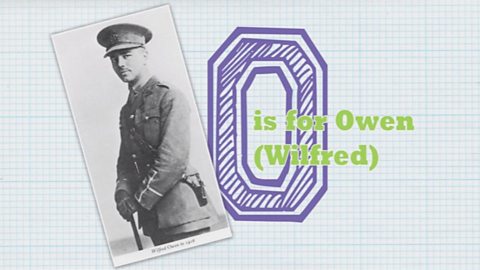
O is for Owen (Wilfred) video
Commentary, newsreel and dramatic monologue introduce Wilfred Owen, today one of the most widely recognised WW1 poets.
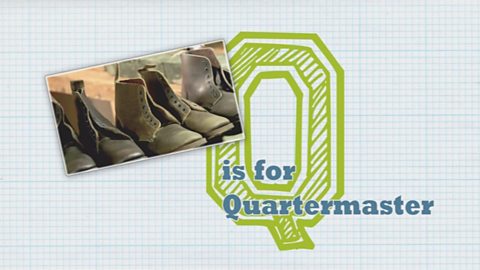
Q is for Quartermaster. video
Newsreel and dramatic monologue explain the role of the quartermaster in keeping British WW1 troops supplied and equipped.
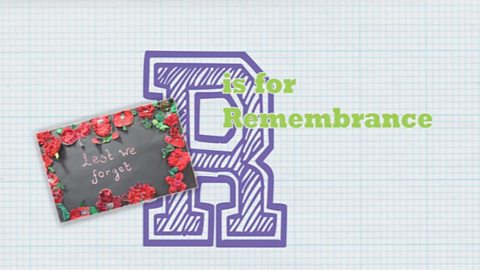
R is for Remembrance. video
Schoolchildren describe the national act of remembrance that takes place on 11th November each year.