We're here in Edinburgh, where we're going to be talking about how sources can help us understand the stories behind the stories. It's 1828, the time of one of Edinburgh's most infamous stories, the notorious killing spree of Burke and Hare. It's well known they murdered 16 innocent people, but I'm planning to use historical sources from the time to help find out WHY they did it. My investigation starts here, at the National Library of Scotland. Wow! What we have here is a broadside.
A broadside was an announcement or news article printed on just one side, which could be used as either a poster or a newspaper to get information out to the public quickly. This one looks pretty sensational. Well, it's got this really bold headline, which immediately pulls you in as a reader. "Execution, Confession, and a list of all the Horrid Murders "committed by Burke, and also the decision of Hare's case." And it starts with Burke being hanged. It talks about the body being cut down, and it seems particularly grisly. "When the body was cut down at three quarters past eight, "the most frightful yell we ever heard was raised by the "indignant populace." We've got this subheading, "List of the 16 Murders committed by Burke," and this tells us there was a man who died in Hare's house. The two of them sold this body to anatomists for £10. "Getting so much money at a time when they were in "a state of poverty, prompted them to look after means of "the same kind, and the subject of murder was "often talked over betwixt Hare and him."
So, I can ask some very simple questions looking at this source. What is going on with anatomy in Edinburgh at this time? How did they know that they could sell a body to an anatomist? I think I've found out all I can from the broadside. I need to look somewhere else. By 1800, Edinburgh University Medical School was a leading centre of anatomy and the science of the human body. I've come to the university's Centre for Research Collections to see some sources relating to the anatomy shows of the time. So, what is an anatomy show? Well, here we've got quite a grisly description. "These Courses will as usual comprise "a full Demonstration on fresh Anatomical Subjects." This means human bodies, human bodies that are being dissected by these anatomists in front of a room full of people. We've got all these tickets. People want to go, sit round and watch these men cut people open. There's more tickets in here, and they're remarkably well-preserved.
Normally, with tickets, you just kind of screw them up and put them in your pocket. And they are so detailed. They are very theatrical. We've got this wonderful illustration on this one here. The fact there are so many, I think, suggests that these shows were incredibly popular. We can see here that there's a fee, three pounds and five shillings. This is actually a business. The shows were a huge success, but they needed a regular supply of bodies, and although Scottish law allowed the use of dead prisoners and even suicide victims, corpses were in short supply. So where did they come from? In Greyfriars graveyard there's another source which offers us a clue. What's striking is the number of graves with cages around them.
Here we have a 'mortsafe'. This is something that people used to protect their graves. And so, why are they protecting their graves? Who are they protecting it from? Well, people are actually coming, in the 18th century and into the early 19th century, to rob these graves. They're selling the bodies that they find to the anatomists. By using sources, we were able to understand the motivation for Burke and Hare's killing spree. Controls such as the grave cages meant that by the 1820s, the supply of bodies was almost running out, which led Burke and Hare to turn to murder to fill the gap in the market and meet the insatiable demand. And it seems that some anatomists, like Dr Knox, were willing to turn a blind eye to where the corpses came from. So, it's clear the rapid growth of medical science in Edinburgh provided the backdrop to Burke and Hare's grisly murders.
It's a great example of the investigative process of being a historian.
Video summary
Dr Sam Caslin from Liverpool University visits Edinburgh in search of historical sources that explain the motivation for the notorious murders of Burke and Hare.
The film looks at the expansion of medical science in the Scottish capital during the 19th century, and the huge demand for human bodies that Edinburgh’s surgeons could use in their highly popular Anatomy Shows.
Sources include a Broadside or one-sided poster describing the capture and trial of Burke and Hare, tickets to the shows and a Mortsafe or cage around a grave at Greyfriars cemetery.
This clip is from the series Hunting for History.
Teacher Notes
After watching Dr Caslin analyse all three sources, students could be challenged to hold an inquest into who or what was really responsible for the murders: Burke and Hare alone, or was the medical profession and the restrictions on using corpses also to blame?
This clip will be relevant for teaching KS3 History in England, Wales and Northern Ireland and 4th level People, past events and societies in Scotland.
Magna Carta. video
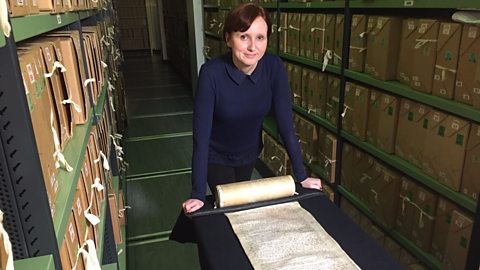
A look at what sources can tell us about the importance and origins of Magna Carta.
William Wallace. video
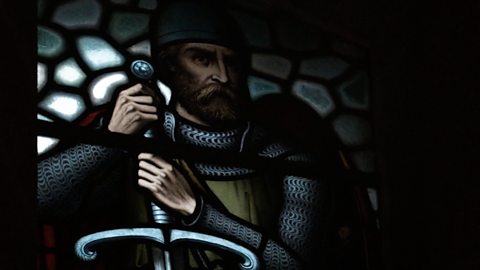
A look at how sources can help separate the myth from the man that is William Wallace.
Elizabeth I. video
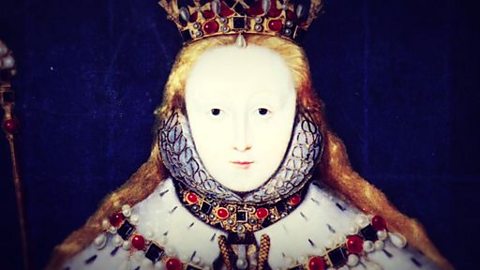
A look at what sources can reveal about the personality of Elizabeth I.
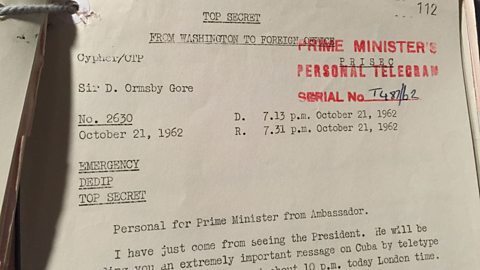
The Cuban Missile Crisis. video
Exploring what historical sources reveal about how close Britain came to nuclear war in the early 1960s.
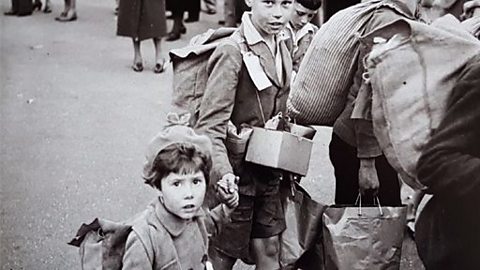
The lives of WW2 Evacuees. video
Explore what sources, such as photos and newspaper articles, can tell us about the experiences of children evacuated during World War 2.
The Slave Owner. video
An exploration of how sources allow historians to understand more about the life and views of a wealthy slave owner (Richard Pennant).