William Wallace, otherwise known as Braveheart, was a 13th-century Scottish warrior and politician who became a legendary figure in Scottish history and the independence movement. But what did he do to become a legend? And does he merit this status?
This is the Wallace Monument in Stirling, in Scotland. It's a celebration of a great Scottish hero, William Wallace. It dominates the skyline over Stirling. Surely this source is going to tell us everything we need to know about the man.
It's been built near the site of Wallace's most famous victory over the English, the Battle of Stirling Bridge, in 1297. It was constructed in the later 19th century, a time when there was a big revival of interest in Scottish history and identity.
The whole monument itself feels very much like a church. It's got stained-glass windows. They want us to worship William Wallace. In the middle of the room is a huge sword which some people claim was brandished by Wallace. The first thing that strikes me is - it's rather large, and it does make me question how likely it is he would have been able to wield this thing.
If we assume that this was his sword, as the people who put it here want us to assume, then we have to get an impression of Wallace as this huge man, somebody who is so strong he was capable of holding this thing. So we have to ask, was William Wallace really as significant as this monument makes out?
My next source is held in Edinburgh, at the National Library of Scotland. This particular source is a poem, written around the 1470s, by a poet known as Blind Harry. And it's been beautifully written out here in old Scots. It sets out the image of Wallace as a superhuman patriot who fought the English. Here we've got a passage that says…
We get this image that we got with the Hollywood movie, Braveheart. It jumps out from this poem. It also says some other things, though, which are a little bit problematic. So one of the things that this particular source says is that Wallace won the Battle of Falkirk. But various other sources suggest that the Scots actually lost that battle. So why is the poet telling fibs?
So far, I've seen two sources. The monument and Blind Harry's poem. Both seem to exaggerate Wallace's achievements. These sources are the work of his supporters. But I wonder how he was regarded by his enemies in England.
In 1305, English troops finally caught William Wallace, and they brought him here to London, where they took him to the Tower. A few weeks later, he was executed for high treason. I'm here at Kew, at the National Archives in London, not far from where Wallace was executed. And buried deep within the archive, there's a fascinating account of the execution.
I have in front of me one of King Edward's Exchequer Pipe Rolls, and it outlines, in Latin, the costs of the execution. Up here, we have the key paragraph, that outlines all the gruesome details. He was hanged until he was almost dead, cut down, his body was cut open, his innards were taken out and burned before him. And then he was cut into four sections. And those pieces were taken to four different towns.
King Edward's Exchequer Rolls generally listed government expenses. But Wallace's entry goes into more detail. It says that it cost 61 shillings and ten pence to execute Wallace. This is no small sum of money. So why have they gone to this expense? Well, the source says that Wallace was a robber, a rebel and a traitor, that Wallace falsely sought to call himself King of Scotland.
So it's clear from this Pipe Roll that, for the English, who were at war with the Scots, Wallace WAS a very important figure. And capturing and executing him was a major victory. We know that sources can distort the truth, and it's coming here to England and seeing what William Wallace's enemies made of him that's really convinced me about the significance of the man.
OK, so the Wallace Monument and the great man's sword were clearly exaggerations, and the Blind Harry poem made claims about his battle victories that we know to be false. But the Pipe Roll, which showed the lengths that his enemies went to to get rid of the man, really shows he was somebody of significance. William Wallace was someone that some people here in England were glad to be rid of - for good.
Video summary
Dr Sam Caslin travels to Scotland to look at some sources about the great Scottish hero William Wallace.
In the film ‘Braveheart’, Wallace is associated with extraordinary powers. More generally Wallace has been accorded a significant role in Scottish history fighting for Scottish independence.
But does the man match the myth? Sources can be used to answer this question.
In Stirling, Caslin visits her first source, the National Wallace Monument, a stunning tribute to William Wallace.
She describes the church-like atmosphere of the building and huge sword that is attributed to Wallace himself, which Caslin discovers is a little unlikely.
She then looks at a poem by Blind Harry that again seems to exaggerate Wallace’s powers, claiming victories for him that are well known to be defeats.
Caslin decides to look at whether any English sources might shed further light on this question.
She visits The National Archives in Kew to look at another source - an Exchequer Pipe Rolls from King Edward’s reign.
The source outlines in Latin the costs of the execution.
It also reveals in gruesome detail how Wallace was hung, drawn and quartered, with parts of his body sent to four different towns.
The costs of this were huge and it’s quite evident that no expense was spared to make it clear that the English had finally disposed of Wallace.
This source allows Caslin to uncover the true relevance and importance of Wallace to his friends and enemies.
This clip is from the series Hunting for History.
Teacher Notes
This clip is excellent for getting pupils to think about how historians use sources, particularly about the weight they attach to sources when they use them as evidence.
Pupils could be asked to consider the possible issues with sources about any hero figure, past or present.
Then as they watch Sam analyse source 1 they could be asked whether they think Sam is convinced by it.
After source 1 they could be told which sources are coming next and which they think are likely to be the more convincing to Sam.
This clip will be relevant for teaching KS3 History in England, Wales and Northern Ireland and 4th level People, past events and societies in Scotland.
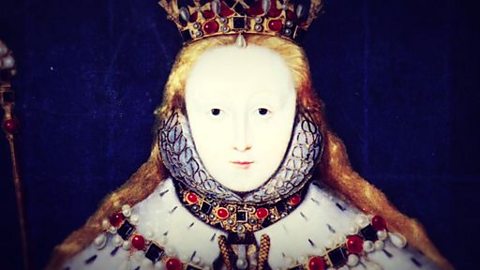
Elizabeth I. video
A look at what sources can reveal about the personality of Elizabeth I.
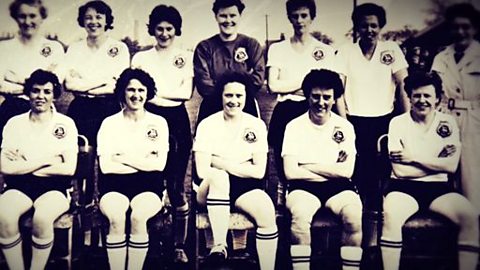
The History of Women's Football. video
Exploring sources that reveal the remarkable success of the Dick Kerr’s ladies football team during World War One.
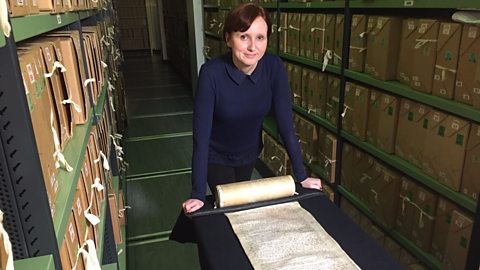
Magna Carta. video
A look at what sources can tell us about the importance and origins of Magna Carta.
The British Civil Wars. video
An exploration of how sources can help us understand the impact of the British Civil Wars on ordinary men and women.
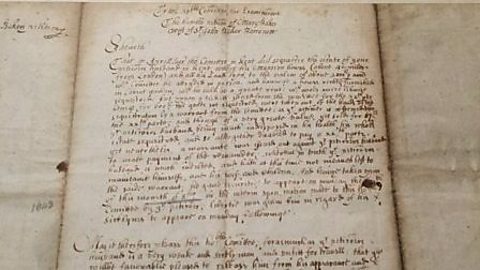
The Cuban Missile Crisis. video
Exploring what historical sources reveal about how close Britain came to nuclear war in the early 1960s.
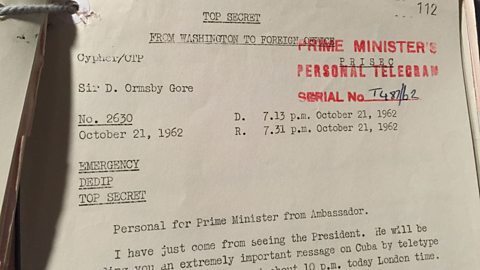
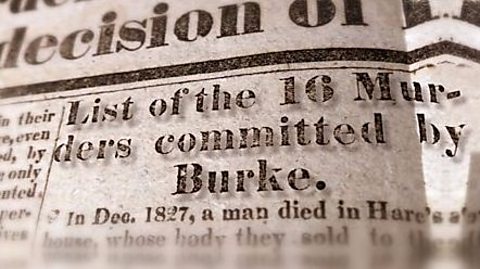
Burke and Hare. video
An exploration of how historical sources can help to explain the motivation for Burke and Hare’s 19th century killing spree in Edinburgh.