Dr Emeka:
Hey, I’m Dr Emeka and this is Dr Emeka’s Essential First Aid.
A burn or a scald is when something hot damages your skin.
A burn is from dry heat, like fire or an iron, and a scald is wet heat, like boiling water or steam.
You can tell it is a burn or scald when the skin is red, swollen, has blisters, is peeling or is white and scorched.
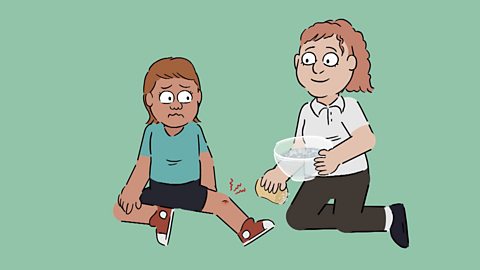
First up - if it is safe to do so, move them away from the heat. You don’t want to be near that.
Then cool the burn: Place it under cool running water for twenty minutes. You could time it on your watch or a phone. If you’re worried it might be serious, call 999 or 112.
You have got to be careful it doesn’t get infected! Don’t put ice or creams on it and don’t burst any blisters.
After you’ve cooled the burn, gently remove jewellery or clothes near it, but if they’re stuck to it, leave them there! Then cover it. Use cling film or a clean plastic bag.
Remember -
Make it safe.
Make it cool.
Cover it.
And call 999 or 112 if necessary.
Video summary
Dr Emeka gives an introduction to dealing with the types of burns and scalds that can occur in domestic settings.
This short film covers the basic strategies for helping out friends or family members with burns that may occur, but is best used in the context of further information about burns.
This short film is from the BBC Teach series 'Dr Emeka’s Essential First Aid'.
Teacher Notes
Students should be taught how to recognise a serious or deep burn: A burn is considered serious if it is bigger than the hand of the burnt individual, it is to a child (anywhere), on the face, hands or feet.
Activities
Students could be asked to give examples of the different types of burns and how we can get them:
- Dry burn
- Scald
- Electric burn
- Chemical burn
- Radiation burn
Students could also be asked to imagine themselves in a setting or be given a picture of a scene such as camping or on the beach. They could highlight possible hazards of what could burn or scald someone and how this could be avoided. They could also look for other ways to cool a burn if there isn’t any running water available (milk, canned drinks).
Other subject areas
- There is an opportunity to understand what an infection is.
- Further study could also include understanding our skin and how it works.
- There is also a strong link with science and the effects of the sun on our skin.
This short film touches on elements of PSHE first aid as introduced to the curriculum in England from September 2020 for Key Stage 2.
While not on the curriculum specifically, it could also be used in Wales and Northern Ireland at Key Stage 2 and in Scotland at 1st and 2nd level.
How to make a call to emergency services. video
A short film teaching pupils how to recognise an emergency and how to make a call to emergency services.
Choking. video
In this short film Dr Emeka gives an introduction for pupils on how to help someone who is choking.
Bleeding and shock. video
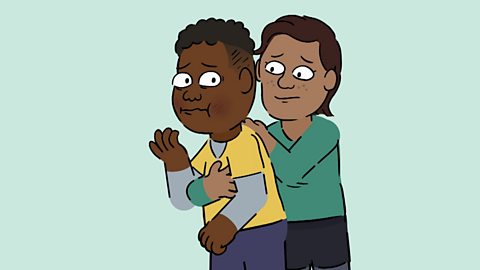
Dr Emeka explains how to treat bleeding wounds, what shock is and what to do if someone goes into shock.
Head injuries. video
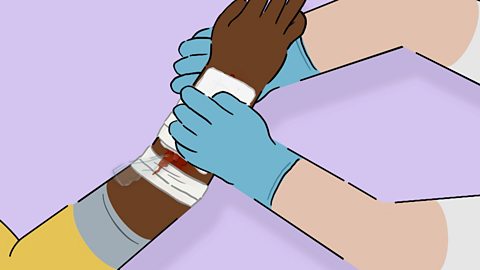
In this short film Dr Emeka explains how to tell if a head injury is minor or severe, and what to do in each situation.
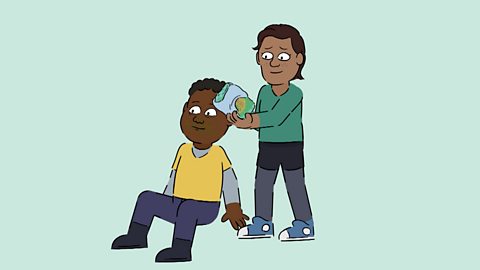
Bone fractures. video
In this short film Dr Emeka explains to how to manage a broken or suspected broken bone.

How to administer CPR. video
In this short film, Dr Emeka introduces the process for administering CPR and how to use an AED (automated external defibrillator).
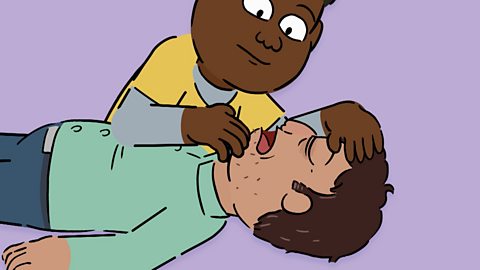
How to administer CPR during the Covid-19 pandemic. video
In this short film Dr Emeka introduces the process for administering CPR and how to use an AED (automated external defibrillator), with specific tips for staying safe during the Covid-19 pandemic.
Bites and stings. video
In this short film Dr Emeka teaches pupils how to deal with bites and stings on themselves, or those around them.