Here are three super saints - Augustine, Columba and Aiden, who have more than just their itchy outfits in common. These lads turned the pagans in Britain, who believed in many gods, into Christians who believed in just one. Let's start with Columba, a fearless saint.
In 563 AD, he sailed to Iona and set up a monastery, and from here many people in Scotland converted to Christianity. But if we look at the rest of Britain, things aren't looking too great for the Christians: this lot are STILL pagan! Next up was Augustine in 597 AD.
He was sent to England by the Pope. He converted a king, built Canterbury Cathedral, and was very pleased with himself.Unfortunately, he mainly just converted the King's best mates to Christianity. Most ordinary Anglo-Saxons thought he was a bit weird with his haircut and his itchy dress and they carried on believing in their old gods. So much for Augustine. Aidan to the rescue!
He was determined to go out and convert the Anglo-Saxons. He set up a monastery on Lindisfarne in 634 and from there he did something amazing, something unheard of, something brilliant: he spoke to ordinary people. This is what actually convinced the Anglo-Saxons to stop being pagan and give Christianity a try. And there you have it, how these three saints and these three places helped Britain make the shift from many gods, to just one.
You can keep your rubbish robes to yourselves though lads!
Video summary
This short, colourful animation, narrated by actor David Tennant, describes how the Anglo-Saxons in Britain converted from paganism to Christianity and the role the three saints; Columba, Augustine and Aidan - had nearly 1,500 years ago.
Find out how they and the Island of Iona, Canterbury and Lindisfarne helped the rich and poor, royalty and ordinary folk of Britain to shift from worshipping many gods to devoting their time to just one.
Teacher Notes
Pupils could write character profiles for each of the saints mentioned in the clip. Retell their stories – why did they come to Britain to follow their vocation?
They could draw or craft a stained glass window to depict the story of each saint.
The class could also use a map of Britain and Europe to plot the important locations in the story of Christianity in Britain.
Pupils might also produce a timeline of events. Each of the locations mentioned in the animation are now important tourist attractions.
Pupils could research them and produce an information pamphlet or leaflet for each.
This animation is suitable for teaching History at Key Stage 2 in England, Wales and Northern Ireland, and at 2nd Level in Scotland.
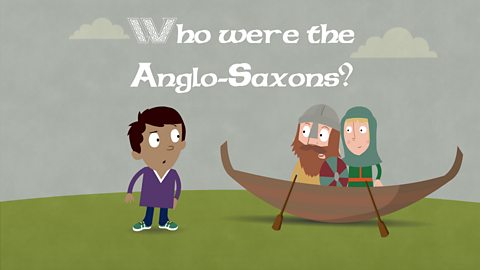
Who were the Anglo-Saxons? video
This short animation introduces the history of the Anglo-Saxons. Find out where they came from, what they were like and what they left behind.
An Anglo-Saxon settlement. video
This short video will help you show students what conditions the Anglo-Saxons lived in and some of the developments they introduced.
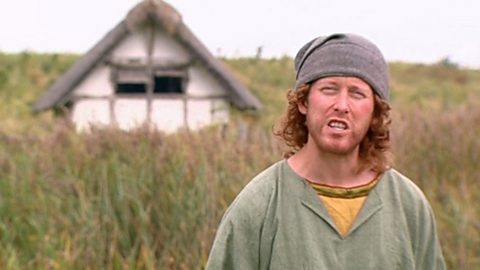
Anglo-Saxon village life and work. video
In this short video, the character Sid the Saxon shows us what a traditional Anglo-Saxon village looked like and some of the key roles people played.
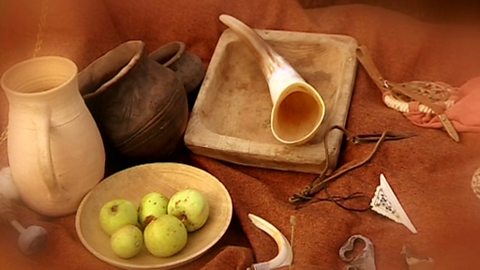
Anglo-Saxons travel around Britain. video
Find out how the Anglo-Saxons travelled around Britain and what similarities there are even now.