Please always refer to the latest government advice before booking travel and departing on any trip.
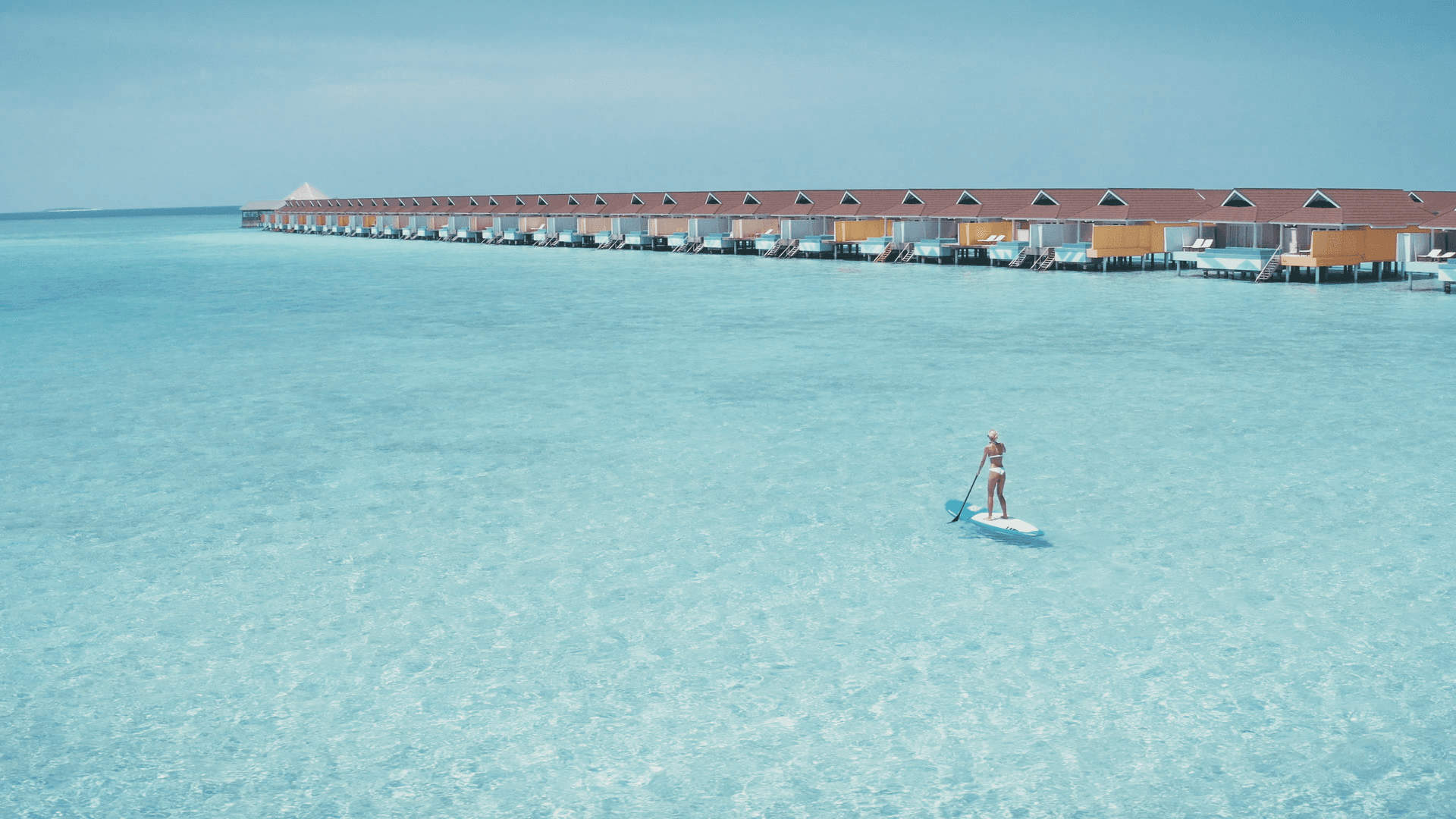
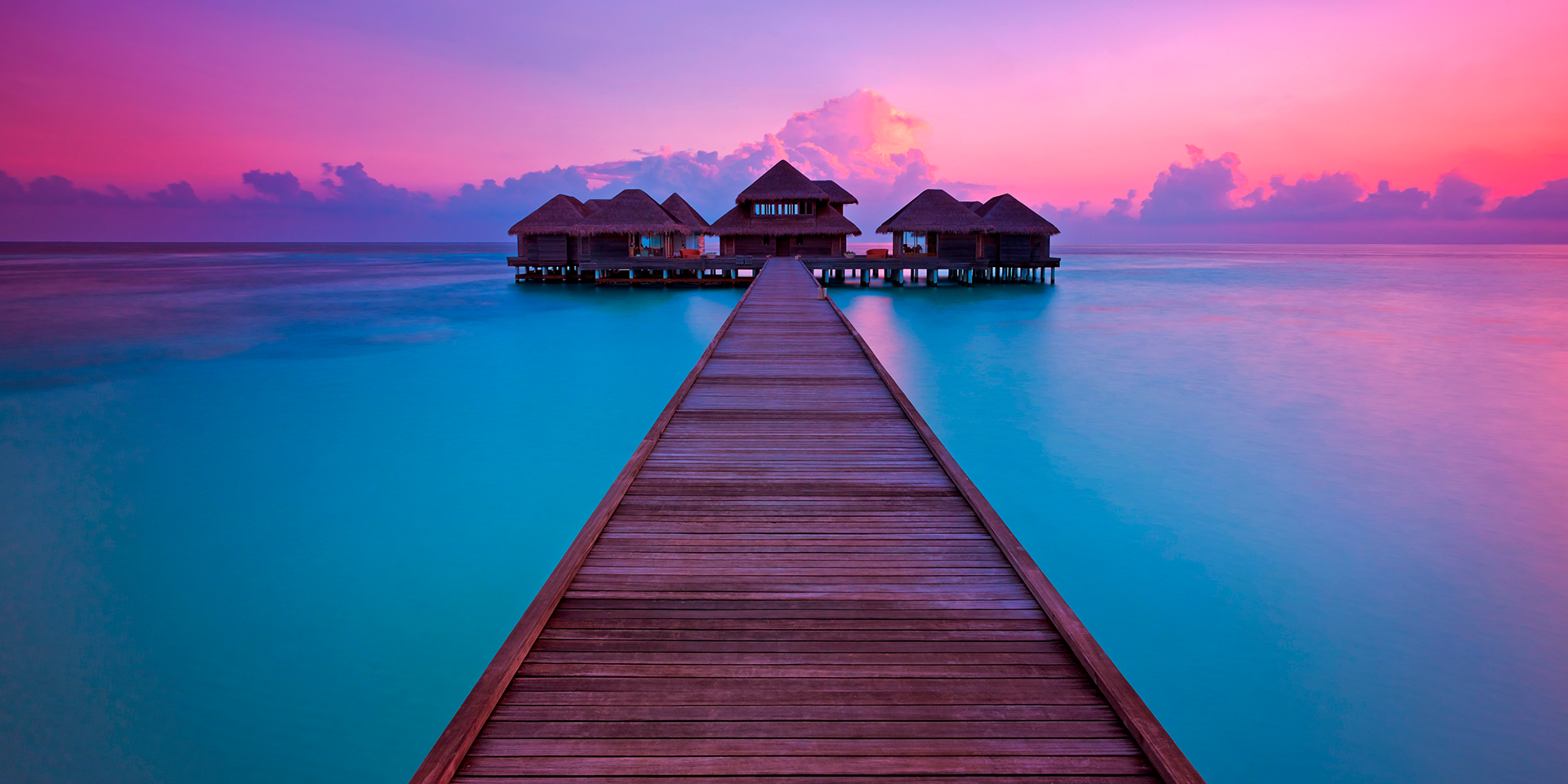
In the remote north of the Maldives, the seascapes of the Shaviyani Atoll are one of nature's masterpieces, a place where a thousand shades of blue blur between sea and sky, where coral islands rise out of the water like scattered seashells and hundred-strong pods of dolphins leap and twirl through ruby and amethyst sunsets. Located in the atoll's watery heart is the Fairmont Maldives, set on the whale-shaped island of Sirru Fen Fushi, a place guests will find is so much more than the typical tropical beach experience.
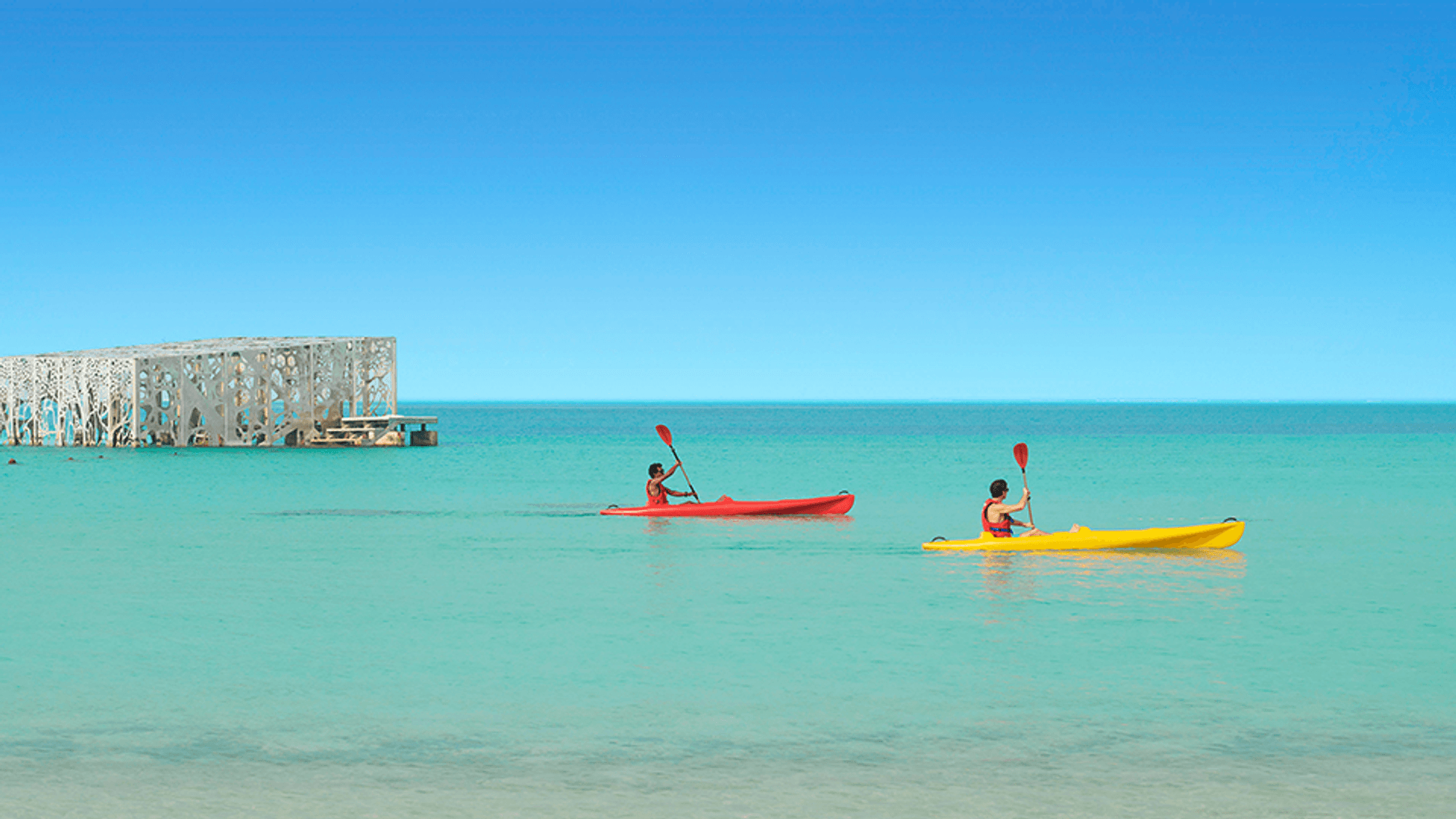
Translating from the Dhivehi language to “secret water island”, the 120-villa resort offers guests numerous ways to immerse themselves into the unique environment, from Maldivian warrior training on the beach, to picking your own ingredients for cookery class, to sea-view yoga and spa treatments that incorporate local healing practices. The island's showstopper, however, is the Coralarium, an astonishing underwater art gallery, the first of its kind in the Maldives.
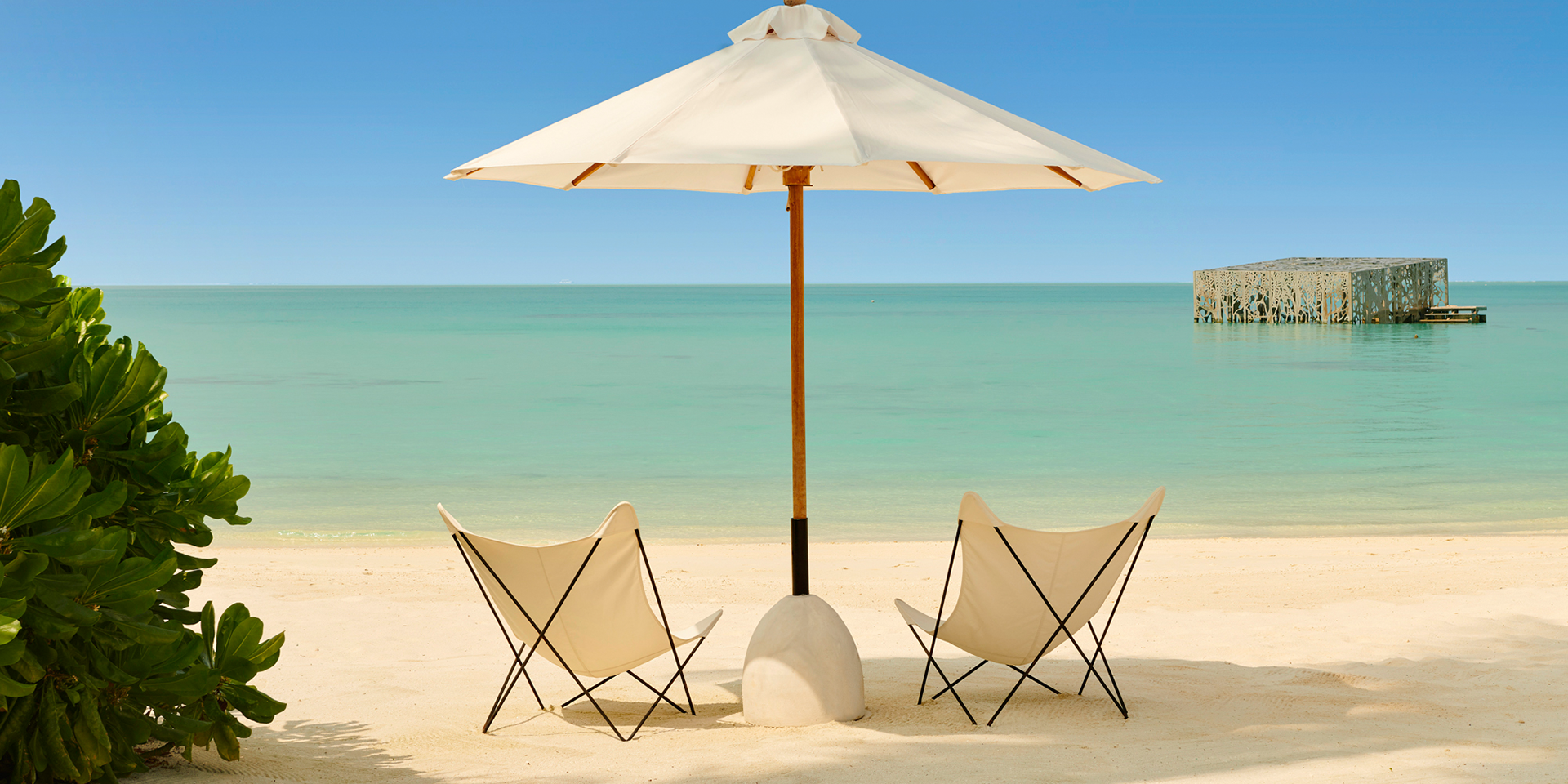
Set inside a 600-hectare lagoon (the largest lagoon of any resort in the country), the free-to-visit underwater sculpture park is the work of artist, environmentalist and underwater photographer Jason deCaires Taylor. Constructed using pH-neutral materials, the collection is housed inside a glinting stainless steel cube which reveals and hides itself with the tides. Inside, 500 starfish-shaped sculptures of varying sizes – some planted in the sand, others suspended from the gallery ceiling – are used to explore themes of rebirth, death and metamorphosis. But the statues are more than mere works of art; they also double as an artificial reef which attracts reef fish to breed, feed and grow.
Inside the Coralarium
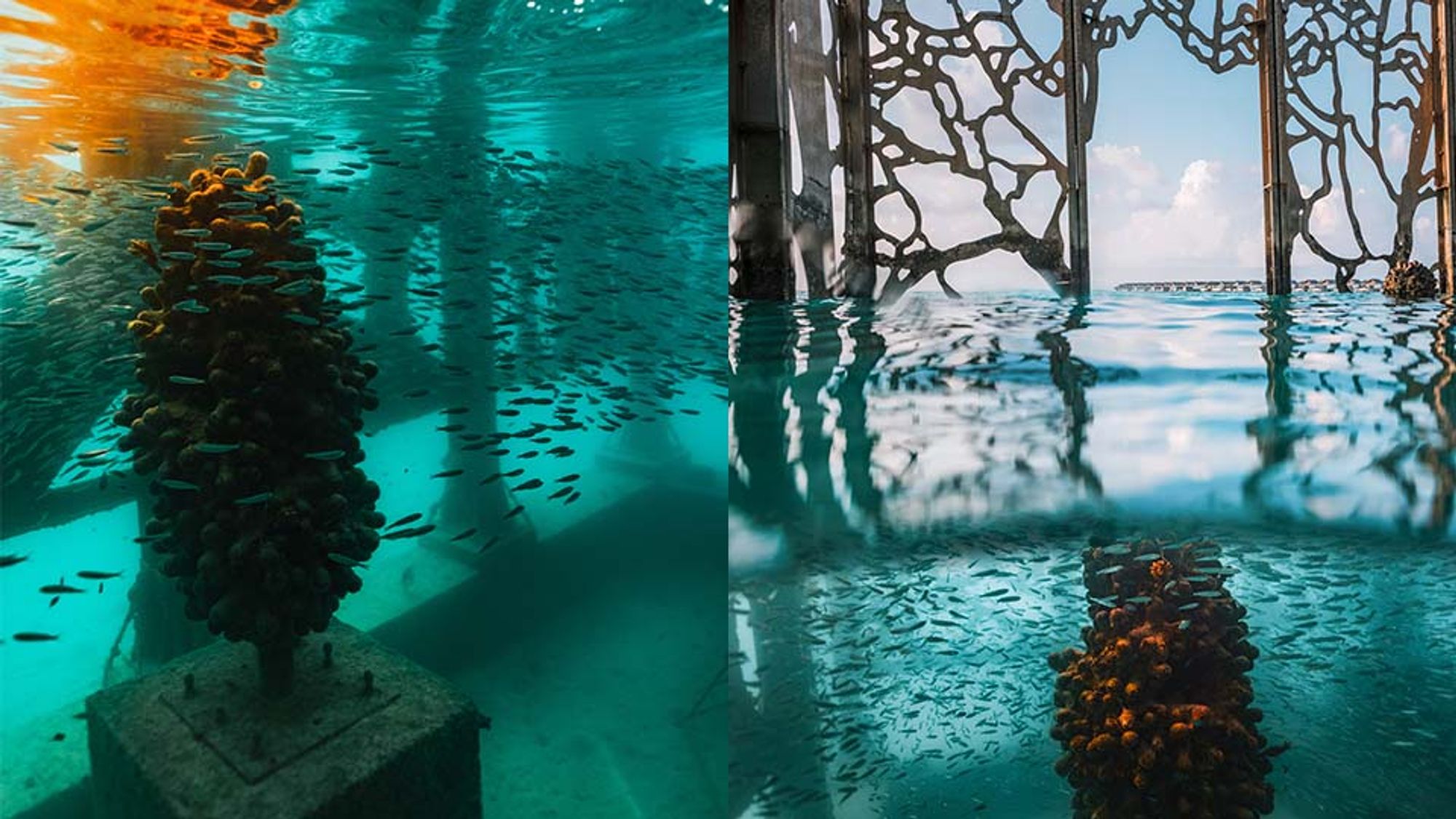
“My favourite part of the Coralarium is the underwater pathway leading to the entrance steps,” says Fairmont's marine biology team leader Ibrahim Sammah. “Here, there are 12 tree sculptures positioned six on either side of the pathway, all almost entirely covered with coral. Plus, the trees are hollow so they attract lots of small, colourful reef fish communities – on rare occasions you might even spot a reef shark or a stingray. It’s just as exciting for me to see as it is for guests.”
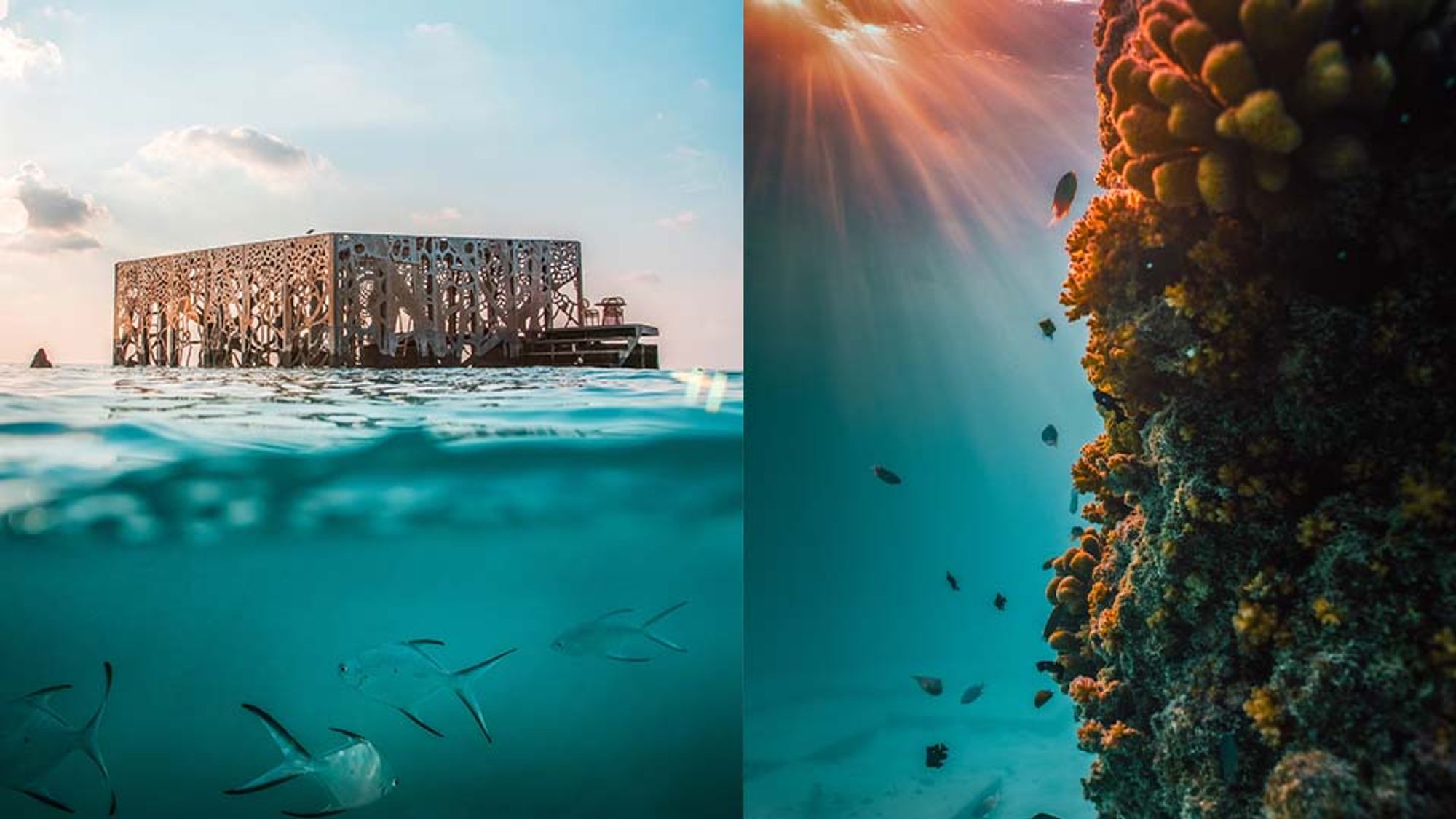
Over time, the sculptures will “grow”, adapt their forms and attract new creatures allowing repeat guests to experience the gallery anew every time they revisit. “Guests love to see octopus inside the Coralarium and we know that octopus like to create little dens by collecting rocks to build a protective barrier and door so we're going to try to make more homes that replicate the ideal octopus habitat to encourage them to drop by more often. Currently, it's quite rare.” Visit next year and – who knows? – you might encounter a whole consortium of cephalopods.
Inside the Lab
“We strive to educate others on the three Rs: reduce, reuse, recycle,” says the Fairmont Maldives Sustainability Manager Samuel Dixon. The latest in a series of eco-focused projects around the resort, the innovative ‘Sustainability Lab’, launched in February 2022, uses state-of-the-art recycling machines to morph waste plastic, collected from the beach and ocean, into a variety of fun and useful products, such as turtle-shaped luggage tags, tables, chairs and bar stools.
The Lab programme is also linked to the Fairmont Maldives Sirru Fen Fushi Award Scheme for Schools programme, which involves Maldivian members of the sustainability team making regular visits to local schools to teach children about wildlife conservation, climate change, rising sea levels and waste management. The team also encourages schools and local communities to collect and segregate plastic, which is periodically delivered to the resort by the Maldivian coast guard.
“Our guests can contribute through a range of memorable activities,” says Dixon. “That might be helping to pull a ghost net out of the ocean and then turning it into bracelets, or designing their own 1m x 1m recycled plastic sheets from which they can cut out products like coasters, flower pots, picture frames and so on. All you need to bring with you is a creative idea.”
Conservationists will also find themselves in good company: the Fairmont Maldives is part of the Manta Trust network, helping identify, track and collect data on the largest reef manta population in the world. “We have three natural purification stations in the house reef that act like an underwater spa for mantas and large amounts of zooplankton pushed in by the currents,” says Dixon. “These features attract manta rays to our lagoon from all over the Maldives between November to April.” As well as having the opportunity to swim with the enormous, though entirely gentle, creatures – something you can only do in a few places in the world – guests can also learn how to identify each manta ray by noting the pattern of dots on the animal's stomachs, a unique sequence akin to a human fingerprint.
From encounters with rare animals, to hands-on educational experiences, to literally immersing yourself in art, the Fairmont Maldives Sirru Fen Fushi offers the ultimate escape for environment-conscious travellers.