

Thursday 16 October 2014

BBC performance against its public purposes
Sustaining citizenship and civil society
The BBC in Scotland responded to the severe weather conditions in the winter of 2009/10 with comprehensive, timely coverage on all media, reporting developments across the UK and providing coverage from many localities around Scotland. A good balance was struck between providing the information necessary to make informed judgements about travelling arrangements, without causing unnecessary concern, and coverage of wider aspects of the unusual weather conditions. Members noted the extent of the public interest in reporting from around the regions of Scotland.
There was high quality reporting and analysis of the major events of the year. BBC Two's The Love of Money provided a major analysis of the international banking crisis of 2008, suggesting causes and drawing lessons for the future, while BBC Scotland continued to report on the after-effects for the financial sector in Scotland. Stimulating perspectives on contemporary life were provided in series like Andrew Marr's The Making of Modern Britain and the BBC One drama Occupation on the lives of British soldiers involved in the fighting in Iraq. The story that the man convicted of the Lockerbie bombing was to be released from prison in Scotland and flown back to Libya – one of the major news stories of the year – was broken by BBC Scotland. There was comprehensive analysis of this complex story, with network outlets deploying the expertise of BBC Scotland journalists. The BBC Scotland team won the Royal Television Society Scoop of the Year Award for their coverage of the story.
BBC Four's This is Scotland season provided a wealth of high-quality factual programming on Scottish themes, ranging from documentaries on the legacy of Calvinism and the Harris Tweed industry to a compelling analysis of Scottish politics in the 1980s in Thatcher and the Scots. Democracy Live, a one-stop digital shop for information on contemporary UK politics, was launched in November.
In a year which was to culminate in a UK general election, BBC Scotland widened the range of and increased the opportunities for political and social discourse in Scotland with Brian's Big Debate on BBC Radio Scotland, live from towns around Scotland from Dunfermline to Stornoway. A new daily topical debate programme on BBC Radio nan Gàidheal filled a gap in the network's schedule so that, 25 years after it was launched, it now transmits all day without a break.
The planning of television election debates by the BBC in conjunction with other broadcasters was followed closely by members of the Council. Members believe that in due course there should be an assessment of how well the arrangements for the debates have helped the BBC to deliver its public purposes for audiences in Scotland. The Council commended the innovative approach to coverage of the election itself, which included a Scottish-based television results programme on BBC One Scotland, coverage on BBC ALBA in An Taghadh 2010 and analysis of Why Didn’t Scots Vote Tory? within days of the inconclusive result.
Promoting education and learning
BBC Scotland offered a range of new content which helped audiences learn more about the world around them. A second series of the multi-platform History of Scotland project again drew a positive audience response. For those who wanted to explore further, there were BBC Radio Scotland's Walking Through History programmes and online resources.
The project concluded with a lively television debate which assessed the importance of historical experience for present-day Scots.
Connections between Scotland and the wider world were explored in series like Scots Who Made the Modern World. There was output which addressed contemporary concerns. A new BBC Scotland series for BBC One, Jimmy's Food Factory, took a scientific approach to the nutritional value of food, while Landward continued its coverage of Scotland's environment from both industry and consumer perspectives. BBC Scotland's Planes, Volcanoes and the Truth explored the science behind the volcanic eruption in April and looked at the implications for the future. A BBC Scotland feature for BBC Two reassessed The Legacy of Lawrence of Arabia in the light of recent events in the Middle East. There were more online resources for Scottish schools, with the provision of Bitesize Scotland games for Chemistry, English and Maths.
The BBC Scottish Symphony Orchestra supplemented its schedule of live performances across Scotland with a wide range of educational initiatives.
Stimulating creativity and cultural excellence
The Council considered that a wide range of BBC content on all platforms contributed to the delivery of this purpose, from Strictly Come Dancing on BBC One to the BBC Radio Scotland Young Traditional Musician competition, now in its tenth year. Members welcomed the range of new comedy offere by BBC Scotland during the year, in response to audience demand for innovation in this difficult genre. Some of the new shows, such as Gary Tank Commander, were particularly popular with younger sections of the audience. The work of some of Scotland's finest musicians was showcased in a series of concerts on BBC Radio 3 in March, broadcast live from the Royal Scottish Academy of Music and Drama. Sheinn am Bàrd on BBC ALBA and BBC Two Scotland focused on Gaelic poetry, while in a yearlong project, the Gaelic singing tradition was celebrated with a song of the day on BBC Radio nan Gàidheal. Artworks Scotland celebrated creative achievement in art, comedy and contemporary music with profiles of Douglas Gordon, Stanley Baxter and Edwyn Collins. The history of portraiture in Scotland was told by Peter Capaldi in A Portrait of Scotland while the centenary of the iconic Glasgow School of Art building was marked by a documentary Mackintosh's Masterpiece. It was a strong year for coverage of sport. Scottish achievement in an international context was highlighted in BBC coverage of tennis and of the Winter Olympics, and there was coverage of sporting activity across the regions of Scotland through BBC coverage of shinty, the Melrose Sevens, and with coverage of the Scottish Football League on BBC ALBA.
Representing the UK, its nations, regions and communities
Engagement work by the Council suggests that there is a strong appetite among audiences for a fuller and more accurate representation of the UK's nations and communities in BBC programmes. Members felt Small Island, a story of Jamaican immigrants to the UK in the years of the Second World War, was a good example of how this could be achieved for the mainstream audience on BBC One. The year saw increased activity in drama. A new drama set in Scotland, Hope Springs, was not re-commissioned. However the Council noted the warm audience response to Garrow's Law, a drama set in London but filmed in Scotland.
Members believe audiences would welcome more dramas with a Scottish setting, and this matter has been raised with the Trust.
Members felt that the BBC Four This is Scotland season, taken as a whole, delivere an impressive level of cultural portrayal: there were documentaries on a wide range of Scottish themes from the Scottish locations of classic films to the contribution made by Scots to the British Army. Network programmes which portrayed aspects of contemporary Scotland for audiences across the UK included Monty Halls’ Great Hebridean Escape, and Simon King's Shetland Diaries. Following the rejection of the proposal for local video services from the BBC, there has been a renewed focus on reflecting Scottish communities within existing services. Members welcomed developments such as the appointment of a BBC Scotland local government correspondent, and improved technology in some BBC Scotland studios outside the central belt, which they believe will contribute to delivery of this purpose.
Bringing the UK to the world and the world to the UK
Audience research suggests that for many licence fee payers, the international perspective offered by BBC services is one of the most highly valued. During the year this ranged from news coverage of the earthquake in Haiti, and its aftermath, to a portrait of the South Pacific on BBC Two and HD, and BBC Four's Russian Season. BBC Scotland productions contributed to this purpose from Cycling the Americas to Scandinavian crime fiction in Wallander. However Council members feel that BBC Worldwide should do more to develop Scottish content with a view to export. There is wide global awareness of Scottish history and culture, but no major new Scottish content with international potential has been developed in recent years. Members feel that this would be more likely to develop if the process of increasing network television production in Scotland focused more on content with recognisably Scottish elements.
Encouraging use of new communications technologies
Members welcomed the successful switchover to digital television in the Borders and the south of Scotland. They also noted the arrival of Freeview HDTV from the BBC in Scotland, and the Trust's valuable work on the BBC's proposals for a common format for receiving the internet on television screens. Both initiatives would make high quality BBC content easier to access for audiences. There remain key gaps on FM and DAB on radio; and on DTT, the absence of BBC ALBA. BBC content has continued to exploit the potential of new media to increase public value.
On BBC Scotland, Brian Taylor’s Blog attracts a wide range of audiences; it was joined this year by a Blog Poileataigeach on the BBC ALBA website. Websites for programmes such as Cycling the Americas have used social networking sites to connect with a wider audience.
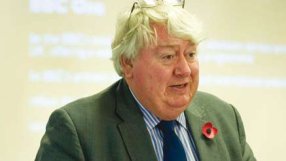
Trustee for Scotland in Stirling.
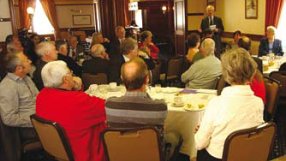
Event in Annan.
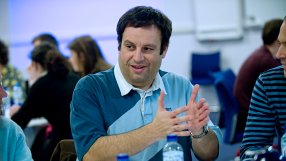
Listening to the audience in Stirling.
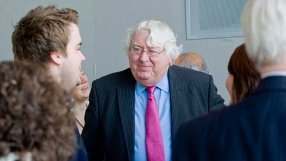
Event in Glasgow.
BBC iD
BBC iDBBC navigation
BBC links

BBC © 2014The BBC is not responsible for the content of external sites. Read more.
This page is best viewed in an up-to-date web browser with style sheets (CSS) enabled. While you will be able to view the content of this page in your current browser, you will not be able to get the full visual experience. Please consider upgrading your browser software or enabling style sheets (CSS) if you are able to do so.
