Simon Cox is at the helm as the programme which explores the latest developments and issues in the world of IT returns for a third series.
Contact Us
If you've got a suggestion for the programme - email us clickon@bbc.co.uk.
Programme Details
29 September 2008
Whether you've embraced technology willingly, or you’re slowly learning the delights of the digital world, this series will have something for you. Simon Cox finds out how modern technology touches our lives.
Mobile phones Mobile phones can do a lot more than just make voice calls - more and more of us are using them as multifunctional devices for messaging, checking email, taking photos, browsing the internet or playing games. As internet giant Google reveals its first foray into the mobile phone market with a mobile operating system called Android, Simon is joined by The Guardian's Jemima Kiss, and mobile phone industry consultant Marek Pawlowski to discuss what the future could hold for the mobile phone market.
Modelling the weather A supercomputer is a machine that is at the forefront of processing power - containing huge numbers of processors, often filling entire rooms. They're used to run incredibly complex mathematical models, and can be found everywhere from aircraft factories to financial institutions. Simon visits the Met Office to see their supercomputer in action - without it, forecasters would be unable to predict the weather more than a few hours ahead.
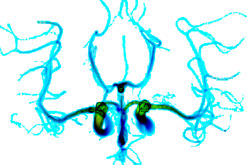
Grid computing Supercomputers are not the only way of harnessing processing power - another option is to hook up computer systems across a nation, or even between countries. A worldwide grid is about to be launched which will process all the data from the LHC at CERN in Geneva. Steve Lloyd from Grid PP, the UK grid for particle physics, joins Simon to explain the power of the grid. And reporter Nick Balneaves visits the National Hospital for Neurology and Neurosurgery in London, where grid computing is being used to model blood flow patterns in the brain - a development brain surgeon Stefan Brew believes could revolutionise the way he works.
Airing your dirty laundry online The web is a fascinating place for exploring human nature. Head online, and you'll find people willing to tell all in their blogs, in chat rooms, or on comments pages. Simon speaks to psychologist Adam Joinson about whether we really do reveal more of ourselves online, and what it is about sitting at a keyboard which compels us to divulge personal information.
The BBC is not responsible for the content of external sites







 If you've got a suggestion for the programme - email us