Simon Cox is at the helm as the programme which explores the latest developments and issues in the world of IT returns for a second series.
Contact Us
If you've got a suggestion or a comment about the programme - email us clickon@bbc.co.uk.
Programme Details
Monday 1st October 2007
Whether you've embraced technology willingly, or you’re slowly learning the delights of the digital world, this series will have something for you. Simon Cox finds out how modern technology touches people's lives.
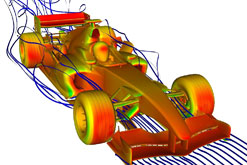
Formula One computing power Behind every Formula One car is an unbelievable amount of computing power - from the minutiae of the design process to tracking their progress on track. The cars can't even be started unless the computer is switched on. Simon visits the Williams factory in Oxfordshire, where the team's Chief Operating Officer Alex Burns explains how a new supercomputer (the exact capacity of which is a closely guarded secret) is changing the way their racing cars are designed.
Open-ID Any internet user will be familiar with the troubles of trying to remember numerous different usernames and passwords. Open-ID has been hailed as one solution - a single sign-on that can be used across the web. Simon Willison talks about his hopes for the scheme.
RFID chips Radio frequency identification technology has been hailed as a way to revolutionise everything from baggage handling to retail supply chains. But they've also provoked concerns about privacy. Simon talks to Patrick Sweeney, author of "RFID for Dummies" about their pros and cons; and meets a woman who's been putting them to an unusual use: Seirian Sumner from the Zoological Society of London, who has adapted the technology to study the nesting habits of wasps.
Government IT Government IT projects have a reputation for being inefficient and expensive - but is that fair? Simon asks journalist Michael Cross, and John Suffolk, the Government's Chief Information Officer, about the challenges of public sector IT programmes, and discusses how they compare to the private sector.
The BBC is not responsible for the content of external sites







 If you've got a suggestion or a comment about the programme - email us