| | | | | | | | | |

| | | CASE NOTES
|  | |  | MISSED A PROGRAMME?
Go to the Listen Again page | | | | | | | PROGRAMME INFO | | | |
| | | Dr Mark Porter gives listeners the low-down on what the medical profession does and doesn't know. Each week an expert in the studio tackles a particular topic and there are reports from around the UK on the health of the nation - and the NHS.
| | | | | | Contact Case Notes | | | | | LISTEN AGAIN 30 min 30 min | | | |
|
|
|  | PRESENTER | | | |
| 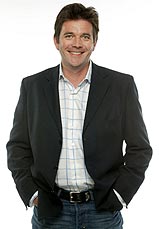 | | | | "I spend half my week practising medicine and the other half writing and talking about it as a GP in Gloucestershire. Working on Case Notes has been a boon for both me and my patients. One of the principal aims of the programme is to keep our listeners up-to-date with the latest developments in healthcare, and to accomplish that I get to interview a wide range of specialists at the cutting edge of medicine. A rare privilege that ensures our listeners aren't the only ones to learn something new."
Mark Porter | | | | |
| | | | | | PROGRAMME DETAILS | | | |
|  | | |
 Full programme transcript >> Full programme transcript >>
Keyhole Surgery
Medical telescopes which allow surgeons to peek inside the body have been around for more than a century, and were first used to examine the abdomen in 1901.
In the last 40 years the laparoscope has transformed many operations, reducing hospital stays from days to hours with smaller scars and fewer complications. The laparoscope can also be used to diagnose life-threatening conditions like an ectopic pregnancy.
In Case Notes Dr Mark Porter looks at the uses of keyhole surgery in modern medicine. His guest in the studio is Professor Michael Bailey from the Minimum Access Therapy Training Unit in Guildford
Diagnostic Tool
Gynaecologists were among the first to adopt laparoscopic surgery, initially to examine inside the pelvis. It's now used for a wide range of routine and emergency procedures. When women are sterilised, clips are placed onto the fallopian tubes using a laparoscope.
If a fertilised egg develops outside the womb - normally in one of the fallopian tubes - an ectopic pregnancy results, which is potentially life-threatening.
Mark hears from Consultant Gynaecologist Mark Whittaker at Gloucester Royal Hospital as he performs an operation to rule out an ectopic pregnancy.
Gall Bladder Removal
The gall bladder is a small bag-shaped organ on the right hand side of the body, just below the liver. It stores a green liquid called bile, which is produced to help the body digest fats and other substances.
Some people develop stones in their gall bladder, which can become inflamed and very painful. The commonest treatment is removal of the gall bladder - a laparoscopic cholecystectomy. Before keyhole techniquest removal of the gall bladder involved a large incision and days in hospital.
We hear from Jennifer, who has her gall bladder removed at the Royal Berkshire hospital by surgeon Tom Dehn.
Training
Would-be surgeons learn by watching their more experienced colleagues and by using surgical simulators.
Mark meets Consultant Surgeon Bijendra Patel who runs the MSc course in Surgical Skills at Barts and the Royal London Hospitals, where they have one of the few laparoscopic surgical simulators currently in use in the UK. The simulator can be used to assess performance and develop the precise hand-eye coordination needed to work in the two dimensions seen on the screen in the operating theatre.
Mr Patel puts Mark's operating skills to the test on the simulator…
| | |
RELATED LINKS
Minimum Access Therapy Training Unit
Barts and the London: Surgical Skills and Science Course
Woman's Health: Ectopic Pregnancy
BBC Health: Gallstones
BBC Health
BBC News Health
NetDoctor
NHS Direct
Dr Foster
The BBC is not responsible for the content of external websites
| |
| | |
|