| | | Back to Beeching | | | |
| | With the publication, in 1963, of The Re-Shaping of British Railways Britain's transport system would never be the same. | | | 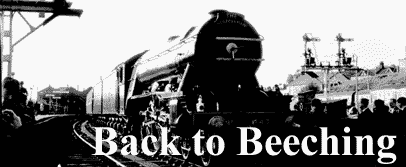
| |
Beeching: Champion of the railway?
 By Richard Hardy By Richard Hardy
After a life-long career with British Rail, Richard Hardy's biography analyses the ideological and technological upheaval of the era
After a life-long career with British Rail, Richard Hardy wrote Beeching's biography to analyse the ideological and technological upheaval of the era.
To this day, there are intelligent people who regard Lord Beeching as the man who destroyed the railway system, rather than its saviour.
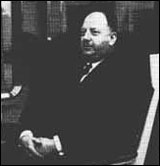 Beeching had the great gift of laughing at himself. Walking into a station lavoratory, he was confronted by a statement written on the wall with great emphasis: Beeching had the great gift of laughing at himself. Walking into a station lavoratory, he was confronted by a statement written on the wall with great emphasis:
"Beeching is a prat!"
He added underneath in a smaller but clear hand:
"No, I'm not!"
Dr Richard Beeching
But in the eyes of those who worked for him he was the best Chairman we ever had - and there is no doubt in my mind that he was one of the greatest figures to have served the railways of this country.
Dick Beeching was born in Kent in April 1913, the second of four brothers whose parents made great sacrifices to send them to Maidstone Grammar School. He earned 1st class honours in physics at Imperial College, London, followed by a research PhD.
He married Ella Tiley in 1938, to whom he was happily married for over 46 years. At the time he was senior physicist in the Mond Nickel laboratories in Birmingham. In 1943, he joined the Armament Design Department of the Ministry of Supply to become, at 33, Deputy Chief Engineer. Beeching's experienced team of engineers were, at first, doubtful about his approach to engineering problems. But their apprehension soon changed to awe, fascination and enthusiasm for the physicist's great intellect and delight for solving the near-impossible.
In 1948, Beeching joined ICI, becoming technical director on the board in 1957. In 1960, he was made a member of the Stedeford Group, examining the loss-making state of the British Transport Commission (BTC) and in March 1961, he was appointed Chairman of the British Railways Board (BRB). Beeching undertook a consultancy and accepted a challenge to examine a desperate situation. In his Reshaping of British Railways Report of March 1963, he prescribed a remedy which was accepted by parliament but not by the press, the public or many railwaymen.
Few men, in peace time, have been called upon to tackle so complex a problem, made more difficult by intense and sometimes ill-informed criticism. Yet his tenacity of purpose, outstanding ability and integrity enabled him to completely restructure the old railway system.
When he left British Rail in 1965 to return to ICI, we knew we had lost a champion. Great strides had been made, not only in our way of thinking and doing things, but in such revolutionary concepts as "Merry-Go-Round" transport of coal, freightliner vehicles designed to carry large international containers and, of course, Inter-City.
He knew that many of the loss-making commuter services listed must be retained in the public interest but made the point that "money must pass". If he made a misjudgement it was his conviction that by explaining clearly every controversial issue in the report, he could make people understand. This was asking too much of human nature.
In November 1964, Beeching was asked by the Prime Minister Harold MacMillan to examine the problem of road and rail co-ordination of both passenger and freight transport. As the greatest analyst of his generation, he was the ideal choice. He was honest, scrupulously fair, courageous, and persuasive but required hard facts and data. The study would have been a brilliant work but it was to be sacrificed on the altar of politics.
In 1966, as Deputy chairman of ICI, he was asked by the Lord Chancellor to chair the Royal Commission on Assizes and Quarter Sessions to overhaul the centuries-old system of higher and criminal courts. The Commission included some able legal men balanced by industrialists.
They were impressed by the amazing rapidity with which their infinitely patient chairman grasped technical and legal detail and jargon and his understanding of the people he met.
His members were an able, amiable yet disparate group, but he brought them round to a unanimous report, although they had been initially opposed to him on certain issues. However, they found that he would respect their views and then accept sound and convincing argument to win him over to their line of thought.
Beeching: Champion of the Railway? by R H N Hardy was published by Ian Allan in 1989
Selected Reading
Beeching: Champion of the Railway?
by R H N Hardy,
Ian Allan, 1989
The Great Railway Conspiracy
by David Henshaw
Leading Edge, 1991
British Rail after Beeching
by G. Freeman Allen
Ian Allan, 1966
British Rail - The first 25 years
by Michael R. Bonavia
David & Charles, 1981
British Railways 1948 - 73
by T.R Gourvish
Cambridge Univeristy Press, 1986
|
| | |