Politicians and the public have debated the National Health Service endlessly. It has been doctors who have had to deliver the service itself. That has given them great power and also exposed them to great pressure.
The doctor’s role and reputation has changed constantly. It is through the story of the NHS doctor that we can see how this great British institution has fared in practice, how far it has travelled from its original ideals, how health care has been shaped by what has been happening in the wider society, urban and rural, affluent and poor.
Using personal memories of doctors and their patients, expert comment and material from the archives this series, presented by Chris Bowlby, traces nearly a lifetime, of our "national doctors". And provides essential historical background to our current debates about the future of health care.
To mark the 60th Anniversary of the NHS, the BBC Health Correspondent Branwen Jeffreys presents four debates for BBC Radio 4. Each week she and a panel of guests will look at some of the funding dilemmas that face the NHS and analyse how, in each case, the cost of health is balanced against quality of care and the values of the NHS.
At the heart of each programme are two expert advocates who marshall supporting evidence using case studies and data to argue their position. In an ideal world both would get the funding and research they want but as we all know, NHS money is finite. In the studio are a business person and a politician who are forced to reconcile principle with pragmatism and make some tough choices between deserving cases.
Niall Dickson of the King’s Fund is on hand to provide the context for these important choices and explain how decisions are actually made within the NHS.
Few understand the compromises that had to be made to bring the NHS into existence, and the political risks that Aneurin Bevan had to take to fulfil a key pledge in the 1945 Labour platform that had been endorsed by a landslide victory just months after the end of the Second World War.
Robert Pugh plays Health Minister, Aneurin Bevan who, on a crucial day in September 1945, must decide once and for all whether to allow consultants to keep their private fees and pay beds in the new NHS.
It’s a drama about political, human and historic choices – about realpolitik and political conviction – about the clash of personalities and the force of history.
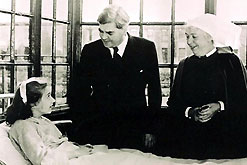
Follow the early years of the NHS from radical plan through to triumphant birth and on to fully fledged but sometimes problematic service.
Through programmes, documents and images taken from the BBC's archives you can witness for yourself a time before the NHS existed, the disputes surrounding its inception and the difficulties it faced in the early years.