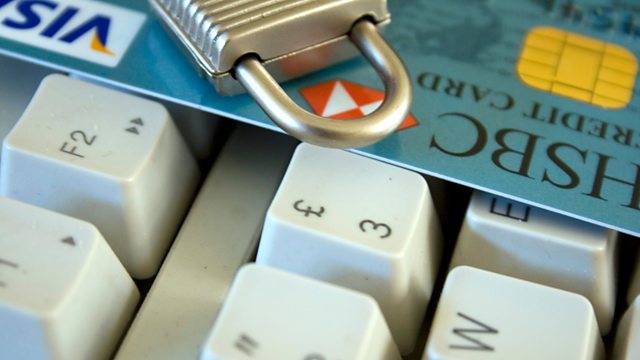
Telephone Banking; TikTok Trolls
We ask whether changes made by the banks to their telephone banking services have been good for accessibility. And the TikTok user hitting back at the social media trolls.
The way banks work has been hugely affected by Coronavirus, with customers encouraged to go online and keep visits to the already dwindling number of branches to a minimum. Telephone banking has also changed, with an increased reliance on voice-activated technology rather than keypad entry. We ask whether those changes have helped with accessibility.
And following our recent story about the online trolls who doubted the existence of Helen Keller, we hear from one user of social media who's challenging the disability deniers with a dramatic video on the site TikTok.
Last on

In Touch transcript: 16/03/21
Downloaded from www.bbc.co.uk/radio4
THE ATTACHED TRANSCRIPT WAS TYPED FROM A RECORDING AND NOT COPIED FROM AN ORIGINAL SCRIPT. BECAUSE OF THE RISK OF MISHEARING AND THE DIFFICULTY IN SOME CASES OF IDENTIFYING INDIVIDUAL SPEAKERS, THE BBC CANNOT VOUCH FOR ITS COMPLETE ACCURACY.
IN TOUCH – Telephone Banking and TikTok Trolls
TX: 16.03.2021 2040-2100
PRESENTER: PETER WHITE
PRODUCER: SIMON HOLBORN
White
Good evening. Tonight, how to get the best from your bank and how to trounce the trolls.
Clip
She’s looking at the camera.
She’s faking it.
If she can read comments, she can’t be blind.
She’s having a laugh, she’s not really blind.
White
We’ll hear one woman’s fight back against the disability deniers.
But first, banks, like many institutions, talk a good game when it comes to services for disabled people. But knowing the right words to use and providing a service that actually works isn’t always the same thing. So, at this time, which has posed challenges both for bank customers and staff, we’ve invited someone with a foot in both camps to come on to the programme to deal with some of your concerns.
Paul Smythe is Head of Digital Accessibility for Barclays. He’s visually impaired himself. We asked him, first of all, about Barclays because we’d had an email from Mike Foster asking why he was having to jump through more hoops than before lockdown to speak to a human being when using telephone banking and also, why he couldn’t be told where he was in the queue. I asked Paul Smythe – what’s the answer to that?
Smythe
At the start of covid lockdown we did see an increase in telephone banking usage and queue times, however, now, I’m pleased to report, that I think our average queue times are less than 10 minutes. You are notified at the start what our current queue times are.
White
Of course, queue times change during the call. Plenty of companies will actually tell you that and they’ll tell you where you are in the queue, does Barclays do that? Mike didn’t seem to think they did.
Smythe
We’ve taken the approach of telling people at the start the queue time they can expect of 10 minutes or whatever it might be. We recognise we’ve seen many customers that would have otherwise gone – popped into their bank branch – using telephone banking and what we have done is actually identified who they are and prioritised them, so they are fast-tracked in the queue. So, customers who do have an access need, then if they do notify us we can flag that on their account so they are fast-tracked next time they call.
White
Okay, I’m going to come back to telephone banking but that email raised another point – he felt there was real pressure on visually impaired people – well all people really – to use online banking and you are always encouraged to do that, that’s quite true. Julianne Porter from Liverpool, she feels a bit like that, that she’s been forced into online. She says: “I very rarely use the phone for banking as more often than not I have to go through lots of steps and it’s long and frustrating. I usually hang up.” But she says: “My use of online has so far been trouble free.”
Now, certainly, some visually impaired people do use it comfortably, others feel they’d struggle with it. In a nutshell, how accessible and how secure, do you think, online banking is for visually impaired customers?
Smythe
So, there’s two ways to do banking digitally – online banking, using the website or mobile banking, using a smartphone app. At Barclays when we build our websites and apps, we get them annually accredited by external experts and Ability Net and once they’ve conducted disabled user testing, making sure they work for folks who rely on assistive technologies, like screen readers or magnifier software…
White
Because I think you do use text to speech, do you, and screen readers?
Smythe
Yes, I certainly do. Banking websites can be quite cluttered and complex, right, if you’re tabbing around with a screen reader, mobile banking is proving particularly popular for partially sighted and blind customers. And, again, let your bank know if it doesn’t work, we’re very active at listening to and acting on the feedback we get.
White
I do want to return to telephone banking. Sometimes talking to an agent is absolutely what you do want, that’s what people like Mike wanted, for instance. Some listeners have emailed with tips for bypassing the menus and getting through to a human more quickly. James Craig says: “Don’t follow the press one, press two, etc., instructions, just stop pressing buttons and after a few – I don’t understand – prompts they get the message and you can actually speak to someone.” And Fern Alder writes: “I am with the Co-operative Bank and discovered that if you dial the number and when they start giving options press the hash button on the phone then it goes straight through to someone you can speak to.”
Paul, do you think that works? I appreciate that probably all companies are slightly different but does that work – just either say nothing or hit the hash button?
Smythe
Yes, I mean I’m very familiar with this, when I’m calling up different banks and utility providers and as a guide, keeping silenced in those voice prompts or hitting the zero button, hash button, star button, can often mean that you get put through to a human, call centre agent, quicker.
White
The theme, though, throughout this, I think, is people do still miss face-to-face contact in their bank dealings. Now we know why that’s become more difficult over lockdown but let’s face it the closing of thousands of branches over the past few years, it was disappearing anyway. Have we seen the last of face-to-face contact or are there ways, particularly for visually impaired people, who can still get it?
Smythe
Well that certainly has been a trend in recent years for people to visit bank branches less. Increasingly, more of these services can be done online and via telephone to link you through to a member of staff that can actually help – advise – you, so that you better understand, manage and ultimately make the most of your money.
White
What I would like to ask you finally, is if people are dissatisfied or they’ve got a problem, what tips would you give people?
Smythe
I guess the first tip is about encouraging people to use contactless payments, using their debit card to tap contactlessly, because we know chip and pin devices are all different shapes and sizes as we return to shops and so forth, really challenging and sometimes when it beeps you don’t really know if you’ve been charged enough. Many banks, including Barclays, now offer instant notifications, so you can get a text or notification instantly when you’re still in the shop which will tell you how much you’ve spent and where. Secondly, mobile banking is, as we’ve said, it’s an easy and accessible way but when you’re within mobile banking there’s multiple ways that you can get put through to a human. And the third and final one is to just notify your bank if you’ve got an access need, there’s lots of extra accessible support and services that banks can and do offer but it’s really just informing them and seeing what they can do.
White
But it is getting to the right person, when you’re given that advice it’s sometimes not as easy to do as it is to say, Paul, it’s finding the right person who can actually put it right, is there a key way to do that?
Smythe
It often comes down to whether banks are actually upskilling in disability etiquette and accessible services, so that they walk for walk and talk for talk as being one thing. But again, when you do find the right person there’s lots of things that we can do. I’ve mentioned about fast-tracking you in telephone banking; we can offer paperwork in large print, braille, email and again, it’s useful to just put a flag on your account so that branch staff, telephony staff, can actually sort of give you a better personalised service. So, again, ask your bank and if you’re not getting great service, right, it’s a lot easier to switch bank accounts these days.
White
Because there were changes relatively recently – two or three years ago – that made it easier.
Smythe
Yes, so this is the current account switching scheme, so you can switch your current account within seven days, it’s free, it’s simple and it’s stress free.
White
Paul Smythe.
Well, do keep your emails coming in on telephone banking. And just to stick with phone lines for a few moments longer – last week we talked about filling in the census form independently and we mentioned that there is a contact centre you can call to get help with it or indeed fill it in completely over the phone. A few of you have emailed to say that you’ve actually tried it out. Alan Philpott emailed to say that he’d rung it 15 times last Thursday without making a connection but then on Friday he got back in touch with the news that he had got through successfully and arranged for someone to fill in the census over the phone. So, persistence pays. Jane Sellars also got a recorded message saying that there was a high level of calls. She’s worried about being fined if she doesn’t complete the census by the deadline of March 21st. And Jane is right about that, you can actually be fined up to a £1,000 for not completing it.
Some of you also wanted to know why our guest from the Office for National Statistics was only speaking about England and Wales. That’s because Scotland’s census is happening this year, it happens in 2022. Northern Ireland’s is happening this year and it’s being carried out by the equivalent of the ONS in England and Wales, that’s the Northern Ireland Statistics and Research Agency. There is a contact number you can call – 0800 328 2021. I’ll just repeat that: 0800 328 2021.
Now, a few weeks back we brought you a story of the trolls on social media site TikTok who questioned whether the famous rights campaigner, Helen Keller, was really deaf and blind. Not only that, but even whether she’d really existed. Historian, Selena Mills, expressed her concern.
Mills
I think as a younger generation that hasn’t learnt how to discern and look at evidence and data and historic well-documented information. The second thing is ableism, the discussion is really around like can disabled people do anything and really anyone who’s blind or deaf or both or mute cannot do all the things that everybody else can do. And I think that is what’s sort of perpetuating this at the moment – 600,000 people shared this piece of information that she didn’t exist. So, I think, that is the worrying thing, the second ableist take.
White
Well, if you thought after hearing that only in America, think again. Siobhan Mead, who works for Guide Dogs, though not claiming to be as famous as Helen Keller, not yet anyway, has had a similar experience. She’s with us. Siobhan, what happened to you?
Mead
So, I joined TikTok a couple of weeks ago because I wanted to reach a new audience and to share my life as someone who is totally blind and to raise awareness about blindness and to really give people an idea of how I live my life and that I’m actually just as able to work and do all of those things like anybody else.
White
And what happened and what was the response you got?
Mead
So, I posted a video of how does a blind person cross a road and I thought this would be quite a really interesting one for many people to think about because it’s a question that I get asked a lot. So, I thought I would do a 59 second video, simply showing how I cross the road as someone who is totally blind. And within minutes of posting that video I was simply abused and trolled and it was just – it was awful, it was an overwhelming sense of yeah, horror.
White
And saying what – what did they say?
Mead
So, I literally couldn’t even count, it was hundreds and hundreds saying: “Open your eyes, why don’t you look left and right.” “I was waiting for a 40-tonne truck to come and hit her.” “Where’s the Tesla when you need one?” “She’s faking her blindness, she can see, she’s just doing it for attention.” And these were coming in thick and fast. And I was – I don’t know why I was shocked but I was simply horrified to think that – wow – this video, I thought that would be really educational actually wasn’t in their eyes.
White
But you decided not to take this lying down, tell us what you did, although with a warning to those of a nervous or squeamish disposition.
Mead
Yes, I did fight back. I felt that I was so incensed and I shouldn’t have to prove my disability and not everyone can. So, I literally did take my prosthetic eyes out – I know it’s very dramatic and something that I never thought I would have to do but I did. Fifty-nine seconds explaining why I started TikTok and for those people who were disbelieving – pop, pop, pop – there you go.
White
In fact, we can hear the response video you posted now.
Clip – TikTok
I joined TikTok a few weeks ago because I thought it would be really good to educate people and raise awareness about blindness. But after making a few recent videos I’ve been accused of faking my disability. Comments have ranged from:
“She’s looking at the camera.”
“She’s faking it.”
“If she can read comments, she can’t be blind.”
“She’s having a laugh, she’s not really blind.”
So, you win, you bullied me into this, nobody should have to prove that they’re blind. Last chance, guys, if you’re squeamish tune out now.
These are my eyes. They’re supposed to look real because otherwise they would look like this. Is it alright if I go and put these back in now? Sorry, if it looks a little too real and normal for some of you guys but I am actually blind. The thing that really upsets me is not everyone who’s blind has prosthetic eyes and why should anyone have to prove that they’re blind or disabled? If you happen to be ignorant, that’s your problem but Google is your friend, don’t go around abusing disabled people purely because you don’t understand disability.
White
Well, a pretty dramatic response. Tell me Siobhan, did you get a response to your response?
Mead
I did, I had an overwhelming outpour of love and support from genuine people who were simply saying – you shouldn’t have to do this, you shouldn’t have to come on here and prove your disability. And they were simply saying carry on doing what you’re doing educating people. So, I’m not going to give up, I’m going to stand up, along with Guide Dogs, who are not going to tolerate this from online trolls and abuse because it’s just simply unacceptable.
White
Now TikTok did take the Helen Keller nonsense down. What happened to the posts to you?
Mead
They are still there I believe and up until a few hours ago I was still getting a lot of comments on my – how does a blind person cross a road – and it’s got 92,000 views on there and there are still people saying – she’s faking her blindness, she’s not blind – and I do point them to the video that you’ve just heard – go and check it out.
White
Why do you think people react like this?
Mead
I think it’s a lack of awareness and although we’re very much in the 21st century and disability is on the agenda of many schools and colleges and we do look at this, I still think there’s a lot of young people who might not understand blindness, just because someone doesn’t necessarily look blind or disabled, they [quote/unquote] “look normal”. So, I think there is a lack of education and awareness on their part, hence the reason that I’m doing what I’m doing and raising awareness through all of my social media channels.
White
Now you obviously value social media as a way of getting your views across, so, what would you like to see done about controlling content without unnecessarily limiting freedom of speech or freedom of expression?
Mead
I think that’s a really good one, Peter. I suppose it doesn’t really come down to freedom of speech, abusing somebody simply because they have a disability. I know that many platforms and social media channels are really looking at this and trying to do their best in terms of using the block button or report. But I do think there’s a wider issue, I do think there needs to be a lot more education so people are able to feel safe online and to really share their journey, whether it’s a disability or whether they just simply want to share their life.
White
Siobhan Mead, thank you very much indeed.
Well, your reactions please, both to the trolls but also to the action that Siobhan took. You can email intouch@bbc.co.uk.
Just time for one last email which really chimes with much of today’s programme and which we thought was particularly apt as the first day’s racing got underway at the Cheltenham Festival. Derek Gardener says: “I’m blind, I have been for around 15 years but I’ve always enjoyed a bet and I’ve relied on what, up until now, has been a really excellent phone service provided by large bookmakers. But ever since lockdown bookmakers have generally shut down their phone services and the one that does still do it removed the best deals that it makes to its online community. And of course, all bookmaking shops are closed at the moment. Now, what that means that if you want to bet you either need to go online through the web…” Derek says: “…or through the smartphone apps and for someone like myself, who relies on text to speech technology to access these sites, is extremely difficult to use reliably. Now this may well be excluding a large set of people, like myself, blind or visually impaired, from a hobby which, provided it’s kept within affordable bounds, can provide entertainment and real help with mental health and wellbeing.”
Well Derek, we’re going to take a look at that on next week’s programme, so do stay tuned, unless, of course, you have a big win, in which case you’ll probably be in Barbados.
Let me know if you’ve been frustrated trying to have a little flutter. The email again: intouch@bbc.co.uk and you can go to our website bbc.co.uk/intouch, there’s more information there, plus you can download tonight’s and many previous editions of the programme. From me, Peter White, producer Simon Holborn and studio managers Carwyn Griffith and Phil Booth, goodbye.
Broadcast
- Tue 16 Mar 202120:40BBC Radio 4
Download this programme
Listen anytime or anywhere. Subscribe to this programme or download individual episodes.
Podcast
![]()
In Touch
News, views and information for people who are blind or partially sighted