Blind charities battle back after lockdown; Her Abilities Award
The efforts some blind charities are making to recover after lockdown, and we hear about the Her Abilities Awards and the drive to celebrate more women with disabilities.
Peter White hears about the efforts some blind charities are having to make to revive their finances and services after lockdown.
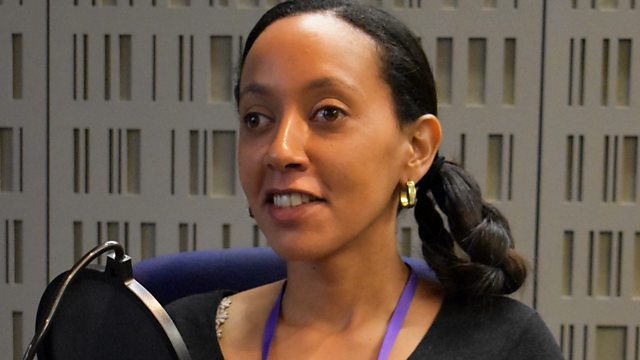
And, Haben Girma, the first deafblind graduate of Harvard Law School, tells us about the Her Abilities Award and the drive to celebrate more women with disabilities.
PRODUCER: Mike Young
Last on

In Touch Transcript - 11.08.2020
Downloaded from www.bbc.co.uk/radio4
THE ATTACHED TRANSCRIPT WAS TYPED FROM A RECORDING AND NOT COPIED FROM AN ORIGINAL SCRIPT. BECAUSE OF THE RISK OF MISHEARING AND THE DIFFICULTY IN SOME CASES OF IDENTIFYING INDIVIDUAL SPEAKERS, THE BBC CANNOT VOUCH FOR ITS COMPLETE ACCURACY.
IN TOUCH – Blind charities battle back after lockdown; Her Abilities Award
TX: 11.08.20 2040-2100
PRESENTER: PETER WHITE
PRODUCER: MIKE YOUNG
White
Good evening. Tonight, how one local organisation is trying to match its services to blind people’s current needs while coping with the loss of its whole fundraising team. And later, the international award scheme looking for the disabled women who are making a difference and the impressive deafblind woman who’s one of the judges.
Clip
We want a future where disabled people are considered for mainstream awards and actually receive mainstream awards – we’re not there yet.
White
We’ll be hearing more from Haben Girma later in the programme.
But first, back in April we reported on the pressures of lockdown on the smaller local blind charities in the UK. Face-to-face services have had to be abandoned and what’s more, the finances and fundraising of these sorts of organisations has come under enormous pressure, most have now had to make radical changes to the way they’ll work in the future.
Berkshire Vision is a charity based in Reading, it’s had to put in place a major overhaul of the way it’s run and raises cash with the breakup of its fundraising team. In a moment, we’ll hear from its Chief Executive. But first, what about the consumer?
Let’s speak to Hannah Smith in Newbury. Hannah’s 30, she’s partially sighted and uses some of Berkshire Vision’s services. From your point of view Hannah, what disappeared of the service you use when lockdown kicked in?
Smith
I mainly lost a holiday and seeing my friends face-to-face. We were supposed to be going to a holiday centre down in Exeter way, however, due to lockdown, for obvious reasons, that was cancelled.
White
And when face-to-face contact disappeared for you where did that leave you, what effect did that have?
Smith
I was upset; however, I was able to gather my thoughts and feelings. Very luckily, I was able to go and spend some time at my mum’s and then Berkshire Vision were able to step in and support myself and other members.
White
Just explain the kind of things that Berkshire Vision were able to do to keep you in touch.
Smith
They were able to provide us with online quizzes and online coffee mornings three times a week. I did it over the phone to begin with and then as I got more confident using the online platform, I was able to transfer it on to the internet.
White
Let me bring in Laura Mitchell. Now Laura is the Chief Executive of Berkshire Vision. I guess this is unprecedented for you, the changes that you’ve had to put in place, how tough has the challenge been?
Mitchell
We had to change how we worked almost overnight. We were calling 600 people to check they were okay and see how best we could support them, without really knowing how long that was actually going to go on for. And we were setting up a telephone befriending scheme, remote activities programme, all immediately, basically.
White
And a lot of people were bound to be more isolated than before. I mean Hannah’s talked about how that felt.
Mitchell
Absolutely. The main thing we were encountering was isolation, which was where we ended up with the combination of the remote activities to keep our members together, if you like, as well as the telephone befriending to give them the one-on-one. But, inevitably, it’s not the same as face-to-face, it’s always going to be more scary for people. And we’ve been doing a lot of one-to-one calls with people before they join their first activity to talk them through what it will be like and try to help as much as we can remotely. But obviously, none of it’s the same as being able to go round there and physically show them. Community groups can restart face-to-face for up to 30 people and we’re looking at how we might be able to do that in practice because that obviously requires social distancing, which isn’t always easy for all of our members. And then there’s the guiding issue as well. But a lot of our – for example, our social clubs, which are very much face-to-face coffee morning style, a lot of the people who attend those are well into their 90s. So, it feels a bit early at the moment to be able to bring those back safely.
White
Right, now all this with your fundraising issue which you had and I think first you’ve furloughed your fundraising team, now you’ve had to make them redundant – a radical step for a charity to cut all its fundraising. How will you deal with that, how will you raise cash?
Mitchell
Absolutely, we had to make them redundant in the end because they were delivering things like face-to-face events. In April we were expecting to run a sponsored tandem cycle challenge and things like that which, obviously, just couldn’t go ahead. Going forward, we’re hoping to refocus towards grants, as well as, obviously, donations and legacies as and when we can get them but that’s, obviously, relying on people’s generosity through those methods.
White
And when you say grants, that’s presumably from local authorities? I mean where would you get that money from?
Mitchell
In that sense I’m thinking mainly trusts and foundations. We were fortunate to get some grant funding in through the emergency Covid funds that came out in April but, obviously, now that’s not going to be long-term sustainable – most of those were only for three or six months. So, going forward, we’ll be looking a regular trusts and foundations. In terms of local authorities, our sight loss support officers are normally funded through contracts with our local authorities, those are okay for this year but potentially not post-April.
White
And grants have formed only, I think, about 10% of your income, so how can you produce a surge in that kind of money?
Mitchell
Prior to this we didn’t have anybody actually focused on grants as their main thing, I quite often wrote a lot of them myself on a Saturday afternoon, so, we’ve now just engaged somebody for two days a week to focus purely on that.
White
Laura, with such financial pressures, as you’ve described, do you think you’re going to have rethink what your organisations are actually for – what they can do?
Mitchell
Quite possibly. We’ve just done a large survey of our members to understand their needs and what they think they would like going forward. So, looking at things like that, along with everything that’s going on in the wider environment, we do, obviously, need to stay up-to-date and current with where we’re at. Our purpose remains as it is, to support the welfare of the visually impaired in our area, so that still remains at the heart of what we do, no matter what, but how we deliver it has always got to remain fluid. We’ve been around for 110 years, it wouldn’t be the same now as it was then, it’s just that this period might be a period of faster change than you would normally expect.
White
So, you’re going to have to be creative obviously.
Mitchell
Yeah.
White
And just finally, back to Hannah, I mean you’ve heard the overall situation, do you worry what will happen to services that you value?
Smith
I think I do because of what Berkshire Vision have offered me, however, they’ve got an amazing team of staff and volunteers who are working extremely hard to keep the services that they currently offer going.
White
So, you’re hoping that the services will continue, even if in a slightly different form maybe?
Smith
Yeah.
White
Hannah Smith, Laura Mitchell – thank you both very much indeed.
Smith
Thank you.
Mitchell
Thank you.
White
And thank you for all your emails in response to our story last week about the wearing of face masks and the exemptions if you have a disability. Reacting to the confrontation on the train we heard, between a deafblind woman and the passenger who wouldn’t accept that she was exempt from wearing a face mask, Sue says: “I hadn’t realised until using a face mask in shops just how much I rely on the sensitivity of the skin on my face for mobility. However, I do wear the mask in shops, even though it’s a bit distressing but I persevere knowing it will be removed as soon as I exit the shop. I haven’t travelled on public transport yet because I know I’d have to wear the mask for a longer period of time. While the virus is still around, I don’t really wish to be in close contact on public transport with others without a face covering.” And Sue goes on to say, her sister has recovered from Covid-19 but it was a horrendous experience.
Veronica says: “Is it possible for both those accompanying and the person with hearing loss, who is partially sighted, to wear a visor instead of a face mask, this might then help other people to understand the problems involved?”
But Dale writes: “I’ve just had someone unmasked respond to my request that she mask up by saying: “Your ill health isn’t my problem.” I doubt that any reasonable authorised exemption note or conversely a request for people to conform will have a gnat’s chance of acceptance by those on either side who are doggedly determined to be difficult.”
Well thanks for all your feedback. And in case you’re thinking that deafblind people are always on the receiving end of help, here’s a story which might change your mind.
Nominations are being welcomed now for an international award, which recognises the work of disabled women in a range of fields and, amongst the judges, is Haben Girma. Haben is deafblind and has already been the recipient of a number of awards herself. Hardly surprising when you learn that she’s been a dedicated activist for disabled people’s rights and is the first deafblind person to graduate from the prestigious Harvard Law School.
Well, she’s been telling me about the Her Abilities Awards and the kind of people they’re looking for.
Girma
I will be looking through the nominations and the three categories we’re focusing on. Category number one: health and education. So, disabled women who are making a difference at schools, education policy and the healthcare sector. It’s very broad. Another category is rights. Disability activists or activists with disabilities who are working for social justice in other fields such as gender, race. The final category: arts, culture and sports. So, these are the three categories we want to receive nominations in. Health and education; rights; arts, culture and sports.
White
Of course, the buzz word in the disability world for some years now has been inclusive, which involves being treated like everyone else. Wouldn’t we be better nominating disabled people for mainstream awards rather than setting up separate awards for disabled people?
Girma
The idea that inclusion means everyone is treated the same is a myth, that is not inclusion. When you say everyone, chances are, in your mind, you’re thinking of non-disabled white men. That is not the idea of everyone. So, when we talk about inclusion, we want everyone to have the opportunity, regardless of how they look, how they speak, how they access information. So, there are many barriers that exist right now that make it difficult for disabled people to receive awards from physical barriers to not having access to the stage to receive their award, applications online not being accessible to blind people because the people who created the online form didn’t know or didn’t make an effort to comply with web content accessibility guidelines. Those are just two examples of access barriers that prevent disabled people from applying to mainstream awards.
Then there’s also ableism, the widespread assumption that disabled people are inferior to non-disabled people. And ableism is in the schools, in the workplaces and that prevents a lot of the jury members and judges for mainstream awards from fully considering the talents of disabled people when considering people for awards. We want a future where disabled people are considered for mainstream awards and actually receive mainstream awards – we’re not there yet. Until we get to that point, awards like Her Abilities Award will help celebrate and bring more recognition to disabled people who are making a difference.
White
There was a time when it seemed as if people with sensory disabilities were almost at the top of the tree in terms of high-profile disabilities, one thinks of Helen Keller, just to take one example. Do you have any sense that this has changed in recent years and if so why?
Girma
In an ableist society disabled people, who appear non-disabled, will gain more opportunities and that’s a symptom of ableism. So, there are people with invisible disabilities whose disabilities are not immediately known, for example, someone who’s deaf, you might not know right away that that person is deaf or someone who’s blind. So, historically, disabled people who look the most non-disabled have gotten the most opportunities and that’s not fair. We need to create a society free of ableism where everyone has the opportunity to be considered for awards, the opportunity to go to school, get a job, regardless of whether they can speak or sign or type, regardless of whether they walk or use a wheelchair. So, ableism is at the heart of many of the injustices in our society, ableism is connected to racism, sexism and other forms of oppression. So, as we move towards a more just society, we need to address all the different forms of oppression.
White
You’re quite high profile yourself now, what difference does that kind of public recognition make to the way you feel about yourself – your confidence?
Girma
I have received many awards over the years and each time I received an award I felt re-energised to continue advocating and working for the disability community. With each award comes a huge responsibility to make a difference, to continue doing the important work. With the Her Abilities Award, we hope to re-energise everyone who’s making a difference. These women are already making a difference in their community, with this award comes more recognition, which will lead to more responsibility and more energy to doing the important work to fight ableism and sexism. I know there might be some confusion, given the fact that I’m a woman with vision and hearing disabilities but this award is open to all kinds of disabilities.
White
We know that as a juror you’re not allowed to nominate people but if we confined you to those who are no longer with us, what person with a sight or hearing loss or both maybe would you nominate for an award and why?
Girma
Harriet Tubman was a black woman from the American south, born a slave, helped many people escape slavery. Later she advocated for women to receive the right to vote and she did so many other things advocating and supporting her community. A lot of people don’t know that Harriet Tubman had a visual disability and also had a seizures. Though we are focusing on living disabled people right now maybe later we’ll expand but for the moment, please send in nominations for living disabled women. And nominations are open until September 27.
White
The impressive Haben Girma.
And you can find out more about how to nominate someone for the Her Abilities Awards at the website her-abilities-award.org – there’s a link to that website on ours.
And we’d like to hear who you’d like to nominate and maybe give them a mention on In Touch.
And if you’d like to know a lot more about Haben Girma, and it’s well worth it, she was the subject of one of my No Triumph, No Tragedy interviews at the beginning of this year. It’s still available to be heard on BBC Sounds.
Anything you’d like to talk to us about, you can email intouch@bbc.co.uk or you can go to our website bbc.co.uk/intouch where you can also download tonight’s and many previous editions of the programme.
That’s it, from me, Peter White, this week’s producer, Mike Young, studio managers Philip Halliwell and Jonathan Esp, goodbye.
Broadcast
- Tue 11 Aug 202020:40BBC Radio 4
Download this programme
Listen anytime or anywhere. Subscribe to this programme or download individual episodes.
Podcast
![]()
In Touch
News, views and information for people who are blind or partially sighted