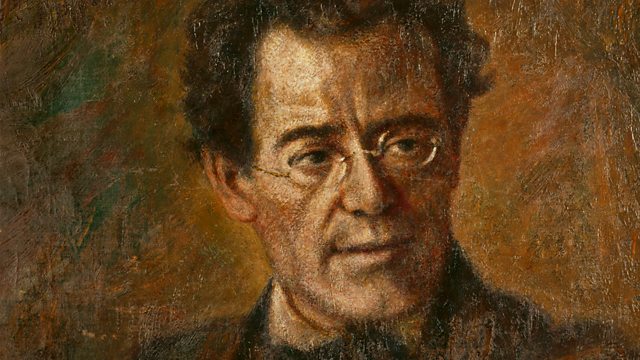
Mahler's Adagietto
Music lovers describe the part that Mahler's beautiful Adagietto from his 5th Symphony has played in their lives. From 2011.
Gustav Mahler wrote his 5th Symphony during the summers of 1901 and 1902.
The Adagietto is the 4th movement which is thought to have been inspired by falling in love with Alma who he married around this time.
This single movement is the composer’s most well-known piece of music. It was famously used in the 1971 Luchino Visconti film Death in Venice. It was also conducted by Leonard Bernstein at the mass at St Patrick's Cathedral, New York on the day of the burial of Robert Kennedy.
Composer David Matthews explains the significance of this piece in Mahler's output.
Psychoanalyst Anthony Cantle describes listening to it with his mother during her last days of dementia.
Malcolm Reid tells how this piece signified a change in himself as a young man in the British police force with narrow, racist views, to hearing it in Australia and shifting him to becoming a liberal.
And Helen Epstein explains why it was played at her mother's funeral.
Series exploring famous pieces of music and their emotional appeal.
Producer: Rosie Boulton
First broadcast on BBC Radio 4 in March 2011.
Last on

Music Played
![]()
Philharmonia Orchestra (Aline Brewer on harp)
Adagietto: Sehr langsam
- Mahler: Symphony No.5.
- Telarc.

Credit
| Role | Contributor |
|---|---|
| Composer | Gustav Mahler |
Broadcasts
 Tue 29 Mar 201113:30BBC Radio 4 FM
- Sat 2 Apr 201115:30BBC Radio 4 FM
- Fri 18 Nov 201618:30BBC Radio 4 Extra
- Sat 19 Nov 201600:30BBC Radio 4 Extra
- Tue 11 May 202118:30BBC Radio 4 Extra
- Wed 12 May 202100:30BBC Radio 4 Extra
- Fri 15 May 202610:00BBC Radio 4 Extra
- Fri 15 May 202616:00BBC Radio 4 Extra
- Sat 16 May 202600:00BBC Radio 4 Extra
Featured in...
![]()
Soul Music—Soul Music Mixtapes
Music that has a powerful emotional impact on musicians and listeners alike.

Why Sam Cooke's 'A Change Is Gonna Come' became a Civil Rights anthem

Watch the animation - Professor Mary King describes how the song became a symbol of hope.
Podcast
![]()
Soul Music
Series about pieces of music with a powerful emotional impact.