The Star-Spangled Banner
Exploring the impact of America's national anthem, which is set to the tune of an English social men's club song. From 2016.
America's national anthem was written by a lawyer, Francis Scott Key, after watching the British navy bombing Fort McHenry in 1814.
It was set to an English social men's club song and recognized as the national anthem in 1889. Notoriously difficult to sing, and traditionally played at public sports events and orchestral concerts, the anthem has inspired emotion and attracted controversy.
We hear from:
* Dr John Carlos who, along with Dr Tommie Smith, raised his fist on the Olympic podium in the Mexico City Olympics in 1968, as the anthem was played.
* Jose Feliciano who sang the anthem at the 1968 World series and provoked criticism.
* Conrad Netting IV who discovered the truth about his fighter pilot father's history, which led him to a cemetery in Normandy.
* Writer Crista Cloutier who associated it with President Obama's election.
* Members of the Coldstream Guards band, who played the anthem at the changing of the Guard at Buckingham Palace on the day after 9/11.
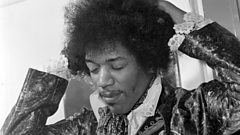
* Leon Hendrix, Jimi's brother, who was in the army at the time of Woodstock, and was put on 'potato peeling duty' because of the 'dishonourable' version his brother had played.
Producer Sara Conkey
First broadcast on BBC Radio 4 in November 2016.
Last on

![]()
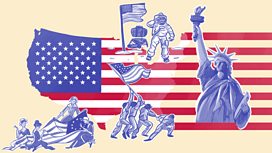
Why do Americans love their flag?
How The Stars and Stripes became an emotional symbol of a nation.
Clip
Broadcasts
 Tue 1 Nov 201611:30BBC Radio 4
- Sat 5 Nov 201615:30BBC Radio 4
- Fri 2 Feb 201818:30BBC Radio 4 Extra
- Sat 3 Feb 201800:30BBC Radio 4 Extra
- Tue 28 Jun 202218:30BBC Radio 4 Extra
- Wed 29 Jun 202200:30BBC Radio 4 Extra
- Fri 3 Jul 202610:00BBC Radio 4 Extra
- Fri 3 Jul 202616:00BBC Radio 4 Extra
- Sat 4 Jul 202600:00BBC Radio 4 Extra
Featured in...
![]()
250 years of the United States
Explore the history & stories of the U.S in the 250 years since it declared independence.
Why Sam Cooke's 'A Change Is Gonna Come' became a Civil Rights anthem
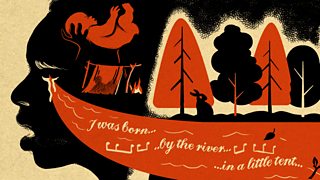
Watch the animation - Professor Mary King describes how the song became a symbol of hope.
Podcast
![]()
Soul Music
Series about pieces of music with a powerful emotional impact.