‘He recorded me collapsed on the bed drunk’
A campaign has been launched to change the law to stop abusers sending ‘culturally sensitive’ images which could harm a person’s reputation in their community. BBC Radio 5 Live has been speaking to a Muslim woman whose ex-husband secretly recorded her drinking alcohol and having sex.

“He thought spreading around these videos and photos would dishonour me and humiliate me.”
Sara (not her real name) was born and brought up in Britain. When she was 20 she entered an arranged marriage and moved to Afghanistan.
Her husband was physically abusive and controlling and isolated her from her relatives.
Sara eventually managed to escape him and move back to the UK. But her problems didn’t end there.
While trying to enjoy a new life as a student, Sara was besieged with constant threats from her ex.
If she tried to ignore him or block him, the threats grew.
He told her: “If you don’t reply to my texts and my calls I will tell everyone you were not a virgin and I’ll send someone to your door to kill you.”
He would taunt me with these photos and media months later"
In Spring 2020, she ceased all contact with him but days later, she found out he had been sending her university friends sexual recordings of her he had made without her knowledge.
He also sent videos to her family that he had secretly filmed of her when she was drunk.
She told 5 Live’s Naga Munchetty: “He recorded me collapsed on the bed drunk. He recorded me throwing up and he would taunt me with these photos and media months later.
“He knows that I’m a quite shy sort of person and he knows that it’s a very dishonourable thing, especially in the Afghan culture, for a girl to drink alcohol - especially in the presence of men,” said Sara.
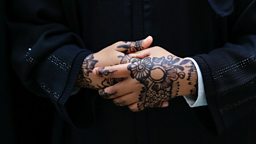
The Muslim Women’s Network is campaigning to change the law to make the abuse of culturally sensitive images a crime. These are pictures or videos that may seem innocent to large sections of the population but are considered shaming in certain cultures and faiths. Examples include a Muslim woman not wearing a hijab or talking to a man who isn’t her husband.
Nazmin Akthar, co-chair of the Muslim Women’s Network, said Sara’s case is extreme but there are many women in the UK being abused in this way.
She knows of one teenager who ended up being sexually exploited because of an image of her wearing shorts and a vest top.
The Law Commission has recently finished a consultation on reforming the laws around intimate image abuse to better protect victims. It highlighted the difficulty in a criminal offence being defined differently according to the beliefs of particular groups within society. The danger is someone could be prosecuted for innocently sharing a photo of a friend.
But Nazmin said it is always “clear cut” when someone is being threatened or blackmailed.
“You know that the perpetrator will…know that this particular image is going to cause problems for the victim.
“There will be genuine cases when one friend just isn’t aware of the cultural factors involved and has mistakenly – innocently – uploaded pictures or shared pictures. We’re not looking to criminalise that at all.”
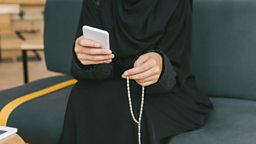
Maria Miller is a Conservative MP and the former Minister for Women and Equalities. She campaigned to make posting online revenge porn a crime.
She said image-based abuse and how it was recognised in the law is “very limited at the moment”.
“It’s going to take time to get these laws right,” she said.
“These are incredibly sensitive issues. When it comes to any intimate images, people’s views on it will be different - not just because of their religion or culture, but because of their experiences of life or maybe their age or their background,” she added.
The Law Commission is due to report back on its consultation later in the year.
It’s going to take time to get these laws right"
Away from the law, Nazmin said society needed to change its attitudes.
“We have an unhealthy obsession across all communities and cultures with so-called virginity, with sexuality and we need to stop obsessing with these concepts.
“All these abusers are able to take advantage of vulnerable young women and other victims because they are too frightened to go to their parents to tell them ‘this is what’s happening to me’ because of the stigma attached to being sexually active and this obsession with being a virgin.
“We need to change these attitudes now."
Sara reported the abuse to the police who said there was a case to extradite her husband to the UK to face charges.
But she was scared what would happen if he were released on bail.
“He sent me and my family rape and death threats,” she said. “I don’t feel safe. If he were released on bail he would definitely come for me.”
Sara is still married to her ex and is trying to find the funds to divorce him through both the Sharia court and the civil court.
The experience has left her feeling hopeless about the future. She is on a waiting list for counselling.
“I constantly have nightmares, I constantly have anxiety that seems uncontrollable because there’s constant stress when there’s no solution to your problems.
“I don’t think I’m going to be completely free ever and that’s my worry every single day.
“When I see my classmates or people my age, I sometimes envy their freedom and the fact that they’re not in this situation because I feel like I’m in the worst of the worst. There’s no solution. Even when I get a divorce he’s not going to give up.
“He’s going to continue stalking me online, he’s going to use contacts to stalk me, and that is my huge fear.”
- Listen to 5 Live on the free BBC Sounds app.
- If you have been affected by the issues raised in this article, the BBC’s Action Line website has information which can help.