Escaping the London theatre ban
Shakespeare’s company of the time, Chamberlain’s Men, performed in Rye in 1597 as part of a lengthy tour which took in big chunks of south east England.
It must have been a challenging tour, several hundred miles across an eleven week period, taking in Faversham, Dover, Bristol, Marlborough and Bath, as well as Rye.
![]()
Much ado near me
Hear more Shakespeare stories on BBC Local Radio.
![]()
Shakespeare Festival 2016
The BBC celebrates the genius of the bard.
It was, however, a popular route with players, and arguably not as difficult terrain as some of the Northern tours.
This tour was arguably the most difficult the company was to undertake - nearly 500 miles across an 11 week period.
We know for sure, from documentary evidence, that they were paid £1 for the performance by the town authorities in Rye, and although it can’t be proved for certain, academics believe there is a fair chance that Shakespeare himself was with the troupe.
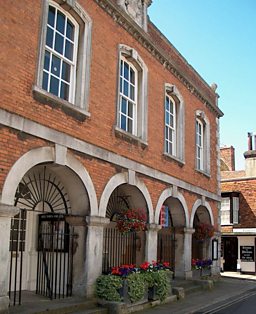
The documents, collated by The Records of Early English Drama (REED Project), don’t tell us where the players performed but civic sponsored productions often took place in the local town hall. In Rye’s case, this probably meant performing in the Court and Market House.
The old Court and Market House does not survive today, but it stood on the same site as the present eighteenth century Town Hall, which gives us an idea of the size of the venue.
The Lord Chamberlain’s Men’s audience in Rye could have been sizeable and socially diverse.
Civic-sponsored performances were often staged before the mayor, the corporation and local people so the Chamberlain’s Men’s audience in Rye could have been sizable and socially diverse.
The town records don’t mention which play or plays Shakespeare’s troupe performed in Rye, but their touring repertory at that time probably included Shakespeare’s latest plays: Romeo and Juliet, Richard II, King John, The Merchant of Venice and I Henry IV.
Given Rye’s importance as a port and trading centre and the current topicality of anti-Semitism in the wake of the execution of Dr Roderigo Lopez (one-time physician to Elizabeth I, and suspected secret Jew) for allegedly conspiring to poison the queen in 1594, Shakespeare and his peers might have expected The Merchant of Venice, with its Jewish antagonist and commercial backdrop, to be of particular interest to the people of Rye.
Shakespeare on Tour
From the moment they were written through to the present day, Shakespeare’s plays have continued to enthral and inspire audiences. They’ve been performed in venues big and small – including inns, private houses and emerging provincial theatres.

BBC English Regions is building a digital picture which tracks some of the many iconic moments across the country as we follow the ‘explosion’ in the performance of The Bard’s plays, from his own lifetime to recent times.
Drawing on fascinating new research from Records of Early English Drama (REED), plus the British Library's extensive collection of playbills, as well as expertise from De Montfort University and the Arts and Humanities Research Council, Shakespeare on Tour is a unique timeline of iconic moments of those performances, starting with his own troupe of actors, to highlights from more recent times. Listen out for stories on Shakespeare’s legacy on your BBC Local Radio station from Monday 21 March, 2016.
You never know - you might find evidence of Shakespeare’s footsteps close to home…
Craig Henderson, BBC English Regions
![]()
Shakespeare Lives
The nation’s greatest performing arts institutions mark 400 years since the Bard's death

Related Links
Who were The Lord Chamberlain's Men?
The Lord Chamberlain’s Men was a company of actors formed during the reign of Elizabeth I in 1594.
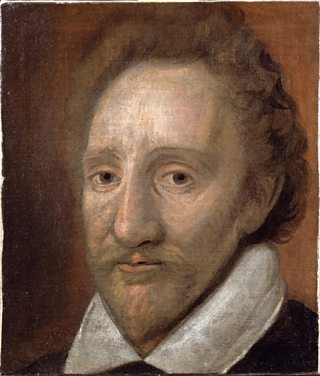
Shakespeare wrote for this company for most of his career, though their name changed to the ‘King’s Men’ when King James I came to power in 1603. It was a great honour for the troupe to be given royal patronage.
Famous Shakespearean actor Richard Burbage played most of the lead roles in the Lord Chamberlain’s Men – Hamlet, Othello, Macbeth and King Lear. Shakespeare himself performed some secondary roles with the company.
Their original patron however was Henry Carey, 1st Baron Hunsdon, who was then the Lord Chamberlain in charge of, among other things, the court entertainment.
The Lord Chamberlain’s Men were previously formed from a company of players called Lord Strange’s Men. This came about on the death of Lord Strange and the departure of the company's lead actor, Edward Alleyn.
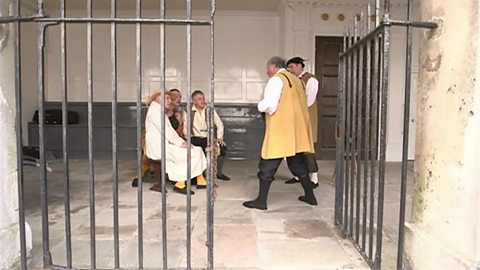
Shakespeare's players escape London theatre ban with a tour of the South East
A look back at Shakespeare's impact on Rye
Shakespeare on Tour: Around Sussex and Surrey
![]()
'New Beginnings' in Guildford
The Guildford Shakespeare Company are celebrating their tenth anniversary
![]()
Prince of Wales attracts star Shakespearean actors
King George IV attracts star actors to Brighton
![]()
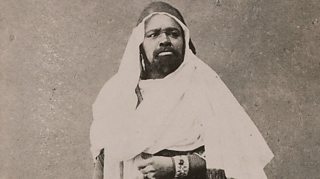
Ira Aldridge
The first black Shakespearean actor
Shakespeare on Tour: Around the country
![]()
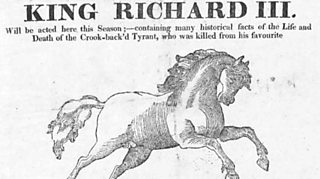
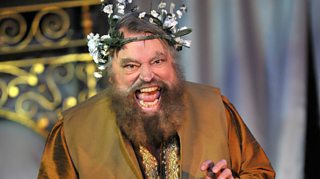
A horse! A horse! My kingdom for a horse!
King Richard III's horse White Surrey is the star of the show
![]()
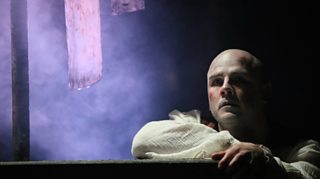
Modern day Macbeth for Corby steel town
The adaptation encouraged younger viewers to connect to Shakespeare
![]()
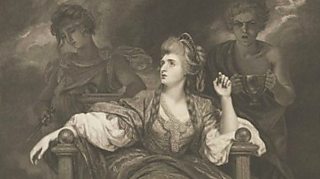
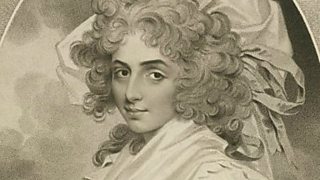
Sarah Siddons plays Hamlet in Liverpool
Actress becomes first woman known to have played Shakespeare's Prince of Denmark
![]()
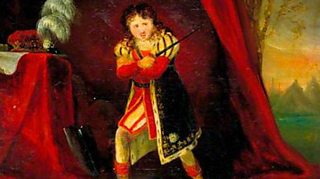
Child prodigy actor prepares to retire as he headlines in Newcastle
W.R. Grossmith says farewell to the stage at 11