Walter Mosley on writing the new America
His crime stories were Bill Clinton’s favourites, his characters as hard-boiled as they come. Walter Mosley says Trump’s election will galvanise his opposition: “… now that the liberals and progressives realise that they have to actually do something in order to have the world that they want, exercising that muscle is going to make America better.”
Here’s the full text of his Radio 4 interview with writer and editor Robert McCrum, part of our America Rewritten series.
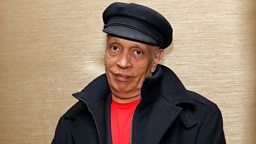
ROBERT McCRUM: Walter Mosley is an acclaimed black American crime writer who’s quite at home in a crisis. He came of age in the Watts riot of 1965. His ‘Easy Rawlins’ crime stories continue to address the African American predicament. In the rewriting of America that comes with every new president, Mosley’s keeping a beady eye on the transition from Obama to Trump – issues such as deprivation, race, inequality and crime. Mosley has seen America tear itself apart before. He thinks most presidents are a disappointment, so he’s not as troubled by Trump as some other writers we’ve spoken to in this series.
WALTER MOSLEY: Well it seems for America that this was a kind of necessary mis-step. What you have is the so-called ‘blue’ states, mostly on the coasts, filled with liberal and progressive people who have dismissed the mid-western and the southern states to such a degree, and for so long, that these people say, I don’t care who I vote for as long as it’s somebody who doesn’t have anything to do with you guys. Now it’s a kind of mistake to say that about Donald Trump, but you could see why people would make that mistake. And you also have the other problems in America. For instance, the white male who was in charge for centuries has been kind of winnowed down to being equal and, therefore, the expectations of that guy are something he’s not used to: so that’s another problem that has to get worked out.
RM: As a black American, do you have any sympathy for a Trump voter?
WM: Anybody who’s voting what they believe is what they need, what they deserve – especially if those things are jobs, medicine, security – I respect them for what they’re voting for. I might think that they’re making a mistake, or that there might be something wrong with them – maybe they’re sexist, maybe they’re racist – but I can’t just say, well there’s a Trump voter. All kinds of different people voted for all kinds of different reasons: many of those reasons, I have respect for.
RM: And when you compare Obama’s inclusiveness with Trump’s exclusivity and his appeal to a very specific demographic, does that trouble you?
WM: Obama’s inclusiveness didn’t help the ‘blue’ states. We were still making fun of the people in the so-called ‘red’ states. We were still turning our backs on them, calling them stupid, calling them hicks, calling them people who didn’t really understand how the world works. So Obama’s inclusiveness was great as far as Obama was concerned, but as far as America was concerned, I don’t think we caught that virus from him: I don’t think that we started to feel inclusive.
RM: Do you think Trump won the election or did Hillary lose it?
WM: That’s a very hard question. I think that Hillary is a Clinton who is also a deep part of the political machine. And I think there’s an underlying sexism in America that we don’t realise, but beyond that I think that she didn’t represent something new to America. She represented the old. She said, ‘Well I’m a part of everything. I know everything, I’ve been everywhere, I’ve been the senator, I’ve worked with these people.’ And like me, people were saying, ‘well if all you people have been doing all this stuff, how come things haven’t changed?’ Now of course it’s the voters’ fault that things haven’t changed, not the leaders’ fault, but what you gonna do?
RM: And why was it that black America didn’t turn out for her in the way that they turned out for Obama as a black president; they weren’t mobilised, were they?
WM: I don’t think that you really felt anything very strong about it. I don’t think that black America, number one, was afraid of Trump on the racial front as a rule...
RM: They’re not afraid of him?
WM: … because if we were afraid, we’d be voting for whoever who was against him. Fear is a great motivator for the vote. Not turning out for her… Most black Americans are poor or working class. Let’s not say poor: most black Americans are working class people who are in trouble, need help – thinking that Hillary’s going to help them? I don’t think people thought that.
RM: Walter, you grew up in Los Angeles and one of the formative experiences of your early years were the Watts riots. Could you describe those to me and could you also describe the effect of the experience on your emergence as a creative writer?
WM: The Watts riots were in August of 1965. I was 12 years old. For five days, people looted and burned and shot. Forty-three people were killed, something like that. It was a major urban upheaval – a revolt. I was just absorbing it, watching it, a kid thinking about it and not really understanding it. But then I went home and the most important thing happened. My father was sitting in the living room, which he never did, and he was drinking – which he often did – but he was drinking a lot and he was near tears. And I went to him and I said, ‘Dad, what’s wrong?’ And he says. ‘The people are out there rioting. They’re fighting. They’re fighting against something I’ve been fighting against my entire life and I want to go out there and I want to shoot and loot and burn, but I know it’s wrong. But I really want to. I want to go out there, but I can’t go out there.’ And I really think that was the biggest thing I got out of the riots – the impact on my father, how deeply he was moved and how ambivalent he was about it; and I think that that was true of most of black America at that time. The most interesting thing about the impact of the riots was that most white people in America at that time had an idea of black people that, well, they didn’t like them, they weren’t quite equal, there was problems with them, but they weren’t worried about them. In a way … this conversation didn’t really happen, but it’s what happened. What people got to know is, how many people in the black community feel like this? The answer comes back 99 per cent and the other one per cent are really mad. And that’s where America began to change, and also where people started to say, hey we are dealing differently with black people specifically – it should have been ‘people of colour’ – but black people specifically, and I think it gave a lot of credence to the Civil Rights Movement. So Martin Luther King started looking a lot better, when he’s talking about peaceful change, when the cities – Detroit, New York – all these cities are going up in flames.
RM: Are you making an unconscious comparison with then and now in the sense that in this recent election there was a constituency which had been ignored and not listened to which suddenly come roaring back to life with the vote for Trump?
WM: I think that there’s a constituency that feels ignored and not listened to. I don’t think it’s exactly the same. It’s not a group of people coming out of slavery and ‘Jim Crow’ and segregation. It’s a group of people who caused slavery, ‘Jim Crow’ and segregation saying, hey we’re not doing that anymore. How come we don’t get the first cut of the pie? But yes, I think it’s similar in as much as that people feel that they have been ignored and want to make America great again.
RM: What does that mean?
WM: Well I think one of the wonderful… one of the brilliant things about Donald Trump, he can say something to you that can mean different things. Certainly to some people it means make it white again. To other people it means making it economically stable again. To other people it’s making it a world power again. Different people had different responses to him saying that and I think that was actually a smart thing to say.
RM: Your characters are very wide-ranging and they reflect a very wide range of experience that you’ve had: Easy Rawlins is a man of the people in many respects. If you were to write a new Easy Rawlins novel – in the present, in the age of Trump, would it be different?
WM: I don’t think so. It would be different because it would be in a different time, because all my books are in different times. If I was writing let’s say another Leonid McGill novel which is current and under Trump… I probably will do that. I have to see what he’s going to do. I don’t really know what he’s going to do. If it’s bad enough, I won’t be putting it in a novel. I’ll be like talking about it, doing things, writing something that’s non-fiction about it. From my point of view, we’ve had a lot of bad Presidents. I might even say mostly bad Presidents...
RM: So who would the bad ones be from your point of view?
WM: Well listen, I think Reagan was, I think Kennedy made some big errors. I think Eisenhower was, even though it was a time of great stability in America. I dislike Bush Senior and dislike even more Bush Junior who basically created ISIS: so he’s not only a problem for America – he’s a problem for the entire world.
RM: And do you accept Trump’s analysis that America is ‘broken’?
WM: Huh, that’s an interesting thing. As a general term, yes. When it comes to the details, what’s broken – no. The idea of what’s broken is us not being active, not understanding how the world is. I was talking to a person the other day – I was being interviewed – and they said, ‘Well America’s a democracy.’ And I said, ‘Well, it’s not.’ They went, ‘Oh yes, it’s a democracy.’ I said, ‘No it’s a republic.’ Republic is different than democracy. Ancient Greece had a democracy where they could actually vote somebody out of the country. We have individual rights which supersede the vote, and I mean really our ignorance is stupendous. And I honestly think the so-called – because I don’t really believe in the existence of white people – but so-called ‘white people’ are the ones who have been the most hurt by this because they’ve lost their history, but they don’t know they’ve lost their history.
RM: What do you mean you don’t believe in white people?
WM: Well there’s no such thing as white people. I mean the idea of … When you’d go to Europe before the new world, if you said a Druid was a Pict, you’d get shot with an arrow. If you said a Viking was a Greek, or a Spaniard was a Romanian. If you go to Poland, it must be at least 30 percent Asian genes there from the hordes from the East. The idea that there’s a white race is ridiculous.
RM: And to go on from there, America has come to represent this sort of rainbow of peoples and faiths and cultures, and one of the things that strikes me as a visitor in the run-up to the transition to Trump is how America is not broken. It seems to be discussing things, arguing, it’s debating in the way that we are now. So that although there’s a lot of pessimism about the transition to Trump, there’s also the [fact that] society’s been strangely galvanised by it.
WM: I think that that’s true. I think it’s very true. And in a lot of ways… In New York people are depressed, they’re so depressed: ‘Oh my god, this is the worst thing that ever happened.’ I say, well I’m sure there’s somebody in Syria would do an apartment swap with you if you’d like it or maybe the Philippines or maybe Congo. Really there’s so many places in the world where it’s really, truly horrible: they have death squads in Manila. It’s a troubling time, but there’s so much potential and possibility now. And I think that now that the liberals and progressives realise that they have to actually do something in order to have the world that they want, exercising that muscle is going to make America better.
RM: Okay so coming to you, Walter, and your muscle, you’re a writer and historically America has always been a society which from the very beginning writes itself or rewrites itself – reinvents, rewrites and repositions itself in the world. Do you see yourself playing a role in that in the next period?
WM: Well, in a kind of a pedestrian way, yeah. For instance, I have conversations like this. I just wrote a book with OR Press called Folding the Red into the Black. It’s a short little book, so I guess I was really ambitious. I’m trying to make a critique of both capitalism and socialism. I’m saying that Thomas More’s notion of Utopia is the problem we’re facing today; that you can have a perfect society, that you can have a perfect government. I’m much more the ‘Untopia’ kind of guy thinking that we can’t be perfect Communists. Honeybees are perfect Communists. Capitalism can’t be unfettered because profit is not infinite. It’s based on labour, which is finite. And so [I’m] talking about taking the best of those things. So those are the kind of arguments I have, those are the kinds of things that I’ll talk about. Of course I’ll talk about Bush or Trump or Pence if he takes over. I’ll do it. But again, like only as one voice that’s in dialogue among many because we’re all valuable. It’s important that we all get in it and we stop this hierarchical thinking – who’s the best, who’s the richest, who’s the smartest. We’re all working together. If you put somebody alone on an island, they’re nobody.
This transcript has been slightly abridged.