Richard Ford on writing the new America
Novelist Richard Ford was wrong about the outcome of the US election. But being wrong isn’t such a bad thing, it’s a creative stimulus: “…the fact that I was so completely wrong about it has made me doubt what I understand about my country; that doubt has got me interested again in finding out just the ways in which I am wrong about it.”
Here’s the full text of his Radio 4 interview with writer and editor Robert McCrum, part of our America Rewritten series.
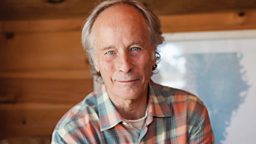
ROBERT McCRUM: Richard Ford is a novelist whose characters live in ‘red state’ America. Frank Bascombe, the protagonist of his novel The Sportswriter, might not have voted for Donald Trump, but he would know plenty of middle-aged white males who did. And Ford, like his characters, is an all-American guy: he shoots, hunts and loves to argue the toss. He’s also an instinctive libertarian, passionate about the integrity of words and ideas, and the freedom they can bring.
The election of Donald Trump has galvanised his imagination in a way that he’s still coming to terms with. In Ford’s company, you can see where the Declaration of Independence came from: but did he see Trump coming?
RICHARD FORD: No I did not and I wrote a lot of things in the public press to say that it was an impossibility. Not a virtual impossibility, but an impossibility. And the fact that I was so completely wrong about it has made me doubt what I understand about my country; that doubt has got me interested again in finding out just the ways in which I am wrong about it.
The people who voted for Trump are people that I ought to know because I’m from the South: I’m from a red state. I ought to have a different sense of those people’s lives …
RM: And you’re a white male, aren’t you?
RF: So far. Because look, they’re not all bigots, all right? They’re not all racists, they’re not all Obama-haters. Some really are rust belt unemployed who think, rightly or wrongly, that immigrants are taking their jobs.
RM: And if a young student at an American university came to you and said that they feel some of the things you’ve described to me, what would your advice be to such a young American faced with a Trump presidency?
RF: Register to vote. And also, once you register to vote, vote, and vote your conscience. That’s no different really from what I would have advised somebody 10 or 20 years ago. I wrote a piece in The Guardian in which I said basically, as regards this last election, blame ourselves for this. We are the citizens of this country. Blame ourselves if we have someone like Trump, and our only recourse is to fall back upon our sense of citizenship.
RM: You were born in 1944, so you’re an older man. How would the young Ford have responded to this?
RF: The young Ford actually was born in Jackson Mississippi into an apartheid environment. God only knows what I would have experienced at that point with everybody around me sort of intolerant to the prospect of blacks gaining a fair shake at things. When your environment is toxic like that, as mine was, who knows what I would have thought. I felt lucky to be able to get out of Mississippi in 1962 and most of what I have done with myself intellectually since then has been to try to cure myself of that.
RM: That’s really interesting because, for the founding fathers, if we go back to the beginning, race – which is what you’re partly talking about – was one of the issues that they were afraid of, wasn’t it? I think there’s a famous letter where Jefferson talks about the race question awakening him in the night ‘like a fire bell’…
RF: Jefferson was peculiarly compromised by the race issue. The founding fathers could see into the next century, that race was going to become a problem because all of these people had been imported into the United States against their wills as chattels; they were soon going to accumulate and were going to need to be reckoned with, – and it scared them to death, as it should have. It’s the founding fathers’ perfidiousness about race, in a way that they could understand.
RM: But you’re also saying, aren’t you, that race remains one of the great faultlines in American society?
RF: It will always be thus. When you have as many decades as we had in the United States in which again human beings were imported against their will as chattels and then an enormous civil war was fought to keep them as chattel, that just doesn’t heal up. Certainly not in my lifetime – probably not in anybody’s foreseeable lifetime – is the issue of race going to be solved in the United States. Even with as wonderful a man as Obama has been…
RM: Do you feel broadly speaking optimistic about the future of America?
RF: Well yes, and I do for some reasons. One is that Mrs Clinton got almost three million more votes than Mr Trump did: that is reason for optimism. There is reason to think that Americans, if they had to vote again today, might vote differently.
RM: So what were the voters’ motives in not voting for her?
RF: I think there were a lot of motives in not voting for her. There were all of those people who hated Obama who were in fact nativists and bigots, and who saw her as the possible President [who would] just carry on his programmes. There are people who didn’t vote for her who are simply nihilists, who want to wreck the government and destroy civil order. There are people who are social conservatives who held their noses and voted for Trump rather than Mrs Clinton simply because they wanted to assure the country of having the most conservative Supreme Court that we can have. And then there are people who are just simply ignorant, who don’t pay much attention to government, who don’t have an interest in government, and who are for that reason susceptible to being lied to by Trump and who were then lied to.
RM: Does Trump represent some kind of dark side of the American psyche?
RF: Yes. Unqualifyingly he does, but I don’t think it’s any darker than the English psyche or the Scottish psyche or the Eritrean psyche. I think there is a dark side to everybody’s psyche and you do your best to try to subordinate it to the better angels that you hear.
RM: So you don’t see this as a step towards American fascism?
RF: I think the steps toward fascism are often mincing little steps, and this is one mincing little step that could lead in that direction. But we have institutions of government, other branches of government which I think can forestall more steps toward fascism. But yes I do think that Trump’s directions – as far as his declarations would lead us to believe – are toward a more fascistic kind of society.
RM: One of the things we’ve heard about a lot since the election is the famous ‘checks and balances’. Are there enough checks and balances to balance an unstable situation?
RF: Institutionally there are. I think one of the balances or checks, depending, is the Supreme Court, but that is threatened now to become imbalanced. Congress of course is now run by the Republicans, both houses. These checks and balances are being somewhat vitiated, I think, by the outcome of the election. How Congress works is labyrinthine and complicated: I don’t discount the possibility that Congress will work as a check toward unrestrained Trumpism. I don’t know about the Supreme Court: it will depend to some extent both upon who is the next nominee, upon who persists from the last elections, and how the justices who are at present on the Court perceive Trump in a non-ideological sense. Is this a dark moment in American history? Yes it’s a dark moment in American history, there’s no doubt about it.
RM: Dark moments could be said to be the thing on which the playwright and the novelist feed. Do you feel inclined to feed on this dark moment?
RF: Let’s let that question go by, okay? That’s not a very interesting question. Does all art have to come out of bleakness? No of course not.
RM: But crises can generate artistic responses.
RF: Well crises is one thing. Dark moments are others, are something else. You would hope, I guess, that a dark moment would attract your attention. In a country where you feel both your residence and your sense of affiliation, for the sun to suddenly be occluded would catch your notice because it’s different from how it has been – particularly given the last eight years in the United States. So if it catches your notice and if that notice remains interesting to you, it could I suppose. But again, events have to again subside and they have to come back in different configurations and different unities and different coherences before – for me at least – they can become the subject of writing, of imaginative writing. So I never know where my notice is going to lead me. That makes me, as a writer, as disinterested as I would actually like to be.
RM: But – I put it to you – is this still an alarm call?
RF: Well sure, it’s an alarm call. But in that disinterested way, Obama’s election was an alarm call to a lot of American citizens, not necessarily just because of race but because of a lot of social concerns and a lot of social issues. I have to take interest in people with whom I do not agree and I think perhaps that is also a source of optimism. That’s the nature of liberty: liberty is the willingness to let people with whom you do not agree attract your attention and attract your interest.
RM: Can we go back to the very interesting thing you said at the beginning about your sense of doubt about your own society. Are you going to have to explore what that means in your own life, and in your own conduct as a writer?
RF: In my own life, I think it’s inevitable. If you’re going to go on being a citizen, if you’re not going to go live in Italy, then you have no alternative but to take an interest in it. That in itself means that you’re going to invoke your own imagination, to persist; to look at the consequences of your own actions and the consequences of others. So in that way there is a cause for optimism.
RM: It sounds to me as though your curiosity’s been aroused just listening?
RF: I’m interested in politics in the most rudimentary sense that I’m interested in what people do to gain a sense of agency in the environment where they live – and that’s what politics is.
RM: But isn’t this an unusually raw expression of politics?
RF: Trump is raw. Trump is an exponent for a lot of other kinds of rawnesses in the country which have probably been being overlooked by me perhaps, by people who vote Democrat perhaps. So we will do well, I think, to pay attention to things that we didn’t pay attention to. Not to the bigots, the racists and the nihilists, but to the people who have rightly felt that prosperity and optimism in America have somehow passed them by. Those are, in a way, my people. Those are the people I’ve been writing about all of my life. I meant to tell you this anecdote about Trump. When I was in the little town of Roy, Montana, I was hunting pheasants. I went in [to a store] and bought some peanuts. They were selling Christmas cookies in this place and I said to the woman as I was leaving, ‘Well, Merry Christmas.’ And she said, ‘Yes we can say that now because Trump is the President. And we don’t have to say “Happy Holidays” anymore.’
This transcript has been slightly abridged.