Ariel Levy on writing the new America
Passionate feminist Ariel Levy is adjusting to the shock of Trump’s victory: “I don’t like this. I don’t think it speaks well of my country. I’m embarrassed and I’m sad, and I think it’s a horror, but it’s not the rest of our lives. And I don’t think this is the beginning of the new normal.”
Here’s the full text of her Radio 4 interview with writer and editor Robert McCrum, part of our America Rewritten series.

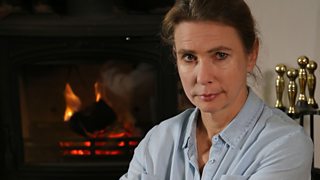
ROBERT McCRUM: Ariel Levy is a New Yorker and a prominent feminist intellectual. She is the author of Women and the Rise of Raunch Culture and a new book for the age of Trump: The Rules Do Not Apply. She’s a vociferous gay commentator with a keen interest in sexual politics and its interaction with the media. I wanted to ask her about Trump’s attitude to American women.
ARIEL LEVY: The night of the election, I was meant to be on a panel about what life under the first female president would look like, and I was all set to talk about tax credits for childcare costs, which would have made a huge difference in the lives of every woman I know.
RM: You must have thought hard about what it would mean to you to have a woman President in the White House. What was your imagined vision?
AL: Hillary Clinton, whatever her flaws were… are… I think she was someone who was going to be not just the first female President, but a very good President by any standards, and was going to give an illustration to this country that female competence is real. And that would have meant a great deal.
RM: Yet across the electorate, there were constituents from all those parts who voted for him. Can you explain that?
AL: I think that there was this enormous feeling that people didn’t want to feel… they didn’t want to vote for someone who sounded the way Hillary sounds. They’d had it with elites. Now why they think Trump is going to serve their interests, why they think there is such a thing as a blue collar billionaire (which is what he called himself and succeeded in convincing people he was), I have absolutely… I cannot fathom that. I have no idea how he pulled that off. It’s the oldest trick in the book, isn’t it? He just stirred up people’s resentments. And the real issues are that the economy does not work for a big swathe of America. Now that doesn’t account for all the voters, because plenty of people voted for him and it wasn’t [just] about that. But for the people who voted based on that, you can imagine why. I just don’t understand why they think he’s going to have this solution. How they think he’s going to bring back jobs that have been lost in a global economy, jobs that have been lost to automation; I don’t understand how people can imagine that.
RM: The word you haven’t used, [which] I’m interested in, is that you haven’t used the word ‘misogyny’. Do you think there was a misogynistic element to not voting for Mrs Clinton?
AL: Well it’s almost like a comic book. It’s almost ludicrous how stark the contrast is, right? You can have a really well-qualified, competent woman, or you can have a man who very literally says that he thinks it’s okay to grab women by the pussy. I mean that was the choice and that’s what people chose, and it’s chilling.
RM: So when you heard that clip the first time, did you think to yourself: that’s him done for?
AL: One hundred percent. I was ecstatic. When I heard that clip, I thought, oh my god, he’s dead – dead in the water. He is going to get beaten to a pulp – by a girl – and it’s going to be a repudiation of everything gross, and horrible, and lame, and old-school about misogyny. I had a grin from ear to ear that day.
RM: So here we are in the week of the Inauguration. Where do you, as an intellectual, and as a writer and as a woman… where do you go now?
AL: That is an ongoing question that I’m struggling with. For one thing – I remember this feeling from the Bush administration too, when the wheels were coming off there – that when you write about culture, as I do, it can make you feel a little frantic when the world’s falling down around you to think, how am I going to write about a comedian right now, after the latest terrorist attack or the latest horror out of the Trump Twitter [feed]. So that’s my challenge: to try to write about the subjects that I’m qualified to write about in a way that doesn’t feel irrelevant.
RM: Now you write for The New Yorker, which on the whole publishes longer pieces than would appear in a newspaper. And if we think of the American literary journalistic tradition, we think of the great journalists of the past, the great writers, the essayists and so forth, and we think of people who created a society in words and in print; and now we have a President-Elect who is essentially communicating through tweets of 144 characters: how do you parse the contrast between, on the one hand, where you’re coming from – this tradition of great distinction of literature and journalism and so on – against a man who’s expressing his ideas in 144 characters?
AL: Well, I think that those of us in print media have been feeling our role contract, and become increasingly less relevant now for quite a while… This is just the apex of it. When I started doing this 20 years ago, magazines still had some centrality in the culture. There was still a circumstance in which if there was a big story – not just in The New Yorker, but in lots of different publications – everyone would be talking about it for a couple of weeks. The internet has really changed that and has changed our ability to make a living too. So we’ve been contracting, and falling from our beloved position of prominence and centrality in the culture for a while: (laughs) this is just the most dramatic and ghastly example yet.
RM: So given the situation, given your predicament, where do you go now?
AL: Well where can we go? What’s our choice but to keep writing for a smaller group of people than we used to 20 years ago and with less centrality. We still do what we do. And The New Yorker, I would say, is still putting up an active and vigorous fight every issue against the Trump administration – through editorials and through investigative pieces. In every way we can, I think The New Yorker’s actively involved in being a voice of protest. What do we have? We have a free press that Trump is actively trying to intimidate and squash. The press is essential, and just because The New York Times got WMD [Weapons of Mass Destruction] wrong doesn’t mean there aren’t a million other things that The New York Times, The Washington Post and all the notable papers and publications in this country that aren’t just blogging a notion that comes into their head without any real reporting: those papers are a huge part of what we have, as a citizenry, to resist this. What else do we have?
RM: So Ariel, you’ve written in your journalism often about gay rights. How do you feel about that?
AL: I’m much more concerned about women’s rights and women’s health, because I think gay rights have succeeded so much in this country, to a point where it’s going to be very difficult for the Republicans to make any real headway on moving backwards on gay rights. I don’t think that there’s political momentum behind that. I think under Bush – [George] W. Bush, second Bush – it worked very well to use gay marriage as a wedge issue. But it’s done. We got gay marriage, and homophobia – gay bashing – is just not popular in this country the way it used to be. There’s been too much success on that front.
Hideously, bashing women is back. We never get past it. We never get tired of it. And Trump – mostly, I think just because he doesn’t think – says things beyond what the Republican Party ever even intended. No one has ever said before that there should be a punishment for women if they get an abortion. Not just, ‘we’re going to make it harder and harder’, [but] ‘we’re going to make it more and more arduous and expensive and dangerous for women to get this; and for poor women it’s going to become pretty much impossible.’ That’s old news. But to say there will be a punishment for women who make this choice about how they want to deal with their lives and their bodies, that’s brand new. And that guy’s the President of the United States. I’m much more worried about women’s rights and what this means for women than about gay rights.
RM: So as an American woman and an American writer in this situation that you now find yourself, what will you do, do you think?
AL: As a writer, you’d have to be like a weird, inanimate lump not to be affected by this, so that you can’t not write about it. So I’m not going to suddenly start being a political correspondent or an investigative reporter – that’s not what I was hired to do, and there are other people who are much better qualified to do that at my publication. But the next piece I’m writing, which is about the photographer Catherine Opie, inevitably a lot of what we ended up talking about was this election. One of the things that she’s famous for is doing this wonderful body of work [including] photographing the Obama Inauguration, the first one; what it meant to America to have the first black President was something that really interested her, and she wanted to be able to make people think about that visually. So there’s not going to be any subject I’m writing about where this isn’t going to factor in in some way, because this is our world now. There’s nothing this isn’t going to touch that I can think of.
And then as a citizen, I think that the only hope I have is that this will energise us and that being in a position of energised opposition, maybe we’ll get somewhere that we weren’t able to get in a position of defensive, hobbled power. What I mean by that is, from the minute Obama got in, his opposition quite literally (and disgustingly unpatriotically) announced in no uncertain terms, ‘We are going to oppose everything he does.’ Not, ‘we are going to oppose things that we think are bad for the country’; not, ‘we are going to oppose things that are in conflict with our values. [But this:] ‘Whatever he does, we will oppose him.’
RM: One of the things I take away from all this is, first of all, your optimism and your positiveness, and also I get a sense – and I’ve had this with other conversations, with other writers – of great cultural resilience in America, an ideological resilience. So that, while on the one hand you’ve got this vote which has changed the landscape in the way it has, on the other hand you have the mobilisation of writers and intellectuals to defend American values. So I want to ask you as we conclude, do you feel positive about the future?
AL: I don’t feel fantastic, I’m not going to lie to you. But I try to remind myself and some of my friends that, while Trump is in many ways unprecedented, things were pretty bad under George W Bush. I think we forget that: the fog of history goes over that and now people just see his sweet little face and his weird little paintings and they forget how many people died because of those wars that we never needed to have, and how Orwellian his appointments were: you know the person running the agency that’s supposed to protect the environment is in fact an oil magnate (laughs). That’s happening again and I just try to remember we got through it. Like, after that came Obama. You know… I don’t like this. I don’t think it speaks well of my country. I’m embarrassed and I’m sad, and I think it’s a horror, but it’s not the rest of our lives. And I don’t think this is the beginning of the new normal. I don’t think this is going to go on forever.
This transcript has been slightly abridged.