Playing for keeps: the BBC SSO at 80
3 December 2015
KATE MOLLESON reflects on 80 eventful years of the BBC Scottish Symphony Orchestra.
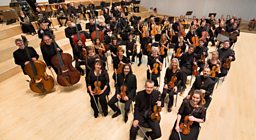
In late November 1935, the Radio Times ran a brief listing of beautiful understatement.
At 1pm on 3 December, the BBC Scottish Orchestra - Leader J. Mouland Begbie, conductor Ian Whyte, violin soloist T. A. Carter - would play a programme of orchestral excerpts by Cyril Scott, Simonetti, Scassola, Montague Phillips and Saint-Saens plus a selection of violins solos by Svendsen, Gossec, Elgar and De Falla.
The notice ends matter-of-factly: Time Signal, Greenwich, at 2.00. Hopefully the astute among Radio Times readers appreciated the magnitude of these few column inches. The 37-piece BBC Scottish Orchestra was officially born two days earlier on 1 December, 1935, and this odd assortment of orchestral sweet-meats was its first outing.
How far we’ve come. This week the BBC Scottish Symphony Orchestra (the illustrious ‘Symphony’ was added to the name in the late 1960s) celebrates its birthday with a programme that sums up the musical clout it has achieved over the past 80 years.
Thursday’s concert opens with a recent piece by the orchestra’s Artist-in-Association Matthias Pintscher — a German composer/conductor who is also music director of one of the world’s most prestigious contemporary music outfits, the Paris-based Ensemble intercontemporain.
The concert closes with Mahler’s Das Lied von der Erde. No orchestra in the UK has a better nous for playing new scores or big-boned romantic repertoire.
So how does a chamber studio ensemble grow from playing Montague Phillips into a world-class symphony orchestra championing Pintscher and Mahler?
Hard to believe it now, given the BBC SSO is so closely associated with its Glasgow home at City Halls, but this was originally an Edinburgh ensemble, formed at the BBC’s Scotland headquarters which were then on Queen Street.
The orchestra wasn’t without its birthing problems: freelance musicians and the part-time Scottish National Orchestra (eventually the Royal Scottish National Orchestra) protested that a new fully-salaried BBC band would take their jobs, which inevitably it did.
The 37-piece BBC Scottish Orchestra was officially born two days earlier on 1 December, 1935
This was a period of expansion for the corporation, with orchestras being formed up and down the country.
By the beginning of the 1930s, the BBC was the world’s largest employer of musicians.
When BBC Scotland moved west in 1937 the orchestra went with it, into the characterful home it would occupy for seven decades at Queen Margaret Drive.
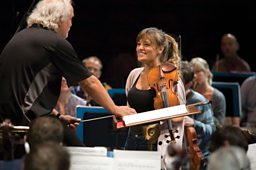
80th Birthday Concert on BBC Radio 3
![]()
BBC SSO's 80th birthday concert
The BBC SSO and Matthias Pintscher performed Pintscher, Mozart and Mahler at City Halls, Glasgow on 3 December 2015.
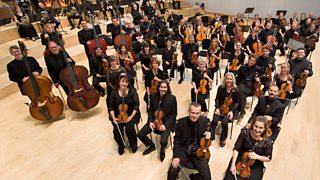
Timeline
![]()
80 Years of the BBC SSO
Travel back in time through 80 years of history from 1935-2015
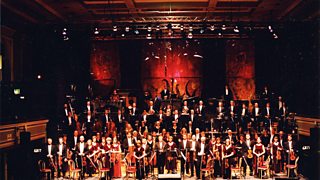
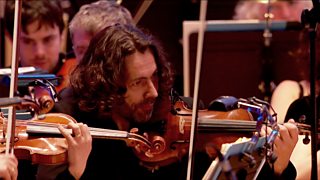
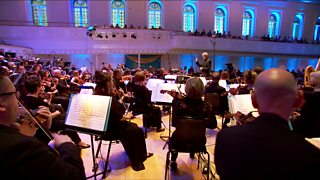
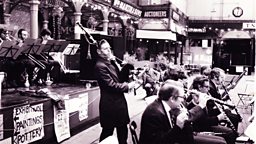
The new studio there had more space, more space meant more musicians, and the orchestra expanded in size and repertoire. The symphonies of Sibelius became an early mainstay, then a strange and wondrous new sound world.
By the beginning of the 1930s, the BBC was the world’s largest employer of musicians
During the Second World War musicians and conductor took turns keeping Home Guard watch on the roof of QMD, and Ian Whyte received a telegraph from Sibelius himself to thank him for broadcasting his symphonies on the BBC’s Overseas Service.
After the war came the first of what turned into a regular ordeal for the orchestra: the threat of being axed by BBC cost-savers in London.
Public outcry prevented it in the late 1950s, and again in 1969, when Britten and Menuhin were among those who voiced their protest, and again in 1980 after a tough musicians’ strike.
Top conductors and orchestras around the world sent their support to Glasgow and the BBC eventually U-turned, but the orchestra emerged from the strike depleted, having lost several key members and without a chief conductor. Uncertainty raised its head again twice in the 1990s; when question marks hung over the orchestra’s future around the time of the Scottish referendum, the feeling was all too familiar.
But the charisma and commitment of the musicians and conductors associated with the BBC SSO meant it never gave in, and over the decades that cast of formidable characters helped shape the orchestra’s musical identity, too. Early fixtures were Whyte, a young Colin Davis and the Motherwell-born Alexander Gibson.
A turning point came in the 1960s under Norman Del Mar, a barnstorming chap with mighty sideburns and an even mightier appetite for new scores.
He took the orchestra through a vast amount of modern repertoire, including the UK premiere of Stockhausen’s Gruppen in 1961 alongside Alexander Gibson and John Carewe. If the BBC SSO is now one of the best orchestras in the world at playing contemporary, that legacy can be traced back to Del Mar.
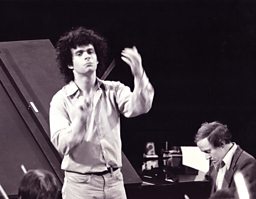
In the late 1970s came a bouncy young thing by the name of Simon Rattle, who spent two years with the orchestra as Associate Conductor and cut his teeth on major repertoire by Stravinsky, Mahler and more.
“Everything I consider to be at the centre of my repertoire was discovered with the BBC Scottish,” he would later say. “The Rite of Spring …. I still haven’t been able to equal that performance with any other orchestra.”
Then in the 1980s there was Jerzy Maksymiuk, an explosively energetic Polish firebrand who championed the likes of Xenakis and drilled the orchestra into shape.
BBC SSO soundtracks
And so it went. Osmo Vanska in the 1990s, soaring through Sibelius symphonies. Ilan Volkov in the 2000s — youngest ever Chief Conductor of any BBC orchestra and dauntless in the new repertoire and vibrancy he brought to the stage.
In the late 1970s came a bouncy young thing by the name of Simon Rattle
Now Volkov is back with the BBC SSO as Principal Guest Conductor and he spearheads an annual experimental music festival, Tectonics, that has brought pioneers like Alvin Lucier, Christian Wolff and Eliane Radigue to Glasgow.
More than that, Tectonics has seduced an inquisitive new audience into the concert hall in a way most orchestras aspire to but few ever really achieve. I wonder what Whyte or Del Mar would think about their band becoming quite so hip.
Two things happened roughly a decade ago that consolidated the status of the BBC SSO.
One was the refurbishment of City Halls, freshly done up with a bright, glowing interior and a joyous acoustic. The experience of hearing live orchestral music here is one of the best in the Europe.
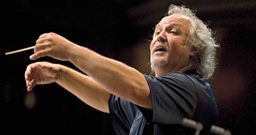
The other was the return home of the great Scottish conductor Donald Runnicles, whose seven years at the helm have included unforgettable performances of heavyweight Germanic repertoire like Wagner’s Tristan und Isolde and Alban Berg’s Wozzeck.
Next year he passes the steering wheel to Thomas Dausgaard — a Dane respected as a rigorous and unfussy champion of lesser-known Scandinavian voices like Nørgard and Langaard. Runnicles will be a tough act to follow — but the BBC SSO is a tough orchestra. Watch this space.
The BBC Scottish Symphony Orchestra’s 80th birthday concert is at City Halls on 3 December, broadcast live on BBC Radio 3. Kate Molleson is a music critic for The Guardian and The Herald.
Related Links
More from BBC Arts
![]()
Picasso’s ex-factor
Who are the six women who shaped his life and work?
![]()
Quiz: Picasso or pixel?
Can you separate the AI fakes from genuine paintings by Pablo Picasso?
![]()
Frida: Fiery, fierce and passionate
The extraordinary life of Mexican artist Frida Kahlo, in her own words
![]()
Proms 2023: The best bits
From Yuja Wang to Northern Soul, handpicked stand-out moments from this year's Proms