Countering terrorism with music: The World Orchestra for Peace at UNESCO in Paris
26 November 2015
The world was rocked by the horrific events in Paris on 13 November, in which a series of co-ordinated attacks by Islamic State terrorists claimed 130 lives. Yet amid the chaos and tragedy, one beacon of hope and defiance shone out. Just three days later, with the city on lockdown and all venues closed due to heightened security, the World Orchestra for Peace was granted special permission to perform a tribute to the victims at UNESCO's Paris headquarters. Below, the orchestra's director and co-founder CHARLES KAYE reveals how leading players from around the world came together in the French capital within 36 hours of the tragedy, and we present video excerpts from the occasion.
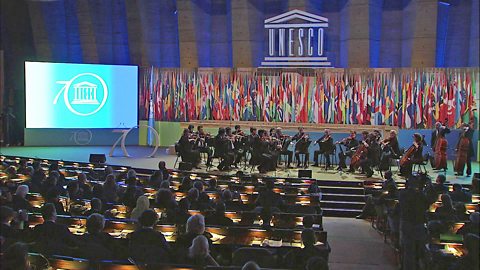
The World Orchestra for Peace perform Barber's Adagio for Strings
Recorded at UNESCO's Paris headquarters on 16 November 2015.
On Monday 16 November, an extraordinary event took place at the Paris headquarters of UNESCO, the world guardians of culture, heritage, science and education.
Some 23 string players of the World Orchestra for Peace - leading players of 21 orchestras, representing 16 nationalities - defied the odds and came together after the terrorist atrocities of Friday 13th, to prove (in the words of their founder, the conductor Sir Georg Solti) "the unique power of music as an ambassador for peace".
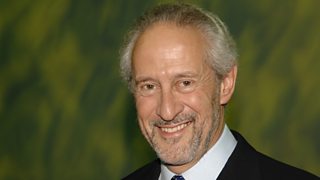
The event was originally planned as the climax of celebrations marking the 70th anniversary of the founding of UNESCO. Then came the terrorist attacks in Paris.
I sent a message to Irina Bokova, UNESCO Director-General, in the early hours of Saturday morning, saying: "All of us remain ready to get on our respective planes and trains tomorrow if we are permitted, and play our part, as planned, in delivering with you through our music a message of peace on Monday. What better signal can we send the world that terrorism will not stop our efforts for peace?"
Despite a clear directive from the French authorities that all theatres, concert halls and sports stadia would remain closed for three days, Bokova was able to get agreement that the UNESCO event would be granted an exception – with the understanding that the programme would be changed from one of celebration to one of dedication, to the memory of those killed and their families.
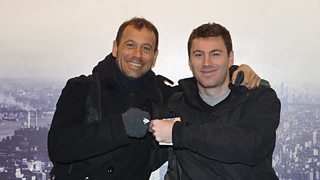
Tonight has restored my faith in humanity and the power of music to healVincent Cervera
The opening work was Samuel Barber’s Adagio for Strings, and was led by Bertrand Cervera, concertmaster of the Orchestre National de France. His 25-year-old son Vincent, a Paris firefighter, was amongst those first to be called to the Bataclan concert hall shootings on Friday 13th.
Despite his traumatic experience that night, he came to UNESCO 72 hours later, to listen to the tribute event and afterwards told the musicians: "Tonight has restored my faith in humanity and the power of music to heal."
Irina Bokova’s moving address, which followed, can be seen and heard on this page, along with the closing minutes of the documentary From War to Peace, where Valery Gergiev, the orchestra’s conductor since Solti’s death, explains what makes this orchestra so special.
The World Orchestra for Peace has performed regularly at the BBC Proms over the past 15 years and the full documentary charts the story of the orchestra and its UNESCO Concert for Peace at the 2014 BBC Proms.
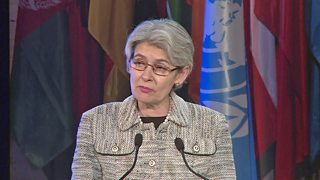
UNESCO Director-General Irina Bokova's moving speech at the World Orchestra for Peace tribute performance.
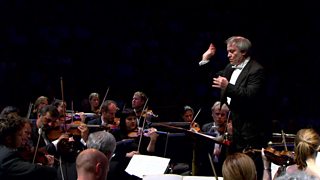
An excerpt from the documentary From War to Peace, which follows the orchestra's UNESCO Concert for Peace at the 2014 BBC Proms to mark the centenary of the start of World War 1.
The musicians
The string players of the World Orchestra for Peace in Paris, concertmasters and section principals drawn from 21 orchestras across the globe.
1st Violins
Julia Becker
Germany
Concertmaster, Tonhalle-Orchester, Zürich
Bertrand Cervera
France
Concertmaster, Orchestre National de France
Eiichi Chijiiwa
Japan
Concertmaster, Orchestre de Paris
Catalin Desaga
Romania
Concertmaster, Philharmonie der Nationen
Fionnuala Hunt
Ireland
Concertmaster, Wexford Festival Opera Orchestra
Eric Lacrouts
France
Concertmaster, Orchestre de l’Opéra de Paris
Barennie Moon
Korea
Principal 2nd Violin, WDR Sinfonieorchester, Köln
Lela Mtchedlidze
Georgia
Concertmaster, Tbilisi State Opera & Ballet Orchestra
2nd Violins
Xin Guérinet
China
Principal Violin, Orchestre National de Lille
Mirelys Morgan
Cuba
Section 2nd Violin, Royal Concertgebouw Amsterdam
Khoi nam Nguyen Huu
Vietnam
Section 2nd Violin, Orchestra National de France
Sandis Steinbergs
Latvia
Concertmaster, Latvian National Symphony Orchestra
Karmen Tosunyan
Armenia
Concertmaster, Armenian National Philharmonic Orchestra
Krzysztof Wisniewski
Poland
Concertmaster, Orquesta Nacional de España
Violas
Yuri Afonkin
Russia
Principal, Mariinsky Theatre Orchestra
Edward Vanderspar
UK
Principal, London Symphony Orchestra
Ylvali Zilliacus
Sweden
Section Viola, Mahler Chamber Orchestra
Violoncelli
Rebecca Gilliver
UK
Principal, London Symphony Orchestra
Cyrille Lacrouts
France
Principal, Orchestre de l’Opéra de Paris
Sandro Laffranchini
Italy
Principal, Orchestra della Scala di Milano
Contrabassi
Sylvain Le Provost
France
Principal, Orchestre de l’Opéra de Paris
Philippe Noharet
France
Section Contrabass, Orchestre de l’Opéra de Paris
Related Links
More from BBC Arts
![]()
Picasso’s ex-factor
Who are the six women who shaped his life and work?
![]()
Quiz: Picasso or pixel?
Can you separate the AI fakes from genuine paintings by Pablo Picasso?
![]()
Frida: Fiery, fierce and passionate
The extraordinary life of Mexican artist Frida Kahlo, in her own words
![]()
Proms 2023: The best bits
From Yuja Wang to Northern Soul, handpicked stand-out moments from this year's Proms