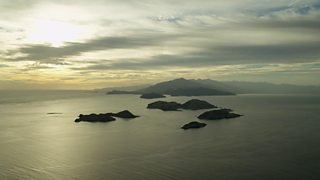
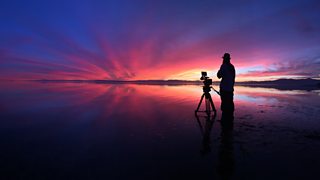
Filming the Salton Sea
Felicity Lanchester: Producer
Our research told of an inspiring wildlife refuge, but one founded on a quagmire of oxygen-starved, stagnant water. We’d seen pictures of the most beautiful sunsets there are, but they floodlit a beach of fish dying in their thousands. We'd seen archive footage of boom towns and ghost towns that gave both a snapshot of the past and a warning shot for the future. The only thing we learnt for sure was that the Salton Sea is a restless place, always in a state of change.
Soon after arriving in a crusty old ghost town on the edge of the Salton Sea, we were charmed by resident Deano McAfee. He had many a tale to fondly tell and offered us Irish coffee on his terrace while recounting memories with a mischief in his eyes.
He echoed words of wisdom from his father:
"If you capsize while out fishing on the Salton Sea, swim until you can’t swim anymore… then stand up and walk to shore!"
Deano couldn’t remember the name of the faultline he lives on, but he enjoyed telling us about a big rumble back when he ran a bar, and how he stood nervously beneath the shelves with the finest liquor on, debating which falling bottle to catch first.
He is full of love and nostalgia for this place despite its merciless, unpredictable nature.
The Salton Sea formed just over 100 years ago, when the Colorado River dramatically burst through some man-made irrigation works and a giant puddle pooled here in the desert. Birds found the new water quickly, and, as is the spirit of the Wild West, people came too, turning one man’s mistake into others’ opportunity.
The oxygen-starved sea became a breeding ground for a disease called avian botulism, killing thousands.
These pioneers were particularly unlucky. In the '70s, freak storms followed by intense desert heat and near-drought conditions left behind a casing of mud, and a concentrated shallow pool of caustic water. Dead fish started to accumulate on the beaches and the whole place became much less enticing. Understandably, many people left.
But the birds resolutely kept coming, and it was nearly to their demise. The oxygen-starved sea became a breeding ground for a disease called avian botulism, killing thousands. We learn, thankfully, that this too is becoming part of history from wildlife biologists Chris Schoneman and Tom Anderson from the Sonny Bono National Wildlife Refuge.
They spent some horrible seasons hauling sick pelicans out of the water, and tried to rehabilitate as many as they could. Today Chris and Tom are decidedly optimistic, and kind enough to take us on a tour of the sea on their airboat. Like Deano, they refuse to give up on this place despite its challenges, and they work hard to help others to appreciate its natural importance and lingering beauty.
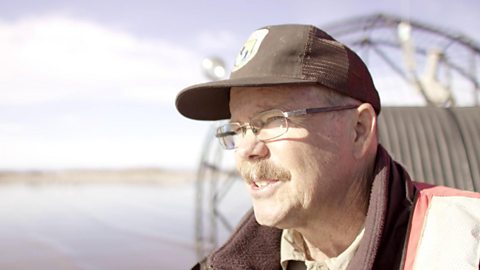
Web exclusive: A fragile paradise
Take a trip with the experts by airboat to explore the Salton Sea.
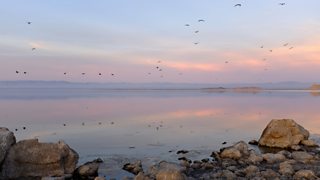
On our last evening we head down to the near-level shoreline to film the lines of pelicans flying in against the warm desert sky. The land we are standing on has been an arid dustbowl of desert; a sea floor brimming with fish and life; and a holiday beach decorated in bright towels - all in little over 100 years.
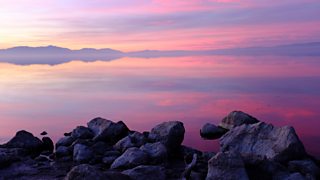
Each footstep comes with a sharp crunch of fish bones, and behind us a geothermal plant dominates the skyline, reminding of the deeper tectonic forces of change beneath us.
Eyelashes of pink flood the sky, centred from an iris below the horizon. They are mirrored flawlessly in the still water below, one long last blink before nightfall. The wing folds of migrating birds ease in darkening roost sites, and the bell of a distant train is absorbed into the desert.
Listening to advocates like Chris and Tom, and story-tellers like Deano, I feel this will always be a place of transition, and it’s clear there is no single answer to the challenges here.
I leave the Salton Sea with an inherited sense of nostalgia for the past, and a strong hope for the future that if anything stays constant here, it is the buoyant spirit and unwavering resilience of the wildlife and remaining people in the face of this restless, flippant landscape.