Rising prices: How dem dey hit different nations?
Wia dis foto come from, Getty Images
Di price of ordinary goods, wey be food and fuel, dey increase for di whole world.
Di reason na sake of poor harvest, Covid19 pandemic and shortage of natural gas, but na for some kontris - and regions - wey di tin dey affect pass.
Sub-Saharan Africa
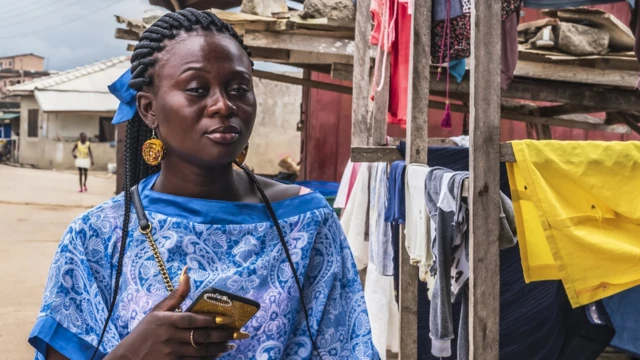
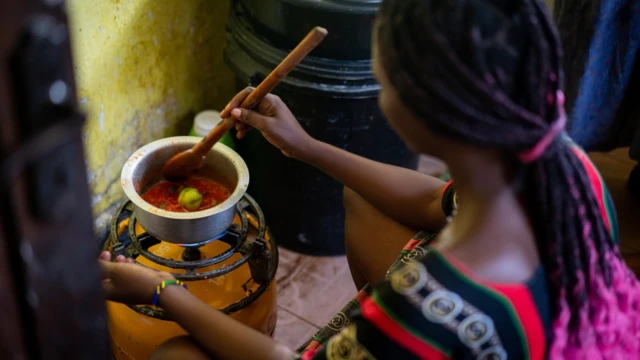
Many pipo for sub-Saharan Africa dey use cylinder of liquefied petroleum gas (LPG) as dia main fuel for cooking. However, gi price of gas dey go up well-well.
For some regions of Nigeria, di retail price don increase more an double over di past year, according to di kontri National Bureau of Statistics.
Wia dis foto come from, Getty Images
Many pipo dey go use firewood, charcoal dey cook or cheap abi even dirty kerosene. No be only say dis one dey harm di environment, e dey also harm di lungs of pipo asd dem dey cook.
Rising oil prices don also push up di price of fertiliser, and di cost of transporting food from farm to shop and market.
Dry weather don affect harvest for many African kontris, according to NASA Earth Observatory. Dis don also make prices go up.
For ngola, price of food don rise by 36.4% over di past year, according to kontri National Institute of Statistics.
Di United Nations estimate say Africa get 282 million undernourished pipo.
For Malawi, di rising cost of living recently spark large anti-government protest.
Turkey
For December, thousands of pipo protest for Istanbul and for di south-eastern city of Diyarbakir against di rising living costs.
Inflation rise by 36% last year, according to di Turkish Statistical Institute (TSI). Food price rise by 44% across di year and by 14% for di month of December alone.
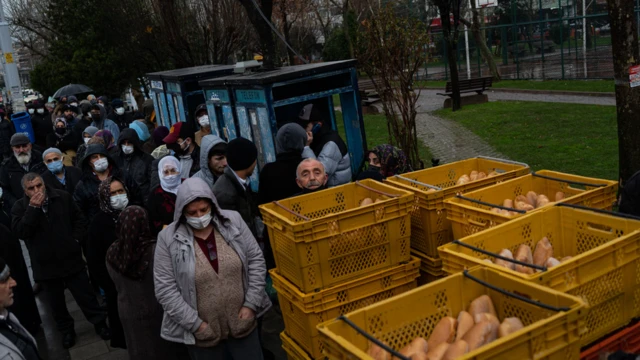
For Istanbul, thousands of pipo dey queue for bread for goment bakeries, wia dem reduce di price sake of say dem no fit afford to buy bread for privately shops.
Bread price rise partially sake of increase in di price of fuel and fertilisers, but also because di Turkish goment don increase di minimum price of wheat and barley to support farmers' income.
Wia dis foto come from, Getty Images
No be only food dey cost. According to di TSI, transport fare, trains and boat rise by more dan 50% for 2021. Household electricity and gas bill rise by 50% and 25% respectively.
Goment dey usually try to control rising prices by putting up interest rates. Dis one dey make hard to borrow money and stop too much circulation of money. However, Turkey president Recep Erdogan don refuse to do dis, e say high interest rates "nn evil wey make di rich richer and di poor poorer".
Last year, di president order Turkey central bank to slash interest rates. Dis one don affect di value of Turkey currency, di lira, to reduce by 45% against di US dollar, and push up di price of imported goods.
Goment response to rising prices na to increase di minimum wage by 50%.
Di economist Ozlem Derici Sengul, founding partner for Spinn Consulting for Istanbul, warn say di di inflation rate for Turkey go reach 50% by April. Di investment bank Goldman Sachs predict say e go rise between 40% and 50%.
Brazil
For Brazil, price for consumers dey rise by over 10% a year and fuel price don increase by 50%, according to di Brazilian goment Institute of Geography and Statistics (IGBE).
Price of food rise by 14% last year, wit harsh weather wey cause shortages of daily foods such as rice and beans, as well as animal feed.
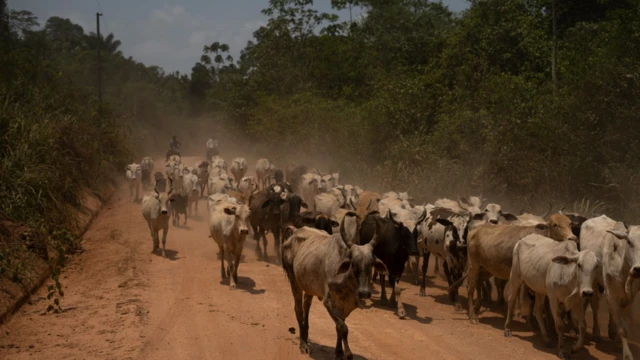
Brazil get more cow dan any wia for di world, but price of meat don increase so much ova di past year wey be say 67% drop don dey for di number of pipo wey dey buy am, according to di Brazilian polling organisation, di Datafolha Institute.
Wia dis foto come from, AFP via Getty
Di cost of light don also increase sake of di bad weather last year. Brazil hydro-electric power plants, wey dey generate most of di kontri energy, get to close down because water no dey and dis make household electricity tariff to go up one-fifth last year, according to di IGBE.
Living standard for Brazil dey worse dan e don be before since 2012. Di Getulio Vargas Foundation, one research institute, estimate say out of di population of 213m, 27.7 million pipo dey live below di official poverty line of $49 (£36) per month.
Sri Lanka
Food price dey over 20% higher dan e dey last year, according to di official Columbo Consumer Price Index (CCPI), because di island state dey struggle to finance import of essential foods.
Di Covid pandemic mean say for two years, Sri Lanka no fit make money from tourism as dem dey do before. Because of dat, dia foreign currency reserve don go very low. Wetin goment do na to stop importation of food because commercial banks no get enough foreign currency to pay for dem.
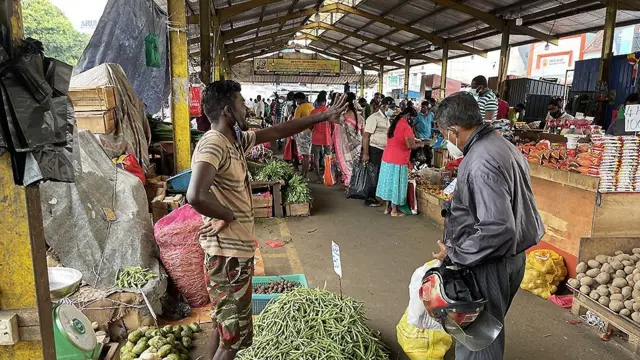
Dis one don cause shortages for shops and increase price for many regular such as rice, wheat flour and powdered milk. Price for gas for cooking don increase by 85% , according to di CCPI.
To calm pipo wey dey vex goment launch $1bn relief package - including to pay and pension increase for goment worker. Dem also comot tax on some food and medicine and announce income support for dia poorest citizens.