Abuses during colonial era still dey pipo mind as King Charles visit
- Author, Anne Soy
- Role, Senior Africa correspondent, Nairobi
King Charles and im wife Camilla dey on a four-day visit to Kenya, where im go acknowledge "painful aspects" of di UK colonial past.
More dan 10,000 pipo bin die and dem torture odas during di brutal suppression of di Mau Mau uprising for di 1950s, one of di British Empire bloodiest insurgencies.
For 2013, Britain express regret and pay out £20m ($24m) to more dan 5,000 pipo - but some pipo feel say dat one no go far enough.
One of dis pipo na 90-year-old Agnes Muthoni.
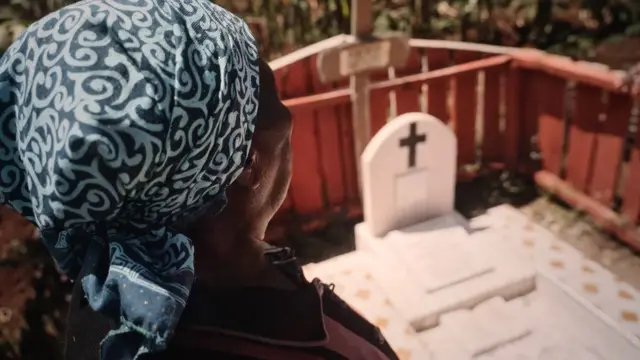
Wit a steady step despite say she dey bend, she lead us to di grave for her house wey dey Shamata, central Kenya.
She pluck weed wey don grow next to her husband grave. Elijah Kinyua bin die two years ago at di age of 93. Dem also know am as General Bahati, and like im wife im sef na fighter during di bloody uprising against di British Empire colonial goment for di 1950s.
She hold di rank of a major for di Kenya Land and Freedom Army wey pipo dey call Mau Mau.
Muthoni smile as she show us her wedding ring. Dem only meet afta di revolt bin end and dem release am from detention.

End of Di one wey oda users dey read well well
"E tok say if women fighters dey wey survive, im go like marry one of dem sake of say she go understand im problems and not call am Mau Mau."
Di struggle unite dem. But even afta Kenya gain independence from British colonial rule, di couple continue to live for di shadows - like many former Mau Mau fighters.
Di resistance group remain outlaw group. Di colonial goment designate am terrorist organisation and subsequent administration for independent Kenya no reverse di ban. "Three Mau Mau members no fit meet; na offence," Kenyan lawyer and politician Paul Muite tok. "Na atrocity."
Na for 2003 di law bin change, and dem finally recognise members of di Mau Mau as freedom fighters.
But dis also mean say post-independence generations no too sabi di past.
"So many pikin and grand pikin dem no get idea about di root of di kontri suffering wey give birth to independence," historian Caroline Elkins tok. She bin conduct interviews on di topic for di 1990s.
Her observation dey popular on di streets of Nairobi today. Many young pipo no too sabi di detention and torture of di Mau Mau. Dem dey more concerned about di economy and wonder if King Charles visit go get any impact.
Muthoni 36-year-old grandson, Wachira Githui, na one of di few pipo wey hear about am first-hand. But e also dey at ease wit several of di lasting impacts of colonialism on Kenya social, political and economic life. "I speak English and I dey proud of dat," e tok, and add say im be fan of Chelsea Football Club.
Kenyan social media dey come alive wen one important English Premier League game dey on. Fans wey refer to English football clubs in di first pesin (we) dey trade banter for hours.

Wia dis foto come from, Getty Images
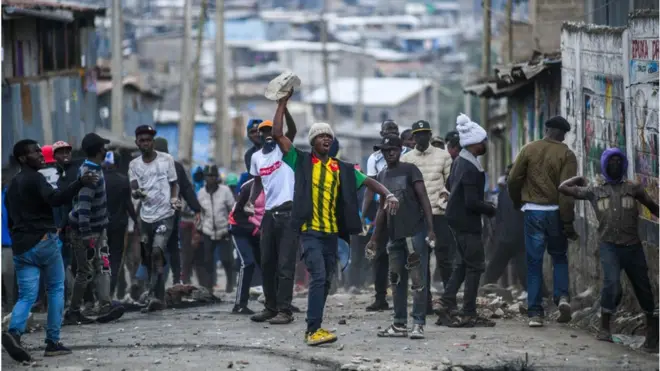
From di streets to offices, pesin no fit miss di legacy of empire for Nairobi.
One black gown wey dem iron well and white neck bands hang behind Paul Muite desk for im office for di Kilimani neighbourhood. E also wear wig wen im dey appear for court. No be only Kenya inherit many of di British legal, governance and education structures - many of di former colonies also inherit dem.
But many aspects of di "more painful past" wey di King dey expected to acknowledge no be sometin wey dem dey too pass down through generations, and e remain hidden from di public.
Oga Muite want both di Kenyan and di UK goments to set up a commission of inquiry to go to evri part of Kenya and document di colonial period in detail. Im dey part of di legal team wey take a test case to British courts for 2009, wey end wit out-of-court settlement four years later.
Di British goment express regret and pay nearly £20 million ($24.3m) as compensation to 5,228 Mau Mau veterans.
Wia dis foto come from, Reuters
But Oga Muite tok say only dos fighters wey still dey alive and wey doctor examine and confirm as torture victims bin receive payments.
Dos wey provide services and maintain supply lines for fighters, and Kenyans outside di centre of di kontri wey fight against colonialism, no follow for im tok.
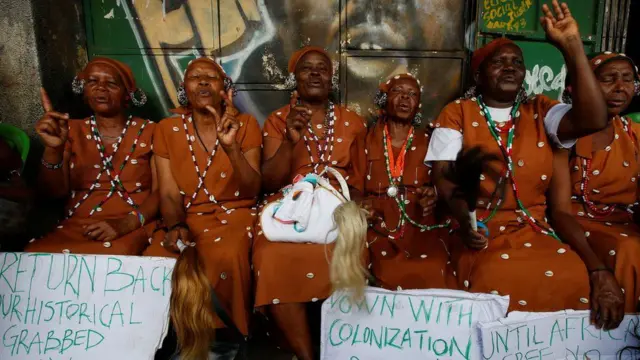
Among dem na members of di Talai clan, wey don recently renew dia calls for di British goment to return di skull of dia leader Koitalel arap Samoei. E bin lead di Nandi community resistance to colonial settlement, wey stop di plans to occupy di highlands of di Rift Valley for over ten years. Eventually, dem lure am to one peace meeting where dem kill am for 1905.
Oga Muite argue say to recognise "dose wey die, dose wey provide services including meals to Mau Mau fighters and dose wey bin experience rape, and give dem a bit of compensation" go help bring closure.
Historian Caroline Elkins tok say di anticipated announcement by di monarch no be "extraordinary moment," but add say di right tin go be "to insist on proper investigation wey di goment gatz do to change history books, to change museums for Britain and to provide funding for Kenya to establish dia own museums and cultural artefacts".
She tok say di atrocities wey di colonial goment commit during di state of emergency and declare for October 1952 in response to di Mau Mau revolt dey committed in di monarch name. Queen Elizabeth II inherit di throne just eight months earlier while on a visit to central Kenya where di rebellion bin dey cook.
"Na Her Majesty the Queen wey her picture hang for detention camps, [and] as dem dey torture and force dem to labour, dem gatz sing God save the Queen."
Di Mau Mau attacks fit dey brutal, and e dey happun for night. Images of six-year-old Michael Ruck - wey dem hack to death along wit parents and a farmhand - and im bloodied teddy bears, bin dey published for newspapers abroad, and e no draw sympathy for di fighters.
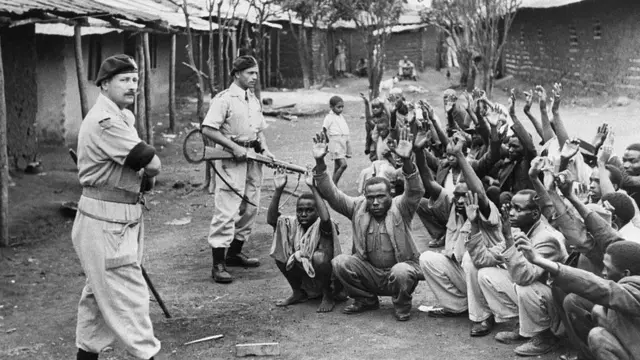
Di colonial goment use im air power and ground forces wey include many Kenyans - known as di home guards - to mount a brutal crackdown on di Mau Mau.
Elkins estimate say as many as 320,000 pipo enta detention or concentration camps. Dem reportedly castrate or flog prisoners to death - dem also reportedly set dem on fire.
Wia dis foto come from, Getty Images
More dan 1,000 bin chop execution by hanging during di emergency period. Di total death toll dey estimated to be in di thousands. Historians don describe di operation to crush di revolt as di bloodiest post-war conflict wey di UK dey involved in for di last century.
"Houses no dey for us to live in," Veteran Agnes Muthoni tok about di conditions for di forest during di emergency. "Hyenas, hunger and rain dey."
Now she dey live for one blue-roofed house made of corrugated iron sheets and timber wey face di green ranges of di Aberdare mountain range.
Di vast fertile land stretching across central Kenya to di Rift Valley dey once known as di "White Highlands". Almost all of am dey exclusively owned by settler farmers. Local pipo, like Muthoni, bin dey pushed to di fringes to pave di way for European farmers to occupy di best land.
Afta independence much of am bin go to di home guards, as di Mau Mau continue to dey considered as terrorist organisation.
But Muthoni dey ready to let go of di past. "We no dey bitter in our hearts sake of say di past don go," she tok.
"Human beings forgive each oda and continue to dey live togeda, but I go like dem to give me land."