Who be di Grey Wolves and why many kontris ban dem?
Wia dis foto come from, Getty Images
- Author, Ege Tatlici and Selin Girit
- Role, BBC World Service
- Read am in 7 mins
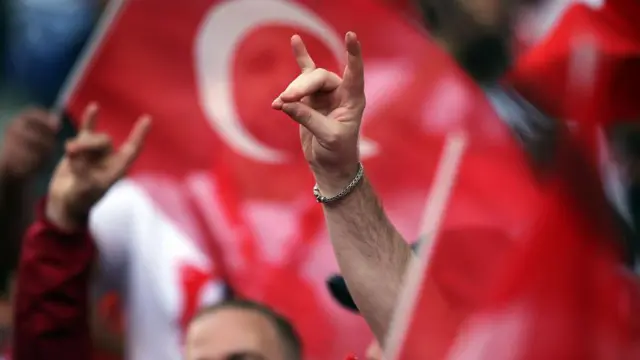
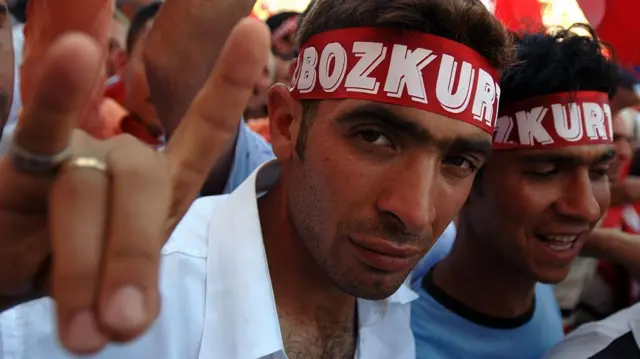
Di Grey Wolves, one Turkish political movement don dey get more and more attention around di world. Dia hand sign wey imitate di head of wolf dey also get more and more attention.
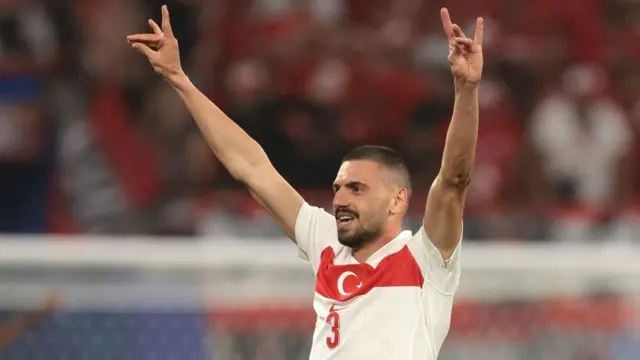
Di “wolf salute” recently cause one big controversy for Euro 2024 football championship wen Turkey player Merih Demiral make di sign afta im score for Turkey match against Austria, wey im team win 2-1.
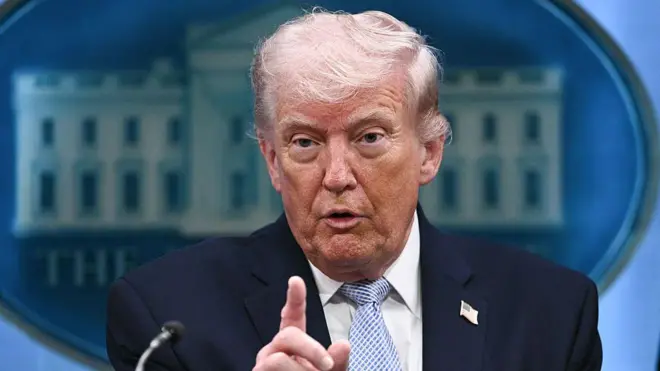
"Di symbols of Turkey extremists no get place for our stadiums," Germany Interior Minister Nancy Faeser tok for one post for X.
UEFA subsequently suspend Demiral for two matches.
Turkey hit back accusing Berlin of “xenophobia” over dia criticism of di wolf salute, and Turkey President Erdogan defend Demiral, by saying:
“Anybody dey ask why German national jersey get eagle, or French jersey get chicken? Merih [Demiral] show im excitement wit dat gesture.”
Wia dis foto come from, Getty Images
For many, di wolf salute dey directly associated wit Grey Wolves organisation, wey dem also sabi by di name “Idealist Hearths”.
Na di nationalist youth wing of di Nationalist Movement Party (MHP) for Turkey, wey be padi of President Erdogan ruling AKP.

End of Di one wey oda users dey read well well
Neither di wolf salute nor di Grey Wolves organisation dey banned for Germany. Austria and France take tougher action, wit one officially banning di gesture and di oda, all activities of di organisation.
'Extremist group'
“Wen we say di Grey Wolves movement for Germany, wetin we dey actually tok about na wider geographic location of clubs, of coffee houses, of local neighbourhood associations,” Burcu Ozcelik, one senior research fellow for Middle East Security for di Royal United Services Institute (RUSI), wey be UK thinktank, tok.
She point out say pipo wey associate demsefs wit di Grey Wolves for Germany get different degrees of attachment, membership or commitment to di group and dem dey mostly fluid for dia connection wit di group.
German federal office for di protection of im constitution (BfV) classify di Grey Wolves as right-wing extremist group wit18,500 to 20,000 members for di kontri.
Turkey pipo na di biggest single ethnic minority for Germany, wit around total of 3 million Turkey citizens and German citizens of Turkish root.
Germany total population na around 84 million pipo.
Wia dis foto come from, Getty Images
“Among di majority of Turkey pipo for diaspora for Europe, nationalistic tendencies and symbols dey strong,” journalist Kemal Can, expert on nationalism for Turkey, tok.
“Di Islamists and nationalists for Europe dey organised. So European goment generally dey worry about dis political organisations, or criminal structures, fit get di power to cause tension,” im tok.
“Dem wan introduce mechanisms wey go stop not only dia own extremist groups, but also di ones wey dey inside migrant communities.”
Violent action
Di Grey Wolves don chop many accuse for acts of violence both inside Turkey and Europe since 1970s.
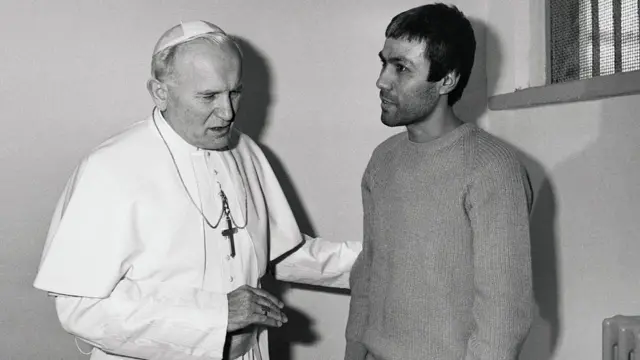
One of di most high-profile cases wey bin involve di organisation na di assassination attempt on Pope Jean Paul II for 1981 by Mehmet Ali Agca, one Grey Wolves member.
Dem bin shoot and wunjure di head of di Catholic church for dat attack.
Wia dis foto come from, Getty Images
Di group bin also dey involved for street clashes for Turkey for 1970s and 1980s, wen dia members fight urban guerrilla warfare wit some militants.
Di belief be say Grey Wolves get link wit ‘Turkey deep state’, one alleged network of powerful, anti-democratic coalitions inside Turkey political and bureaucratic structures.
Grey Wolves bin dey involved for various street clashes inside European towns in recent years as well.
Political analyst Burcu Ozcelik say dis kain incidents bin create environment of fear, causing more debates on wetin to do about di group.
For Germany, though controversial, Grey Wolves no be illegal group.
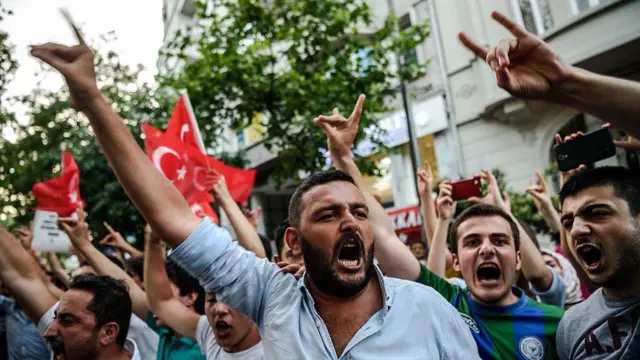
But Austria ban di use of wolf sign for 2019, and France ban all activities of Grey Wolves for 2020.
For 2021, European Parliament bin advise make dem include Grey Wolves for EU terrorist list.
Wia dis foto come from, Getty Images
Di palava wey surround di organisation go beyond Europe borders.
For Azerbaijan, kontri wey get close historic and linguistic links to Turkey, di group bin attempt to capitalise on di kontri strengthening nationalism afta di collapse of di Soviet Union for 1991.
“Di Grey Wolves become controversial for Azerbaijan afta dia allege involvement for one failed coup attempt for1995 against Heydar Aliyev, di papa of di current president Ilham Aliyev,” Könül Khalilova, editor of BBC News Azerbaijani, tok.
“Heydar Aliyev, one former KGB general, bin see dis group as threat to im regime. As a result, dem ban Grey Wolves for Azerbaijan and dem kill dia leader during di coup attempt.”
For2005, Kazakhstan, one of di kontris for Central Asia, wey also get multiple historic connections to Turkey through language and culture, bin declare di organisation illegal too, and classify am as “terrorist group”.
Turkey say dem no get any movement wey dem dey call Grey Wolves and say banning of di wolf salute dey unacceptable.
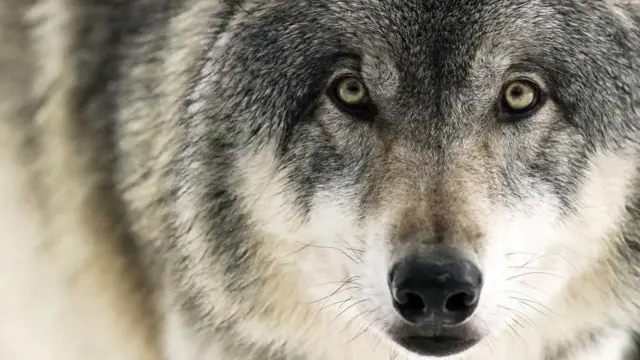
Wolf as guiding figure
"Di wolf symbol na one of di most important symbols of di Turks," Ahmet Tasagil, wey be professor at di Turkish Language and Literature Department for Yeditepe University for Istanbul, tell Anadolu news agency.
"All Turkic tribes wey dey live for Central Asia bin use dis symbol during di fourth and fifth centuries,” e tok.
E also point out to di sources from di 12th and 13th centuries wey mention say Turks, afta dem arrive for Anatolia, follow one wolf, according to Armenian, Syriac, and oda Middle Eastern legends.
"For di Turks, di wolf na guiding figure, wey represent wisdom,” e tok.
Wia dis foto come from, Getty Images
During di period of di Ottoman empire, for late 19th century, dem bin use di wolf symbol in different forms, and for early years of modern Turkey, e bin appear on banknotes and stamps.
Di wolf salute imsef, though e dey much more recent. E come from Azerbaijan during di early 1990s during mass protests, Könül Khalilova tok.
“Dis protests bin contribute to di kontri independence and di collapse of di Soviet Union. Dis sign, even though dem no dey use am widely, become symbol of Turkishness for some pipo,” she tok.
“For dem, e symbolise cultural and ethnic identity wey bin dey suppressed during Soviet rule,” she tok.
Di belief be say di founder of di Nationalist Movement Party for Turkey bin witness di use of di wolf salute during one rally for Azerbaijan for 1992 and adopt am for di Grey Wolves for Turkey.
'No be national symbol'
“For 1990s, di Grey Wolves bin dey di general wave of nationalistic sentiment and bin get identity declaring imsef on di exclusion of di Kurdish minority,” expert on nationalism, Kemal Can, tok.
Wia dis foto come from, Getty Images
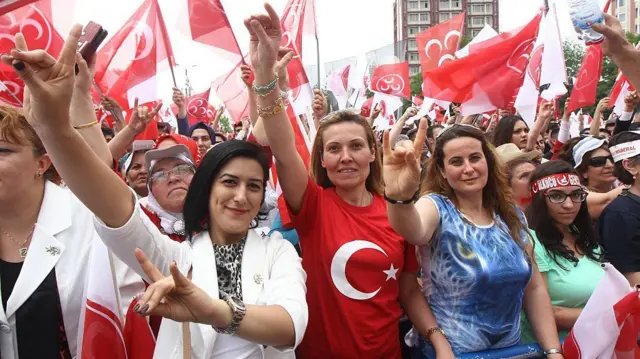
Im emphasise say for Turkey, many political leaders across different divide bin use di wolf salute to look like dem dey sympathise wit nationalist voters.
“However, dem no eva accept dis salute as national symbol for Turkey,” im tok.
Burcu Ozcelik agree.
“Many Turkey pipo, even though dem dey very open about dia Turkish nationalist sentiment and identity and dey very proud of am, dem no dey associate demsefs wit di Grey Wolves,” she tok.
“So, e no be unifying symbol, and e no dey represent wider universal sense of Turkishness.”