The view from Beijing
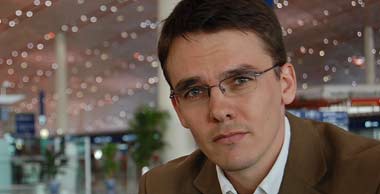
by James Reynolds, BBC Beijing Correspondent
My desk in the BBC’s Beijing bureau overlooks the main avenue leading towards Tiananmen Square. In the last few days, workers have hung red and white Olympic flags from street lights next to the avenue. As I write, I can see an engineer fixing up a big TV screen by the side of the road.
Beijing says it’s ready for its Olympic Games. (It’s worth knowing that it’s been saying this for some time. The motto for the one-year-to-go events in August 2007 was “We Are Ready”.)
All the Olympic venues have been built and tested. The new Olympic Stadium, known as the Bird’s Nest, held its first track and field event in May. The stadium’s architecture is astonishing, but inside the air is stifling – there’s no wind or breeze. During the test event, the organisers appeared to have a special wind machine which they switched on whenever flags were raised during medal ceremonies, causing the flags to billow majestically.
China insists that terrorism poses the greatest threat to a successful Games. It’s deploying 100,000 police officers to keep control (not including unarmed volunteers who now stand under almost every underpass in this city making sure that no one plants a bomb). There’s even a battery of surface-to-air missiles outside the Olympic Stadium.
Critics say that China is using the threat of terrorism as an excuse to lock down the city and prevent anyone from protesting. The Communist Party wants to keep control. This year the government has continued to jail human rights activists on charges of subverting the state. Security forces are keeping a close eye on potential local protesters– some dissidents tell us that they’re under surveillance.
But the greatest challenge may come from foreign protesters – possibly from pro-Tibet campaigners – so China recently made it much harder for foreigners to get visas. Some foreign journalists have told me that the police have come to their offices asking to see everyone’s passport.
It’s difficult to predict what might happen if foreign groups manage to demonstrate. But Chinese officials tell us privately that any heavy-handed crackdown this summer would be harmful to China’s international image.
Then there’s the air quality. A month before the start of the Games, Beijing’s air still failed to meet the World Health Organization’s safety standards (we’ve been testing the pollution with our own hand-held detector). The air is often so bad here that you can barely see more than a few blocks in front of you. But the government is imposing a series of emergency clean-air measures – it’s taking more than a million cars off the streets and it’s banning all construction work. The city hopes that this will do the trick. We’ll know soon enough.

Related links
- BBC Olympics
- BBC Paralympics
- BBC Sport
- BBC Beijing coverage
- BBC Topics - China '08
- BBC London 2012 coverage
- BBC Outreach
- London 2012 website
The BBC is not responsible for the content of external internet sites