The big media challenge
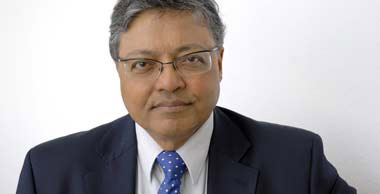
by Mihir Bose, BBC Sports Editor
“Ask not,” said John Kennedy at his inauguration as US president, “what your country can do for you, ask what you can do for your country.”
These may have been clever Kennedy words, but they apply to the media covering the Beijing Olympics.
Ask not what China can do for the media, ask what the media can do for China.
When China won the right to host the 2008 Olympics, their bid leader brought tears to the eyes of the members of the International Olympic Committee (IOC) by saying that, while hosting the Olympics was a big step for China, giving the Games to China was an even bigger step for the IOC.
In a sense the same applies to the media, particularly the Western media.
We in the West have grown up in a world where we expect certain things to happen as of right. When there is a story to be covered we expect access to the people who have made the story, or the people who speak for the people who have made the story.
In reality, the great and good of the Western world would be most upset if they – or their proxy voices – were not heard in some form on the various media outlets.
The Chinese have been a different story.
I was made most aware of this some months ago when I was in Beijing. This was when the world’s media was consumed by the problems that China’s Olympic Torch relay was causing in various parts of the world, from London and Paris to San Francisco and Buenos Aires.
There was no problem in getting access to the Olympic officials in Beijing. In fact, during that period the Chinese arranged a press conference and journalists were bussed there. But this was a formal, neo-Soviet style staged affair with many speeches, and where the Chinese athletes spoke of how they amused themselves in their spare time – not a word about the Torch relay. It was difficult to justify using the press conference in our broadcast as it was just not news.
In China you cannot thrust a microphone in front of someone and expect an answer – certainly not one designed for 24-hour news coverage.
Respect versus scepticism is another thing that I expect to be highlighted during these Games.
In covering international sports events over many years, I have been struck by the fact that the Western reporters’ questions are always meant to probe the leaders, to question what they are saying and to suggest that perhaps not all the information is being revealed.
But journalists from other countries, and not just from China, take a much more deferential attitude – of the kind that prevailed in the West back in the 1950s, when journalists treated politicians with deference and accepted whatever they said without demur. I am sure the Chinese will provide access, but it is more likely to be similar to the 1950s approach.
So in that sense, if the Beijing Olympics presents quite a media challenge for China, it also represents a huge cultural issue for much of the Western media.

Related links
- BBC Olympics
- BBC Paralympics
- BBC Sport
- BBC Beijing coverage
- BBC Topics - China '08
- BBC London 2012 coverage
- BBC Outreach
- London 2012 website
The BBC is not responsible for the content of external internet sites