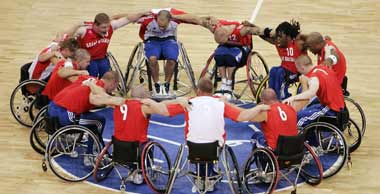
Paralympics 2008
by Tony Garrett, BBC Disability Sport Executive
From 6 to 17 September 2008, Beijing will play host to the 13th Paralympic Games and the BBC will be on hand to provide extensive coverage across TV, interactive, radio and online. The event will also mark the 60th anniversary of the first unofficial games for athletes with disabilities.
In 1948, Sir Ludwig Guttmann organised a sports competition involving World War Two veterans with spinal cord injuries in Stoke Mandeville, England. Four years later, competitors from the Netherlands joined the games and an international movement was born. The first Paralympics took place in Rome in 1960. In Toronto in 1976 more disability groups were added and the idea of merging different disability groups for international sport competitions was born.
Today, the Paralympics are elite sports events for athletes from six different disability groups. Paralympic athletes are grouped according to their athletic achievements and functional ability, rather than their disability. The movement has grown dramatically since its first days: the number of athletes participating has increased from 400 athletes from 23 countries in 1960 (Rome) to 3,806 athletes from 136 countries in 2004 (Athens).
In 2008, athletes will compete in 20 sports, with rowing introduced to the schedule for the first time alongside archery, athletics, boccia, cycling, equestrian, football (five-a-side and seven-a-side), goalball, judo, powerlifting, sailing, shooting, swimming, table tennis, volleyball (sitting), wheelchair basketball, wheelchair fencing, wheelchair rugby and wheelchair tennis.
Beijing, home to one million disabled citizens (according to the organisers), has undergone a three-year programme to improve accessibility at stations, hotels, hospitals and shops.
The British Paralympic team has a strong heritage of success and will arrive in Beijing with high hopes of once again securing a leading position in the medal table. In both Sydney and Athens Team GB finished second in the final table with 41 and 35 gold medals respectively.
Team GB’s greatest Paralympian, Tanni Grey-Thompson will be joining the BBC team along with ex Paralympians Ade Adepitan and Marc Woods as a guest commentator.
As we get nearer to the Games, media interest has increased, with international stories on Oscar Pistorius and Natalie du Toit bringing Paralympic sport to the forefront of the sporting news and a real multimedia approach being driven forwards. BBC television coverage will be more extensive than ever before, with daily highlights programmes on BBC2 between 19:00-20:00 and live terrestrial coverage at the weekends and at the Opening and Closing Ceremonies. Clare Balding and Steve Cram will present the programmes from the Bird’s Nest stadium (NST), with commentary positions at Athletics, Swimming and Basketball and a small team reporting on the equestrian and sailing from Hong Kong and Qingdao.
All BBC coverage will be available in high definition (HD) and on iPlayer, action will be streamed live for six hours a day through the red button and via broadband and even more features will be available at bbc.co.uk/paralympics.
Other programmes are ensuring that they are covering both Olympic and Paralympic stories in unison: Olympic Diaries, Blue Peter and Radio Five Live to name just a few. The Beijing Paralympics will be a big challenge for broadcasters, but we are looking forward to it and I am sure we will be successful.

Related links
- BBC Olympics
- BBC Paralympics
- BBC Sport
- BBC Beijing coverage
- BBC Topics - China '08
- BBC London 2012 coverage
- BBC Outreach
- London 2012 website
The BBC is not responsible for the content of external internet sites