

Explore this turbulent period of Irish history when Londonderry took centre stage in the battle for supremacy between two Kings.





19th April 1689
The city prepares for the siege
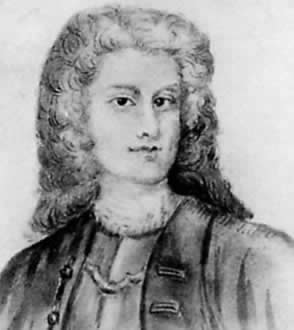
Inside the city's walls, a council of fifteen officers is created. Colonel Henry Baker is elected as governor with the Reverend George Walker, a Church of Ireland rector, as his assistant. The new Governor sets up a defence plan, dividing the city into sectors and assigning a regiment to each sector. Two cannon are mounted on the tower of St Columb's Cathedral, facing south towards the Jacobite lines. The remaining cannon are placed along the walls.



20th April 1689
The Williamite fleet departs, James leaves for Dublin
The Williamite relief fleet leave Lough Foyle taking many refugees from Londonderry. Nevertheless, the city is crowded not only with Williamite soldiers and citizens, but also with thousands of Protestants who have come in from the countryside. James departs for Dublin, leaving Lt-General Maumont in charge of the Jacobite army. Maumont rings Derry with sixteen infantry regiments. On the opposite side of the Foyle, he establishes a location for his artillery. There are several more offers of surrender made by the Jacobites but the city holds firm. At night the governors smuggle out Lt-Colonel Lundy, who is disguised as a private soldier. Lundy is sent to Culmore Point where he boards a ship set for Scotland.

21st April 1689
Jacobites attempt to take Pennyburn
Lt-General Richard Hamilton marches his Jacobite troops to Pennyburn village. Colonel Adam Murray sees the manoeuvre and places five hundred Williamite musketeers along the road to create an ambush. As Hamilton's men reach Pennyburn, Murray calls up another five hundred musketeers. Hamilton sends for reinforcements and Lt-General Maumont responds in person with forty cavalry men. As the two regiments of Jacobite horsemen drive the musketeers back towards the city, they are ambushed and fired upon. The Jacobites lose nearly two troops of horse, several officers and their commander-in-chief, Lt-General Maumont. Murray is said to have taken Maumont's sword.

23rd April 1689
Culmore Fort surrenders to the Jacobites
At Culmore the Jacobites gain control of the Foyle by fooling the defenders of Culmore Fort into surrendering. Additional Jacobite guns are positioned close to the city at Stronge's orchard. Throughout the day, ten pound balls are fired at the houses along Shipquay Street, while, in turn, the men on the ramparts fire upon the Jacobites.
25th April 1689
Colonel Murray attempts to dislodge the Jacobites from Pennyburn
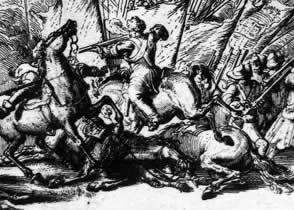
The Londonderry infantry drive the Jacobites out of their trenches at Pennyburn and the two sides snipe at each other during the day. General Pusignan, the Jacobite commander, is fatally wounded and another French officer, Jean-Louis Desjean, the Marquis de Pointis, is also wounded. Lt-General Hamilton is now in charge of the Jacobite army. Hamilton sends a letter to Dublin, complaining that his battalions are undermanned and that only a tenth of his men are armed with muskets.

26th April 1689
Heavy Jacobite bombardment
The Jacobite bombardment continues:
"The bombs played hotly on the city, with little intermission from the setting of sun until morning. This night was one of intense suffering; terror prevailed in all directions".
Inside the walls, the ammunition is placed in the church for safety and all provisions are stored in a storehouse.

5th May 1689
Battle of Windmill Hill
The besieged soldiers of Londonderry had entrenched themselves from Windmill Hill, a strategic point in front of Bishop's Gate, to the Foyle. The Jacobite General, Richard Hamilton, resolves to drive them back. The Jacobites capture a small fort around the windmill, and dig trenches to defend their position. The following day, the besieged soldiers launch an assault on the entrenched Jacobites. "The skirmish continued hot for more than half an hour on both sides...." and Windmill Hill is recaptured with heavy casualties on the Jacobite side. Governor Baker agrees to improve the line of defence on the hill to prevent the Jacobites from reclaiming it.

10th May 1689
Sallies from the city continue
Raiding parties into enemy lines are frequent. Two hundred men under Lt-Colonel Blair set off from Londonderry to attack the Jacobites in the west. Colonel Murray, watching their progress from the walls, realises that the Jacobites are trying to cut them off from the city. Murray gallops out on horseback to warn Blair and his men, surviving a fusillade of fire.
13th-15th May 1689
The Jacobites move their camp
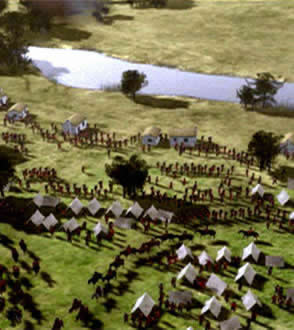
In mid-May the Jacobites move their main camp to Balloughry Hill, two miles south-west of the walls. Their second camp is at Pennyburn and their third at Stronge's Orchard. The Jacobites put guards on all sides of the city and along the banks of the river. These new positions have two benefits: allowing the Jacobites to fire simultaneously on Londonderry while reducing the intelligence getting into the city. The constant gunfire disrupts the wells in the city, leaving St Columb's well, the only source of fresh water. This well is in no-man's-land below the city's walls on the edge of the marshy ground known as the Bogside. The Jacobites dig a trench and fire on those gathering water.

18th May 1689
Attack on the Jacobite fort at Creggan
One hundred men, led by Captains Noble, Cunningham and Sanderson march out of the city to seek forage for the horses. They capture a small Jacobite fort at Creggan, but on their way back to the city they are ambushed by Jacobite cavalry troops. Captain Cunningham and sixteen men are taken prisoner and killed on the orders of Colonel Piers Butler, Lord Galmoy.

Last week of May 1689
Jacobites begin building a boom
The Marquis de Pointis, a French naval officer and engineer, begins work on a boom to prevent further relief ships sailing up the River Foyle. His first boom fails as it is made of oak and is too heavy to float. The second attempt is made of fir beams and succesfully floats. The boom is built across the narrowest part of the river at Brookhall. Trenches are dug either side of the river for additional Jacobite defence. De Pointis wants to build another boom closer to the city but Hamilton refuses permission.
27th May 1689
A detachment of men from the city attack Pennyburn
Three hundred of the Londonderry garrison go out from the Windmill Hill, before daybreak, to conduct raids on enemy camps at Ballourgy and Pennyburn. The men from the garrison at Pennyburn attack a fort and fire on the Jacobites.

June 1689
Bombardment of the city intensifies
James dispatches additional artillery in an attempt to break the siege. The arrival of more Jacobite artillery, including several large cannon, towards the end of May results in a change to the bombardment of the city. The size of the cannon balls increase and the bombardment intensifies; the largest recorded bomb weighs 272 lb.

3rd June 1689
Twenty eight bombs fired from Stronge's Orchard
Ash writes: "The enemy discharged thirteen bombs, the first killed one man and a woman, the second or third killed James Boyd in his own house, and hurt Anne Heath, who died shortly after; the others hurt nobody, but tore up the streets, making great holes in the pavements ...". He continues "...that night we had fifteen bombs, which did much mischief, killed and wounded several people, and broke down many houses."
4th June 1689
Second Battle of Windmill Hill
The Jacobites attempt to recapture the garrison's works at Windmill Hill. Lt-General Hamilton rounds up twelve battalions of Jacobite infantry and fifteen or sixteen squadrons of horses - five or six thousand men in total. They attack the defences at their lowest point - bordering the river. As the Jacobites make their way south along the river they are spotted by the defenders. Eight thousand defenders march to the hill, organised into three or four defensive lines. The Jacobite cavalry charge the defenders' lines. The men, seeing that the cavalry wore buff leather coats, shoot at their horses, causing many to fall. The rear of the cavalry retreats in confusion, as does one unit of infantry unable to withstand the hail of gunfire. A second unit reaches the defences but is eventually driven back.
4th June 1689
Heavy bombing of the town
The city is constantly bombarded by Jacobite gunners. On the evening of the 4th of June, thirty six mortar shells (known then as 'bombs') "plowed up our streets and broke down our houses, so that there was no passing the streets or staying within doors".

7th June 1689
Three English ships anchor below Culmore Point
Three ships; HMS Greyhound, HMS Kingfisher and Edward and James, are sent ahead of Major General Kirke's main relief fleet to obtain intelligence about the condition of Londonderry and the state of the Jacobite defences. Captain Guillam, in the Greyhound, sails upriver to survey the boom and engages with the Jacobites at Culmore Fort. He realises the Greyhound is unable to smash through the boom and tries to sail back down the Foyle. However, the tide changes and the ship becomes stuck on the Foyle's sandbanks. Taking advantage, the Jacobites arrange eleven guns on the two shorelines, putting seventeen holes under the Greyhound's waterline and fifty in her upper. The Greyhound's crew nevertheless manage to sail her away, though she is listing badly. After temporary repairs, she is sailed to Scotland to be refitted. On the way back she encounters Kirke's fleet off Inishowen. Captain Richards, an engineer officer who had been with Guillam, boards Kirke's ship, HMS Swallow, and informs him of the boom.

16th June 1689
The main relief fleet arrives at Culmore Point
Although, Major General Kirke receives instructions from William to sail for Londonderry on the 29th of April, he does not set sail until 30th of May, due to adverse tides and winds. The main relief fleet arrives at Culmore Point and the ships are spotted by the people of Londonderry; "...at the sight of which our cannon were thrice shot round the walls and from the steeple which was answered by their cannon."

17th June 1689
General Marshal Rosen arrives at the Jacobite Camp
James, frustrated at the lack of progress of the Irish army, sends Marshal-General de Rosen to Londonderry. On receiving news that the English relief ships had arrived, James orders de Rosen to prevent the English from relieving the town. De Rosen increases pressure on the besieged, moving Jacobite guns closer to the town and digging trenches nearer the walls.

17th June 1689
Tension increases inside the walls
The apparent inaction of the relief ships, combined with the lack of provisions, the illness of Governor Baker and increasing levels of disease and death, creates heightened tension amongst the people inside the walls. A Mrs Talbot offers £500 for the release of her husband, Lt-Colonel Talbot, who is being held prisoner inside the city. Walker is keen to accept the offer but the citizens of the town are enraged and form a mob. They throw the Jacobites in prison, and then look for Walker who hides in Governor Baker's chamber. After breaking into Walker's lodgings, the mob heads for Governor Baker's lodgings in search of Walker. Baker manages to calm the mob and sends them on their way.

19th June 1689
Kirke holds a Council of war on board the Swallow
Major General Kirke still had not received any message from the city asking for relief. He knew that the Jacobites had sunk ships in the Foyle and had built a substantial boom across the river. He and his senior officers think it unwise for the ships to force their way up the river. Kirke therefore decides to keep his ships in the lough, until either more forces arrive or until he receives a message from Londonderry.

25th June 1689
Kirke's fleet attempts to communicate with the city
After several unsuccessful attempts by the besieged and the fleet to exchange messages, Roche, a messenger from Major General Kirke, reaches Londonderry. He attempts to return to the fleet but is ambushed by the Jacobites and is forced to return to the city. The following day, Derry dispatches another messenger but he drowns on the way to the fleet and his letters are captured by Jacobites. The letters reveal a city in a desperate state of starvation and disease.

27th June 1689
The Jacobites offer terms of surrender
Colonel Gordon O'Neill of the Jacobite army approaches the town with terms of surrender from James. These terms include an offer of peace, which states that, if the town surrenders, the people will receive a free pardon, freedom to return home, permission to practice their religion, and compensation for their losses of property. These terms are rejected.

28th June 1689
Jacobites attack the town's fortifications
On his return to the city, General de Rosen plans to breach the walls, close to Butcher's Gate. He begins pounding the wall with artillery, while soldiers dig a trench towards the half-bastion at the gate. On the evening of 28th of June, Lieutenant-Colonel Skelton leads a major Jacobite attack with the recently-arrived Clancarty's Regiment. With few men on guard, the Jacobites make good progress and quickly take the outworks. However, their approach is observed by the besieged. Captains Dunbar and Noble, lead a party of soldiers out of Bishop's Gate and attack the Jacobites in the flank. They then 'thundered upon them' while the men fire from Gunner's bastion and the walls. This attack leads to fierce fighting in which the Jacobites are driven back from the outworks and over the bog. The soldiers in the cellar are captured by the defenders.
30th June 1689
Governer Baker dies
After suffering poor health for several months, Governor Baker contracts a violent fever and is forced to stay in his chamber. On 21st of June a Council of War is held to determine Baker's replacement during his illness. Colonel Jonathan Mitchelburne is selected. A few days later Baker leaves his chamber to man the walls and direct his soldiers. He suffers a relapse and dies. Governor Baker is a popular leader and his death is a great blow to the morale of Londonderry's inhabitants. He is succeeded by Colonel Jonathan Mitchelburne.

30th June 1689
Jacobites try to force Londonderry to surrender
General de Rosen, believing relief imminent, tries to force the town into surrender. De Rosen writes a letter to the town threatening that if they do not surrender by six o'clock on Monday 1st of July, he would issue orders for Protestants from the surrounding area to be brought to the walls of Londonderry. Those in the town could either admit them or be forced to watch them starve. This declaration causes great anger amongst the townspeople and they decline the offer.

2nd July 1689
The Jabobites drive Protestants to the walls of the city
The Jacobites round up two hundred unarmed Protestants and drive them to the city's walls. Initially the garrison mistake them for the enemy and open fire. The besieged are enraged by the Jacobite maneouvre and threaten their prisoners with death if the Protestants are not released.
3rd July 1689
Further Protestants are driven to the walls
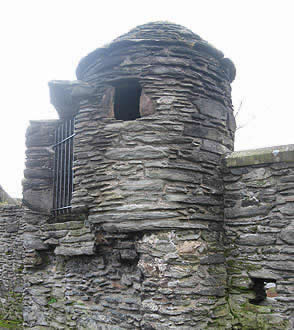
The Jacobites drive a further one thousand Protestants to the walls. Orders are given in the city to leave them outside the walls, but some are let in and fed. The town erects gallows to hang the prisoners opposite the Jacobite camp. James, horrified when he hears of De Rosen's cruel tactic, commands him to send the Protestants back to their homes unharmed. The Jacobites send their prisoners home with provisions and money and the Governors of the town take down the newly-built gallows.

7th July 1689
A detachment of Williamites sail to Inch
Major General Kirke orders a detachment of six hundred men from his Williamite fleet to sail round the Inishowen Peninsula to Inch Island, in Lough Swilly. They arrive on the 9th of July. The aim of the expedition is to create a diversion to discourage the Jacobites from attacking Enniskillen. Since the island is used by the Jacobites for provisions, Kirke's men are able to deny the Jacobites access to a major source of their food supply. Captain Richards, the engineer officer, is sent by Kirke to secure the island's defences.

8th July 1689
The Jacobites attempt to breach Butcher's Gate
For most of the day, the Jacobites use their battering pieces against Butcher's Gate. One ball, weighing nearly 14lb, comes through the gate and kills a man in the street. At night the governors order the gate to be reinforced with timber to guard against the constant barrage.

10th July 1689
The Jacobites send a letter of surrender into the city
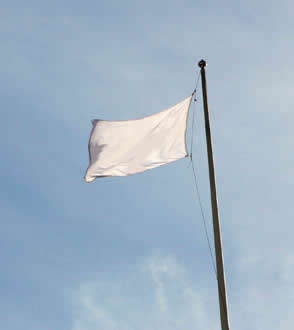
James writes to Lt-General Hamilton stressing the importance of the surrender of Londonderry. Lt-General Hamilton sees the departing Williamite fleet as an opportunity to obtain the city's surrender. He decides to appeal directly to the men of the garrison and sends an offer of surrender in an empty mortar bomb. He offers terms of safe passage for all inhabitants:
"To the soldiers and inhabitants of Derry: The conditions offered by Lt-Gen Hamilton are sincere. ... you cannot be ignorant of the King's clemency towards his subjects. Such of you as chose to serve the King, shall be entertained... you shall be restored to your estates and livings, and have free liberty of religion whatsoever it be... expose yourselves no longer to the miseries you undergo, which will grow worse and worse..."
13th July 1689
Negotiations of surrender begin
By this time the conditions inside the town have deteriorated still further. The general population of the town does not receive rations and they are forced to scavenge; their main source of protein is dog. The water from the wells is contaminated and the lanes are filled with faeces and urine. The city decides to begin negotiations with Hamilton; the date of surrender is set for the 26th of July.
14th July 1689
Major General Kirke plans to relieve Londonderry
Negotiations continue, but the Jacobites refuse to accept the terms of the Londonderry commissioners and in response intensify the bombardment of the city. Governor Walker sends a messenger to Major General Kirke informing him of the terms of surrender on offer and the poor conditions within the town. Kirke replies to Governor Walker to inform him that his fleet would relieve Derry:
"At night, a messenger, who went from us to Inch on Sunday last, returned and brought a letter from Colonel Percy Kirke. It gives us an account that he will with god's assistance relieve us soon"
19th July 1689
Bombardment of the town continues
The Jacobites are aware that the town's inhabitants have been greatly weakened by death, illness and lack of supplies. They increase pressure on the besieged, in an attempt to force a surrender, by maintaining their bombardment of the town. They use their battering guns on Gunner's bastion and Butcher's Gate in an attempt to breach the gates and walls. Between 14th and 19th of July there are 106 bombs fired against the town.
20th July 1689
Relief preparations begin
Major-General Kirke arrives at Inch and receives confirmation that the boom is broken, that the Jacobites have withdrawn their cannons from Culmore and that the town is in desperate need of relief. Kirke begins relief preparations and orders three ships to be laden with provisions. He sails the three ships, the Mountjoy, Phoenix and Jerusalem into Lough Foyle. The following day he sails the small fleet up the lough to Culmore Point, anchoring there until the wind allows them to sail up the river to Londonderry.

28th July 1689
The Relief of the city
In the evening, four ships of the fleet, including HMS Dartmouth, the merchant ships Mountjoy, Phoenix and Jerusalem with HMS Swallow's longboat, make their way to Culmore Point. The Dartmouth anchors off Culmore Point and engages in fire with the fort while the Mountjoy and the Swallow's longboat sail towards the boom with the Phoenix. The ships stop at the boom. The Mountjoy strikes the boom, rebounds and runs aground and her captain, Michael Browning, is killed by Jacobite fire. However, the sailors in the longboat cut through the cables and chains of the boom. The ships, under a barrage of fire, are able to make their way through the boom and are towed up the Foyle by longboats to the Ship Quay by 10 o'clock that night.
"O to hear the loud acclamations of the garrison soldiers round the walls when the ships came to the quay,.... The Lord, who has preserved this City from the Enemy, I hope will always keep it to the Protestants."

31st July 1689
Jacobites defeated at Newtownbutler by Enniskillen
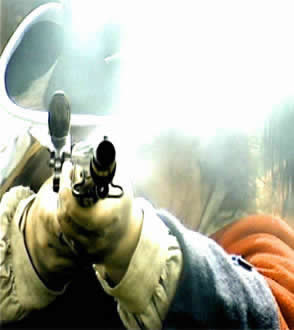
Colonel Wolsey replaces Gustavus Hamilton as the Enniskillen Governor. He sends orders to Lt-Colonel Berry at Lisnaskea to prevent the Jacobites from occupying the town. Berry's men meet the Jacobite troops and kill 200 men. Wolsey, with his troops joins Berry's men and they march onwards to meet Viscount Mountcashel's Jacobite forces. The men clash half a mile outside Newtownbutler. Initially the battle is in the balance but communication breaks down within the Jacobite side. The Williamites corner the Jacobites in wood-covered bog and two thousand Jacobites are killed.
1st August 1689
Jacobites retreat
The enemy continue to fire on the town until 31st of July when they set fire to their camps and retreat to Lifford and Strabane.
"General de Rosen, seeing the town relieved with provisions...decamped on the 1st August after fifteen weeks ... and losing two thousand men."

BBC iD
BBC iDBBC navigation
BBC links

Copyright © 2015 BBC.The BBC is not responsible for the content of external sites. Read more.
This page is best viewed in an up-to-date web browser with style sheets (CSS) enabled. While you will be able to view the content of this page in your current browser, you will not be able to get the full visual experience. Please consider upgrading your browser software or enabling style sheets (CSS) if you are able to do so.
