Environmentalist Kerry Leonard writes the next in his series of exclusive wildlife reports for Breathing Places.
Super Seal Pups
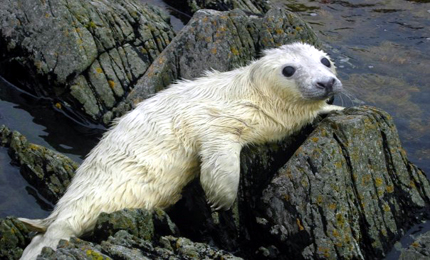
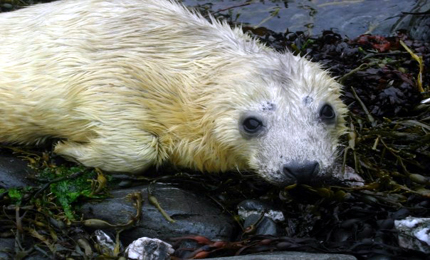
"As we walk down towards the shore several pairs of suspicious eyes view us from the water. Adult seals, with just their snouts and eyes showing above the surface, float close offshore watching our every move. At least we know we are in the right place to find what we came to see - seal pups. These are Atlantic Grey Seals on the Copeland Islands, and during September and October they give birth to their small white pups on the rocky shore.
Very young pups are indeed nearly helpless and we approach one animal which was probably born during the night. It lies motionless, asleep and probably exhausted from its exertions, the raw end of its umbilical cord still projecting. I can approach down to touching distance, but something always holds me back from touching them, even when asleep – it seems rather rude to wake a sleeping seal by prodding it. In any case older pups are not quite so benign and can turn their bodies surprisingly quickly to reveal incredibly sharp teeth that could remove unwary fingers.
In Northern Ireland Atlantic Grey Seals are mainly found on the east and north-east rocky coasts, and the Copeland Islands are probably the largest single breeding site with up to 30 or 40 pups each year, although this number varies. In contrast the other species of seal, the Harbour (Common) Seal is present in reasonably large numbers, particularly on the Co. Down coast. Strangford Lough is very important for the Harbour Seal. Another good site to see the species is at Ballykinler, near Newcastle. The seals rest on the relatively undisturbed sandy shore of the Military base but can be observed from the National Trust property at Murlough National Nature Reserve ."
Listen to Kerry Leonard talk about moths and butterflies when he visited Creggan Country Park.
|