|  |  |  |  |
 |  |  |  |  |  |  |
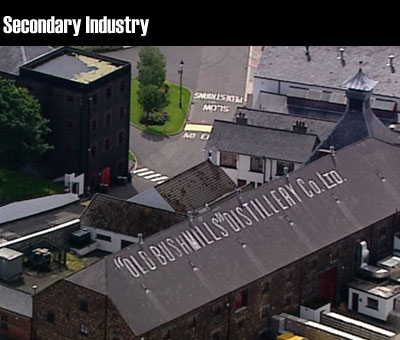  | 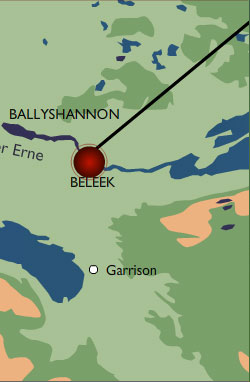 |
A secondary economic activity involves taking raw materials from a primary industry and turning them into manufactured goods or products. Textile production, food processing and oil refining are examples of secondary industries. You will often find secondary industries around docks like here in Belfast. This is because it is easier to process the raw materials at the point where they are imported. The manufacturer can then use the port to export the finished product further reducing transport costs. In the UK the number of secondary industries has declined. The Harland and Wolff shipyard was one of Northern Ireland's biggest secondary industries. In the 1960s it employed 25 000 workers to build ships. The Bombardier Aircraft factory or Shorts, is another secondary economic activity located at the docks. The factory makes aeroplane parts from sheet metal and employs around 7000 people. Bushmills in County Antrim is another example of a secondary industry. This is the world famous Bushmills Distillery which takes a primary product, barley and ferments it in peat flavoured water from the nearby River Bush to make Irish whiskey. Not only does it provide 125 secondary jobs but it also attracts tourists to the area and is part of the tourist industry along the Causeway Coast. Belleek Pottery in County Fermanagh is another secondary economic activity. The factory makes high quality ornamental china ware from clay and other raw materials. Belleek employs over 600 people. Most of their output is targeted at tourists or exported overseas. The factory was built on the River Erne because the river was used to power the factory and transport materials and goods. Today all imports and exports are by road. | A secondary economic activity involves taking raw materials from a primary industry and turning them into manufactured goods or products. In the UK the number of secondary industries has declined. Bombardier Aircraft Factory, Bushmills Distillery and Beleek Pottery are all examples of secondary economic activities. |