|  |  |  |  |
 |  |  |  |  |  |  |
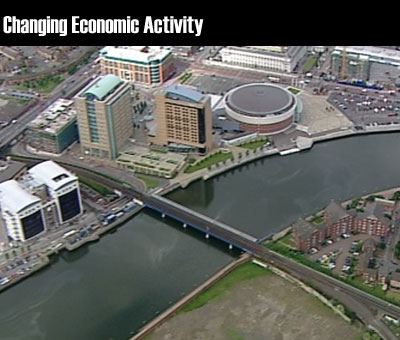  |  |
Once Textile production and ship building were two of Northern Ireland's biggest industries. Now many manufactured goods are made overseas where lower wages mean lower costs. As the number of secondary industries has declined, tertiary activities have increased. This linen mill at Sion Mills closed in 2004. It is typical of the linen mills that were once located all over Northern Ireland. Forced to close because it is cheaper for businesses to produce linen goods overseas. Some mills have been demolished, some contain small industrial units and some have been converted into housing. Employment in the linen industry has gone from over 100 000 to less than 1000. 50 years ago this area of Belfast docks would have been full of secondary industries providing manufacturing jobs. As with many other major cities, the unused dockland areas are being redeveloped to house tertiary industries. Thompson docks on the left, once used for ship building, is being redeveloped as a Titanic tourist centre. The area around the Waterfront Hall provides jobs in leisure, recreation, computer software, tele-communications and tourism. The twin white buildings beside the bridge are offices and a call centre for the Abbey Building Society employing nearly 900 people. The large white building is the Halifax Call Centre in the old gasworks area. It provides 1500 jobs in an area which used to provide jobs manufacturing gas for Belfast. Tourism has also increased in importance and many jobs now depend on tourists coming to Northern Ireland. The Ulster American Folk Park near Omagh is a good example of a tertiary activity based on tourism. The Park attracts many visitors who spend money in the surrounding area and help the local economy. Tertiary jobs in tourism are crucial in rural areas where primary and secondary jobs have all but disappeared. | The number of secondary industries in Northern Ireland has declined and the number of tertiary activities has increased. In Northern Ireland textile production has declined because it is cheaper for businesses to produce textile goods overseas. Land around the docks that has been left derelict by the closure of secondary industries is now being redeveloped to house tertiary industries. Tourism has also increased in importance and many jobs now depend on tourists coming to Northern Ireland. |