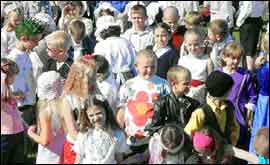
| There are many schools which can trace their foundations back to Victorian times and a few to even earlier roots, but there are a few things which make the history of St. Peter's CE Junior School interesting and probably fairly unique. It was founded by a woman in 1704 and at this time in history there were very few educated or influential women.
She appears to have been wealthy in her own right.
We have the copies of evidence going back to 1704 including her will.
Over the 300 years there has been only two female head teachers
There are only two surviving head teachers, myself and my predecessor. Who was this woman? She was Catherine Pepys, nee Grumbold, who was born in Raunds but left to go to Cottenham in Cambridgeshire when she married a cousin of Samuel Pepys (The famous diarist). Her own family, the Grumbolds are equally interesting. Her parents were Edward and Mary Grumbold. It seems likely the family owned quarries in the areas surrounding Raunds and the stone they excavated was much sought after and used for mantelpieces as it could be polished. It was known as "Raunds Marble."
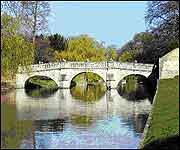 | | Clare Bridge, Cambridge |
Both Catherine's Uncle Thomas and brother, Robert, were master stone masons and builders, but it is their links with other well-known famous people of their time which makes them so interesting. It seems Thomas knew Inigo Jones but Thomas's most influential work was at the University of Cambridge. Some writers think he designed the Clare Bridge.Others think Thomas was only the builder. But it was his nephew, Robert, who was to really make his mark upon Cambridge and other places. The Wren Library was completed in 1695, having been designed by Sir Christopher Wren and the actual building work was overseen by Robert Grumbold who chose the exterior stone from a quarry in Rutland. From my research I have also discovered an earlier Grumbold, William who designed the Market House at Rothwell for Sir Thomas Tresham (1545 -1605). It can be seen that Catherine's family were involved with and knew many influential people of their time. Robert obviously travelled about the country and no doubt Catherine may well have been to both London and Cambridge with him. Where she met her husband, we do not know but it was certainly a match between two wealthy families. Catherine's Will 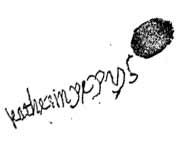 | | Catherine's signature on her Will |
The document is three pages long and is clearly signed by Catherine herself and dated 1703. It is quite difficult to read but it definitely states that she left £100 to both Cottenham and Raunds. At Cottenham she nominated the first master and stipulated that his successors were to be born in Cottenham, a rule observed until 1828. At Cottenham, the money was to be used to pay a master to teach 16 poor boys for free, but the wording concerning Raunds states "poor children" and according to records of 1st September 1704, the following pupils were taught by Thomas Teale, the parish clerk. Thomas Infield - son of Sarah
Frances Hall - son of Francis
Daughter of Widow White
James Teale son of Thomas Teale
John Whitmea's son
James Dowglas's child
Son of William Smith
Susannah daughter of Robert Sutton
Judeth - daughter of Widow Somes
Anne - daughter of John Ekins
Elizabeth Sawyer - daughter of James
Daughter of Widow Barnett. The story continues » |