| 29 October 2014 |

| |
| BBC Homepage | | |
| |||
| Contact Us | | |
Abolition Of The Slave TradeYou are in: Norfolk > Abolition Of The Slave Trade > Slavery and Abolition: The Norfolk connections 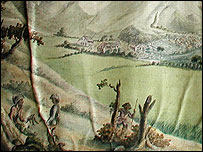 Donnington Castle sugar plantation Slavery and Abolition: The Norfolk connectionsThe people of Norfolk played an extensive role in the slave trade, both as its supporters and in the campaign for its abolition. Victoria Horth, of the Norfolk Record Office, writes about the county's connections to this time in history. Norfolk had many connections to the slave trade, both as supporters of the practice and in the campaigning for its abolition. By the 18th century, plantations had become a lucrative business and some families in the county were benefiting from the use of slave labour. Richard Bunn of Mileham, near East Dereham, owned slaves on the Island of Nevis in the Caribbean. His will of 1783, allowed Kitty, a 'Negro woman' and her oldest daughter, Bathsheba, to be freed, but all Kitty's other children were left to Bunn's son, Richard. One theory suggests that Bathsheba was in fact Bunn's daughter. Earsham HallSir John Dalling bought the Donnington Castle sugar plantation in 1780, while he was Governor of Jamaica. The plantation was left to his son, Sir William Windham Dalling, in 1798. 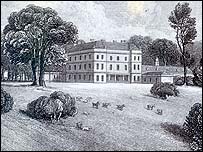 Earsham Hall, c. 1820 In 1810, William inherited Earsham Hall near Bungay from his great-uncle. Despite the Abolition Of The Slave Trade Act of 1807, which abolished the transatlantic trade, the plantation was very profitable, making £8,190 13s. 2d. in 1818 alone. It's widely thought that money, made from the plantations, found its way to Norfolk in the form of bricks and mortar at Earsham Hall. In 1820, a new library was added to the estate. By 1830, 258 slaves worked on the plantation, but profits had fallen to £1,939 0s. 3d. The Slavery Abolition Act of 1833 which ended slavery in the British Empire seems to have caused the plantation's final downfall. Between 1840-9, without the use of slave labour, the plantation made a loss. Slaves given apprenticeshipDespite the money being made out of the slave trade, not everyone who enslaved people agreed with the practice. David Barclay was a banker with strong Norfolk connections. In the late 1700s, he received 28 slaves as payment for a customer's debt. He transported the slaves to Philadelphia, America and put them into apprenticeship, before granting their freedom. The terms of their apprenticeship also allowed the slaves to gain valuable life skills. In addition to serving 13 years as an apprentice chair-maker, eight-year-old October was taught to read and write. In 1801, to promote his work, Barclay published a pamphlet entitled An Account of the Emancipation of the Slaves of Unity Valley Pen, in Jamaica. Abolition movement in NorfolkThe abolitionist movement had a large following in Norfolk. In 1794, many Norfolk citizens subscribed to re-print An Interesting Narrative of the Life of Olaudah Equiano or Gustavus Vassa, which detailed the experiences of the freed slave. 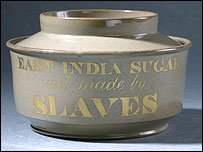 Anti-slavery campaign sugar bowl c. 1800 Other former slaves visited Norfolk to campaign against the trade. In May 1854, Mrs Elizabeth Doyle recorded in her diary that 'Benjamin Benson a black man' visited Crimplesham School rooms to talk about the 'horrors of slavery'. Other tactics were also readily followed. In 1791, William Fox produced a pamphlet called Address to the People of Great Britain, on the Propriety of Abstaining from West India Sugar and Rum. This called for people to boycott sugar produced on slave-worked plantations. The Norfolk support for this campaign was so strong it was noticed elsewhere in Britain: a Birmingham newspaper reported that in Norwich 'sugar is now positively banished from the most polite and fashionable tea-tables'. In 1828, more than 17,000 people put pen to paper, to sign a petition to parliament in St Andrews Hall, Norwich calling for an end to slavery. West African SquadronAfter the 1807 Act, the Royal Navy set up the West Africa Squadron to enforce anti-slavery laws. The Squadron sailed along the African coast rescuing illegally-captured slaves. Captain Fredrick Paul Irby, of Boyland Hall, Morningthorpe, was stationed on the HMS Amelia off the African coast from 1811 to 1813. 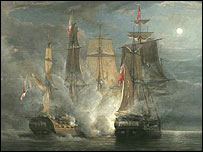 HMS Amelia, the ship of Captain Irby This image shows the HMS Amelia and the French frigate Arethuse in action during 1813. Painted in 1852 by John Christian Schetky, it was held by the Irby family. During his tour of duty, Captain Irby rescued three child slaves, who were later baptized at St Peter Mancroft Church in Norwich in 1813. Thomas Fowell BuxtonAs the movement for total abolition gathered pace, the anti-slavery drive had many prominent Norfolk campaigners. Norwich MP William Smith campaigned strongly against slavery, working with both William Wilberforce and Thomas Fowell Buxton. Buxton was instrumental in passing the 1833 Act and in setting up the Niger Expedition to Africa in 1841. In 1834, Harriet Martineau wrote that she could not visit a friend in Charleston, South Carolina as 'no earthly inducement could tempt me again to spend six months in any country where there are slaves'. Charlotte Upcher, of Sheringham Hall, was another sympathizer - a poem included in her notebook contains the lines: Sir, Fowell he has by the Spirit of God A small number of people from Norfolk gained from the slave trade, but many helped to bring about its downfall. Images published with permission of the Norfolk Record Office last updated: 09/04/2008 at 12:29 SEE ALSOYou are in: Norfolk > Abolition Of The Slave Trade > Slavery and Abolition: The Norfolk connections
|
| | About the BBC | Help | Terms of Use | Privacy & Cookies Policy |