| 24 September 2014 |

| |
| BBC Homepage | | |
| |||
| Contact Us | | |
Abolition Of The Slave TradeYou are in: Norfolk > Abolition Of The Slave Trade > Earsham Hall built on slavery Earsham Hall built on slaveryEarsham Hall is one of Norfolk's most well-known and visited venues, but the estate's history and development is entwined with profits made from the slave trade. Frank Meeres, of the Norfolk Record Office, looks back through the history books. 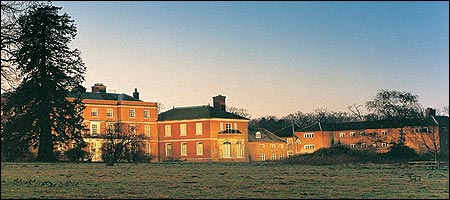 Earsham Hall Earsham Hall is one of the finest of the many beautiful halls and large houses in Norfolk. It has had many owners, and whilst once a family home to Norfolk's gentry - more recently the hall has been a school and is now an antiques centre. It was originally designed and built by John Buxton between 1704 and 1708: he sold the property to Colonel William Windham in the 1720s. In the 19th century, Earsham Hall was owned by the Dalling family, whose fortune was based partly on their sugar estate in Jamaica - a plantation which was worked by slave labour. The archives of the family include fascinating details of the way in which the estate was run, including information about the names and conditions of the slave labourers. Several of these documents are featured on the Norfolk Record Office website resource celebrating the 200th anniversary of the abolition of the transatlantic slave trade. Sir John DallingThe Dalling link with the West Indies began with John, later Sir John, Dalling, who was governor of Jamaica between 1777 and 1781. He'd previously served as acting governor between 1772 and 1774. 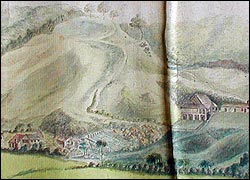 Donnington Castle plantation c. 1800 While in Jamaica, he acquired a sugar estate at Donnington Castle on the island (not to be confused with Castle Donnington in Derbyshire or Donnington Castle in Berkshire). Dalling returned to England in 1781 and died in 1798. His estates and baronetcy passed to his son, William Windham Dalling. The family did not yet own Earsham Hall: this was still the property of the Windham family. It passed to Sir William in 1810: from this date he owned the Hall and also the Jamaican property. Money from the latter was no doubt spent in improving the former. Money from sugarAn account book survives showing that the sugar estate brought Dalling an average income of between £5,000 and £6,000 a year in the 1820s and 1830s - a very large sum for the time. One list of Dalling's slave labourers at Donnington is transcribed in the Record Office resource: there are 23 adult slaves on it, (including one who is worth nothing to the estate because he has managed to run away), and an unspecified number of children. Their total sale value is given as £2,180. We can learn from the family archives about some of the work done at Earsham Hall at this time. Dalling was evidently a man of culture: many fine paintings were purchased and, in 1820, a new library was built at the hall. This cost £120 for the bricks and the labourers, with a further £13.6s.9d to the carpenter to build the actual bookcases. No books are mentioned, either he already had these or they featured in a separate account. 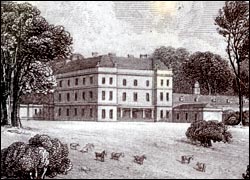 Earsham Hall (detail) c. 1820 However, there is an undated catalogue of the books in Sir William's library, which shows an interest in the West Indies, such as histories and geographies of St Domingue (the old name for what is now Haiti), and a Voyage to Martinique: perhaps these books were inherited from his father. Interestingly, the books include a two-volume set of Cowper's verse. William CowperWilliam Cowper, who died in East Dereham in 1800, was famed for – amongst many other poetical works – his anti-slavery poems, one of which The Negro's Lament became almost an anthem of the abolition movement: it would be fascinating to know if Sir William's edition of Cowper included these poems. Expenses also survive for maintaining and refurbishing parts of the Hall in the 1830s. However, although money from the Jamaican estates may well have played its part, these improvements did not come solely from the profits of the plantation: Dalling also owned the farmland that came to him with Earsham Hall. Enslaved men, women and children in the British Empire finally became free in 1838, after a period of forced apprenticeship following the passing of the Abolition of Slavery Act in 1833. The accounts show that Dalling's sugar estate was running at a loss after 1840: presumably the workers, no longer slaves, had to be paid a living wage: the era of English landowners profiting from slave labour was over for good. last updated: 09/04/2008 at 12:29 You are in: Norfolk > Abolition Of The Slave Trade > Earsham Hall built on slavery
|
| | About the BBC | Help | Terms of Use | Privacy & Cookies Policy |