Summary

  • Northern Ireland will become the first part of the UK to bring in graduated driver licensing for new drivers in bid to reduce the amount of fatal road crashes involving young people

  • Roads Minister Liz Kimmins tells Good Morning Ulster says the new rules are the "biggest reform to driver tests and licensing we've ever seen"

  • However, Stormont speaker Edwin Poots criticised the minister for announcing the changes in the media instead of the assembly

  • The reforms will see Northern Ireland adopt similar laws to those in place in Australia, the US and other countries

  • The new rules will be introduced on 1 October and include a minimum six-month wait for learner drivers before they are allowed to take a practical test, and six-month restrictions on night-time driving and passenger numbers for those who have passed the test

  • The story comes as BBC News NI is dedicating a day's coverage to road safety, focusing on all aspects of this issue across its news platforms

  1. Focus on road safety: A final recap and goodbyepublished at 19:00 GMT 27 January

    As our live page coverage draws to a close, let’s take a look back at the key points from today:

    That's all from the live page team today, thank you for joining us.

    Ralph Hewitt, Caroline McClatchey and Ciaran McCauley were today's editors. Eimear Flanagan, Barry O'Connor, Lili Busby, Auryn Cox and Leo McGann were the writers.

  2. Cross-border issuespublished at 19:00 GMT 27 January

    North West Today also got involved today, covering a number of road safety issues.

    The BBC Radio Foyle programme heard how police forces on either side of the border are unable to cross, which can be an issue when there's a crash.

    A Londonderry woman whose sister died in a crash in County Donegal has called for a special exemption to change those rules.

    A Donegal TD also said he will raise the matter with the justice minister in the Republic of Ireland.

    The Commissioner for Older People in Northern Ireland also told the show it would be "potentially discriminatory" to introduce eye tests for elderly drivers every three years - a proposal put forward in England and Wales.

    Listen back to the show on Sounds..

  3. Most unpopular part of the new restrictions?published at 18:50 GMT 27 January

    Jasmine Sandhar
    BBC Newsbeat

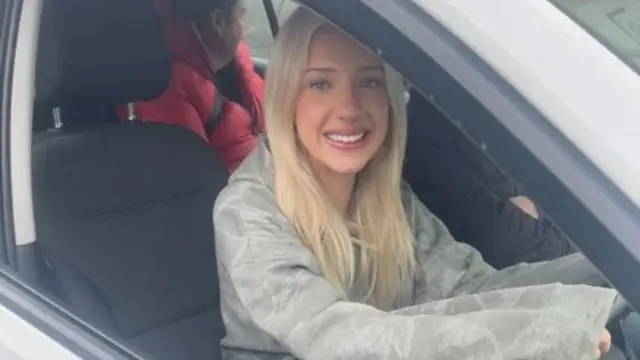
    Ira has blonde hair and she is sitting in a car, at the wheel. She is smiling and wearing a grey hoodie. There is someone beside her and in the backseat.
    Image caption,

    Ira is sitting her test in a few months

    Ira is learning to drive so she doesn’t have to rely on her dad to ferry her to work or university.

    The 19-year-old student from Belfast says there are “good and bad” sides to the new rules.

    She believes that limiting the number of passengers at night might be the most unpopular part of new restrictions.

    “That's probably what people my age will think is the worst thing about it because obviously that's what you're most excited to do whenever you pass your test, all your friends in your car,” Ira told BBC Newsbeat.

    Ira’s driving instructor, Niall Kelly, says the new rules are a “good start but need work”.

    “It's not going to fix things right away,” says Niall, who has been teaching drivers for 10 years.

  4. Graduated driver licensing around the worldpublished at 18:44 GMT 27 January

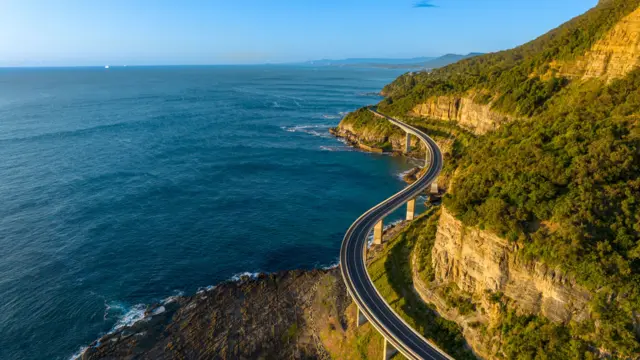
    An overheard shot of a winding road in Australia. The road is elevated above ground level on the platforms and to the left hand side is the sea and to the right is a cliffside with green foliage growing on it.Image source, Getty Images

    We've heard a lot about graduated driver licensing (GDL) today.

    It has been in place for decades in other parts of the world such as Australia, New Zealand, the United States and Canada.

    The US government’s National Highway Traffic Safety Administration noted a pattern of road safety improvements, external following GDL legislation: Florida had a 9% reduction in crashes for drivers aged 16 and 17 while Michigan and North Carolina saw 26% and 25% reductions in crashes for 16-year-old drivers.

    After Queensland, Australia, brought in enhanced graduated driving license requirements in 2007, such as lengthening the learning period and restricting the number of passengers allowed late at night, novice driver crashes dropped by 13.9% per year, external.

  5. New rules a 'positive step forward' - The AApublished at 18:34 GMT 27 January

    A yellow AA VanImage source, Getty Images

    Edmund King, director of the AA Charitable Trust, said the graduated driver licensing reforms are a "positive step forward" and something the group would like to see implemented across Great Britain.

    “There is significant evidence to show the risk of a crash increases with every peer-age passenger in the car with a young driver at the wheel," he said.

    "To know this and to still allow young drivers and their passengers to place themselves in this situation is wrong and needs addressing.

    “The current consultations on the government’s Road Safety Strategy include some of the same measures which will be implemented in Northern Ireland, namely the logbook and minimum learning period. But they do not address the increased risk of peer-age passengers.

    “Hopefully this proactive move by Northern Ireland to protect its young people will pave the way for our government to take a similarly decisive action."

  6. 'Measures are consistent with the evidence'published at 18:29 GMT 27 January

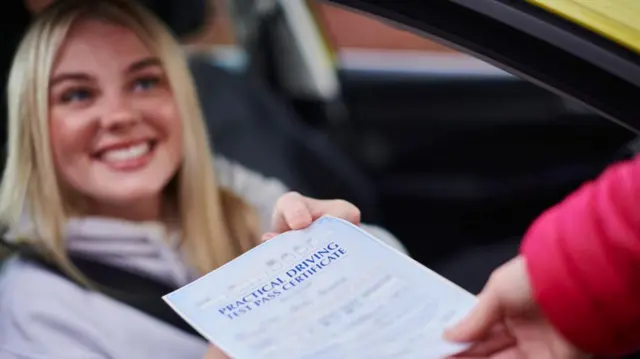
    A young woman with blonde hair. She is sat in a car with the seatbelt on. Someone is passing a driving test pass certificate through her open window.Image source, Getty Images

    As we've been hearing today, Northern Ireland will be the first place to introduce graduated driver licensing in the UK.

    Trade body ABI has reacted saying this represents "significant progress" in improving road safety.

    Fraser Lyall, general insurance policy adviser, said: "Many of the measures outlined, including a minimum learning period and targeted passenger restrictions, are consistent with the evidence we, and others, have presented to help improve safety for more inexperienced motorists."

  7. Would lower speed limits improve road safety?published at 18:23 GMT 27 January

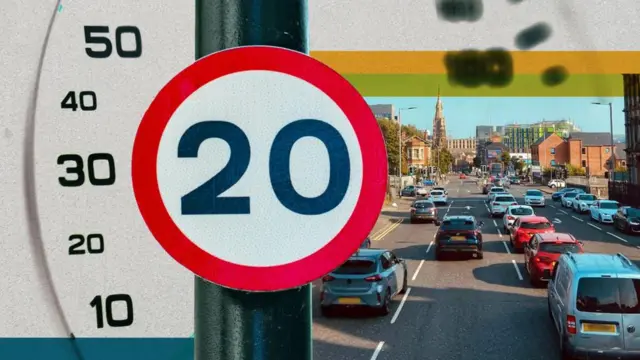
    A composite graphic showing a 20mph road sign, with cars on the right, and a speedometer on the left.
    Image caption,

    The Department for Infrastructure has launched a consultation on speed limits

    Earlier this month, Minister for Infrastructure Liz Kimmins launched a consultation on speed limits, external.

    One of the proposals is to introduce a 20mph speed limit in all areas that are currently 30mph.

    Lowering speed limits has happened in other parts of the United Kingdom - in Wales speed limits were lowered in built up areas in 2023.

    But will Northern Ireland follow suit?

    You can read more here.

  8. More road safety coverage coming up on BBC Newslinepublished at 18:22 GMT 27 January

    There’ll be more coverage on road safety and graduated driver licensing over on BBC Newsline at 6:30pm.

    You can watch live by clicking at the top of this page.

  9. More road statistics - in chartspublished at 18:17 GMT 27 January

    Last year, 56 people died on Northern Ireland's roads - 69% were men and 44% in the 25-34 age range. We've pulled together some other statistics over the past five years and the last decade.

    This Flourish post cannot be displayed in your browser. Please enable Javascript or try a different browser.

    This Flourish post cannot be displayed in your browser. Please enable Javascript or try a different browser.

    This Flourish post cannot be displayed in your browser. Please enable Javascript or try a different browser.

  10. Cause of most collisions?published at 18:02 GMT 27 January

    Infrastructure expert Karen McShane told Evening Extra that inattention or attention diverted is "one of the big causes" of accidents and deaths on the roads.

    Check out the table below, which lists all the causes for collisions in 2024.

    This Flourish post cannot be displayed in your browser. Please enable Javascript or try a different browser.

  11. Is there room for change on car insurance for teenage drivers?published at 17:44 GMT 27 January

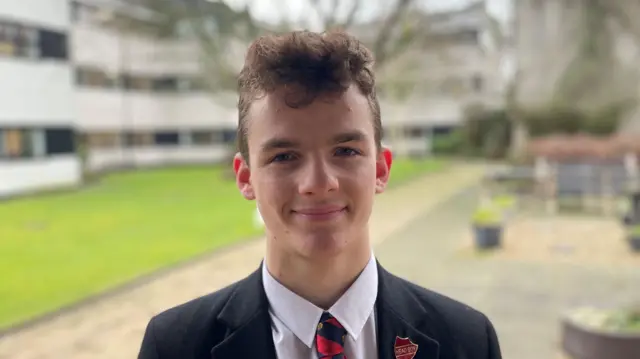
    Daniel Logan
    BBC News NI

    A man with short brown curly hair looks into the camera. He wears a black blazer and white shirt with a red ad navy striped tie. He has a red badge in the shape of a shield on his lapel. Out-of-focus, behind him is a green garden with a white, multi-storey building behind it.

    Now, on Evening Extra, business correspondent Patrick Fee is talking car insurance, and the rising costs for young drivers.

    Oscar Scullion is one of those - he sharesa Peugeot 208 with his brothers.

    He has been driving for just over a year but the joint insurance with his brothers was about £2,600 when he was on his restricted plates.

    "It is around £700 a head [now] and even with the current prices that I see around, dropping down to £700 can be a big difference, but it is still quite a large sum of money," he said.

    Oscar, from Ballyclare, believes there is room for change by bringing down the prices.

    "Having some sort of criteria, such as a free school meal equivalent that we have in school, that could even drop insurance prices, and make it more manageable for people who are struggling, or people who need it most," he says.

    Read more here on Oscar's story and what can be done to bring your premiums down.

  12. TV ads 'can't shock in the same manner that they did back then'published at 17:40 GMT 27 January

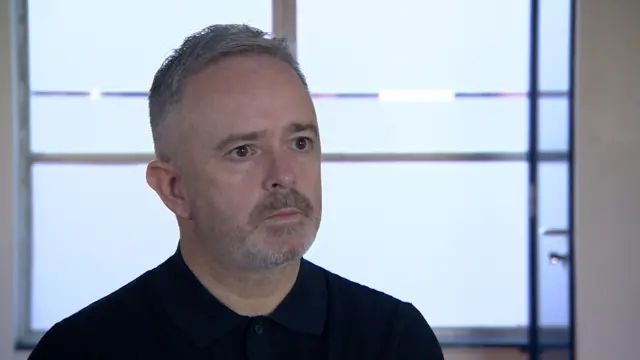
    Paul Bowen, a man with short, greying hair and stubble, wearing a black polo shirt during a TV interview.

    Paul Bowen is executive creative director with the Ardmore Advertising, the firm which is currently producing new road safety adverts for the Department for Infrastructure.

    The new adverts will focus on speeding and driver behaviour.

    "It boils down to - selfish driving behaviour cost lives," he told Evening Extra.

    However an ad campaign in 2026 is a very different proposition to 2000, when TV watching was so habitual for everyone.

    "We can't shock in the same manner that they did back then because the channels are so much more expansive.

    "We have to shock by making people care and we've got to make a connection because people nowadays, with so much stimulus around them, they need to understand what the challenges, what the solution can be and in order to engage with that, they have to give a damn about it."

  13. Shocks, speeding and Samantha Mumba: Remembering NI's graphic road safety advertspublished at 17:35 GMT 27 January

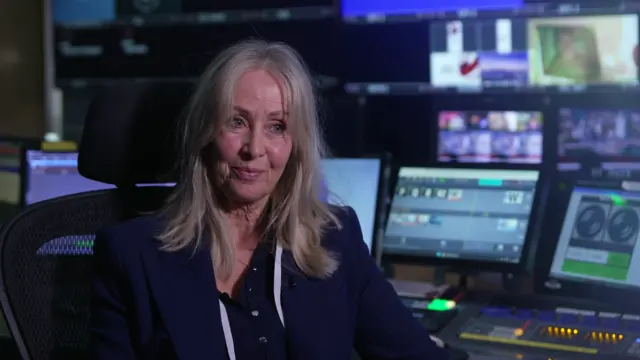
    Julie Anne Bailie, a woman with shoulder-length straight blonde hair, smiles during a TV interview. She is stiting in a TV studio gallery with multiple monitors and a mixing desk behind her.
    Image caption,

    Julie Anne Bailie used to own one of the best known advertising agencies in Belfast

    A moment ago Evening Extra was talking about ad campaigns - specifically the shocking ones that were commonly seen on our TVs (after the watershed) in the 90s and 00s.

    The aim was simple - to shock motorists with ads that illustrated the deadly consequences of speeding, drink-driving and other safety breaches. The method often involved pairing the shocking scenes with pop music, like, in one memorable instance, Samantha Mumba's Body to Body

    "This shock strategy was brand new, people in Northern Ireland and across the world really hadn't seen anything like it," said former advertising firm owner Julie Anne Bailie.

    One advert, which portrayed children being knocked down by a drink-driver, was considered so hard-hitting that it could only be broadcast after the watershed.

    The ad was named the world's best commercial in the live action category at the International Broadcasting Awards 2001.

    Bailie's Belfast-based firm, Lyle Bailie International, bought the company behind the advert and went on to produce many more like it with Stormont funding.

    She explained that the adverts aimed to address "two core psychological problems" among road users - one was "complacency" and the other a failure to take personal responsibility for safety.

    "We were totally anaesthetised to the dangers on the road and it's almost as if when people heard about deaths and serious injures, they were just statistics."

    Lyle Bailie International ceased trading in 2017, with a downturn in government advertising spending cited as a major factor in its demise.

    You can hear more of Bailie's interview on the BBC's Evening Extra programme.

  14. Police urges parents to talk to driving-age children about road safetypublished at 17:30 GMT 27 January

    Donaldson adds that graduated driving licenses (GDL) will make young drivers better prepared to recognise risk.

    “That can only be a good thing for Northern Ireland,” he says.

    He urges parents with children who are close to driving age to have a serious conversation with them about getting behind the wheel.

    “A vehicle is a lethal weapon.

    “Once you pass your test, you are in possession of a lethal weapon. And if you don't want to listen to me, that's fine, but listen to some of those families who've lost loved ones."

  15. 'We're not just demonising young people' - PSNI ch suptpublished at 17:28 GMT 27 January

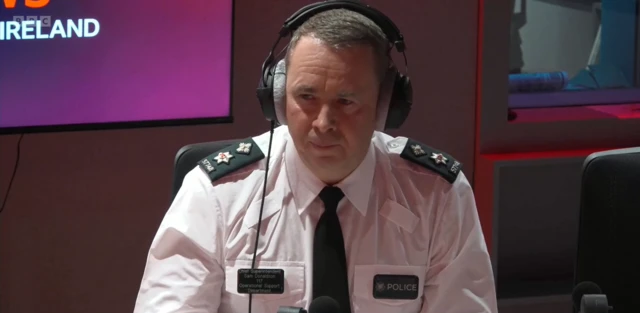
    Sam Donaldson in Policing uniform in studio with headphones on.
    Image caption,

    "It's important to say it's not just about young people, it's about inexperienced drivers as well."

    Ch Supt Sam Donaldson tells Evening Extra he thinks some of the young drivers - and other people - who have been killed on the roads would be alive today if graduated driver licensing was in place.

    "The sooner we get that in, the better. This is about changing the culture," he says.

    When asked on whether these reforms could be demonising young people, Ch Supt Donaldson said he did not think so.

    "Young people will have different views, when I was 17 I would have taken the view that I don't need to be tested, I'm ready to drive - and I'm sure many young people who have been through the test think they're fantastic drivers, and they're not.

    "It's only with hindsight that you realise you're not. It's important to say it's not just about young people, it's about inexperienced drivers as well."

  16. ‘Our roads are dangerous 365 days a year’published at 17:22 GMT 27 January

    Ch Supt Sam Donaldson is live in the studio with Richard Morgan now.

    He begins by paying tribute to the people out dealing with Storm Chandra today.

    “I've been on the roads today and I've noticed people driving a little bit slower,” he says.

    “When the traffic is reduced and the weather is really bad people are driving a little bit safer.”

    He adds that his message is "why are people not thinking like that year round".

    “Roads are a dangerous place 365 days a year, people only think it's dangerous when there's flooding,” he says.

    “200 people in the last three years have lost lives on our roads, four more people already this year, homes that'll never be the same again.”

  17. Storm Chandra affecting roadspublished at 17:13 GMT 27 January

    BBC News NI reporter Michael Fitzpatrick is in Culcavy, County Down, which has been hit by flooding due to Storm Chandra.

    It's been a day of disruption across our roads and beyond - earlier a section of the M1 was closed for a period, while several thousand people remain without power.

    An amber weather warning remains in place until 9pm.

  18. New licence rules 'will save lives on our roads' - PSNI road safety bosspublished at 16:58 GMT 27 January

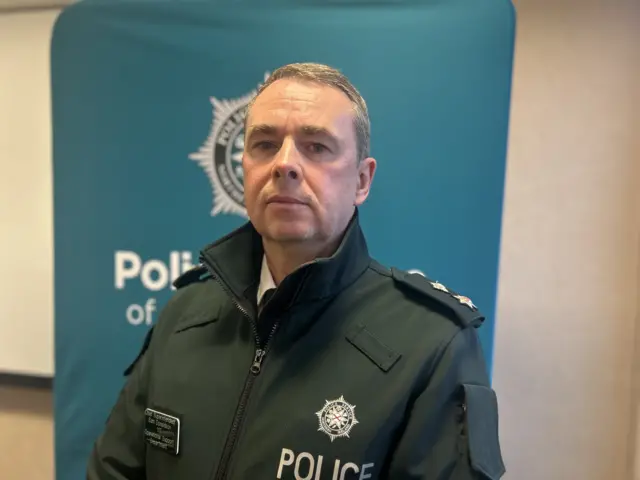
    Man standing in PSNI uniform in front of a tall PSNI banner. His uniform is green with a PSNI logo and he has short grey hair
    Image caption,

    Sam Donaldson remembers his own child starting to drive and is sure lots of people can relate to this

    Many parents get nervous when their child begins to drive, and PSNI Ch Supt Sam Donaldson is no different. He said the sooner graduated driving licensing comes into force, the better.

    The officer, who oversees the PSNI's road safety operations, recalled his own child starting to drive for the first time and remembers the nerves.

    "Young people who are 17, 18 and new drivers regardless of what age, they don't recognise the risk the way perhaps some of us here a little bit older do.

    "I absolutely welcome this graduated response... we've got to bring our new drivers on a slower journey to allow them to learn how to drive on the roads. That's the way it's done in Scandinavia and they have far safer roads than we have, so we've got to learn from them and we've got to bring this in.

    Ch Supt Donaldson is coming up shortly on Evening Extra.

  19. Evening Extra: PSNI on road safety, the cost of insurance and shock ad campaignspublished at 16:43 GMT 27 January

    At 5pm, Evening Extra will be continuing our day of road safety coverage - presenter Richard Morgan will be speaking to Ch Supt Sam Donaldson, who oversees PSNI road operations, live in the studio.

    He'll also be speaking to BBC News NI business correspondent Patrick Fee about the rise (and rise) of car insurance, particularly for younger drivers, and looking back at the shock road safety ad campaigns of the past, as officials look to film a new campaign this year.

    You can watch the programme live on three platforms - by hitting the play button at the top of this page; on BBC iPlayer; and on the BBC News NI YouTube channel, external. You can also listen live on BBC Sounds.