Summary

  • Northern Ireland will become the first part of the UK to bring in graduated driver licensing for new drivers in bid to reduce the amount of fatal road crashes involving young people

  • The reforms are described as the most significant changes to licensing here in 70 years, and will see Northern Ireland adopt similar laws to those in place in Australia, the US and other countries

  • The new rules will be introduced on 1 October and include a minimum six-month wait for learner drivers before they are allowed to take a practical test, and six-month restrictions on night-time driving and passenger numbers for those who have passed the test

  • The story comes as BBC News NI is dedicating a day's coverage to road safety, focusing on all aspects of this issue across its news platforms

  • Good Morning Ulster will feature an interview with Infrastructure Minister Liz Kimmins on the major reforms - you can watch the programme live by hitting the play button at the top of this page

  1. 'Waiting six months to take my driving test would have really restricted me'published at 09:49 GMT

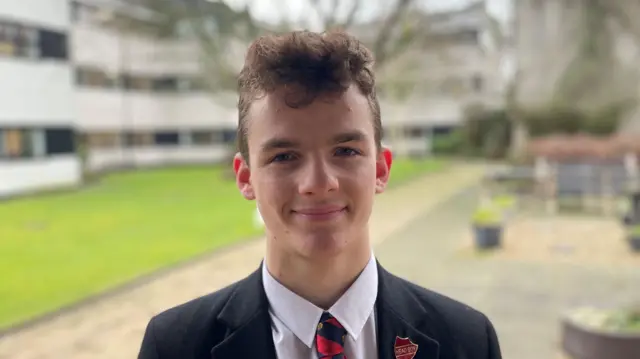
    Seventeen-year-old Ewan told The Nolan Show that he recently passed his test after six weeks of lessons.

    Under new rules new drivers will not be permitted to take their driving test for at least six months after being granted a provisional licence.

    Ewan says that waiting six months to take his test "would have really restricted" him.

    "I feel a lot of freedom right now but a lot of responsibility and I respect that," he said.

    Ewan added that he thinks some of the proposals are "quite good".

    However, he feels it is going to impact "a lot of people who aren't necessarily intending to do any harm".

    "But if it is going to be for the greater good and it is going to help people, then I do think it could definitely be seen as a positive thing."

  2. What impact will the new rules have?published at 09:35

    a man looks directly into the camera. He is bald and has some grey stubble. He is wearing black framed glasses, a navy suit, blue shirt and purple tie.
    Image caption,

    DUP MLA Peter Martin is the chair of Stormont's infrastructure committee

    The new driving licence rules will apply to all drivers - but DUP MLA Peter Martin has been asking what impact the new rules will have to some.

    Speaking on this morning's Nolan Show, Martin reacting to the announcement of the new rules said anything that drives road collisions down "should be welcomed and at least examined".

    He questioned the impact it will have on younger drivers and working class families.

    Martin, who is also chair of Stormont's infrastructure committee, added that the new rules will be scrutinised in the Northern Ireland Assembly.

  3. Graduated driver licence discussion coming up on The Nolan Showpublished at 09:19 GMT

    As we've been hearing on Good Morning Ulster, Northern Ireland is set to become the first region in the UK to bring in graduated driver licence (GDL) rules.

    Coming up on this morning's Nolan Show, driving instructor Neil McLaren, DUP MLA Peter Martin and Matthew Robinson from the NI Conservatives will discuss the incoming changes.

    You can read more on the GDL rules here and listen to the Nolan Show live at the top of this page as well as on BBC Sounds.

  4. When will NI's new driving rules come into force?published at 09:17 GMT

    The graduated driver licensing for new drivers is due to be launched in October but the new testing system will not begin until April 2027, according to Infrastructure Minister Liz Kimmins.

    "There is some time for people to actually understand what we're talking about," she told Good Morning Ulster.

    "I think it gives that opportunity to bed this in and ensure that people are fully aware of what is involved, but I think we have to continually re-emphasise why... this is about saving lives."

  5. Road safety education is the 'key'published at 09:15 GMT

    Davy Jackson looking at the camera - he has grey hair and beard and is wearing navy glasses and blue blazer with white shirt
    Image caption,

    Davy Jackson tells Good Morning Ulster "road safety is everyone's responsibility"

    The chair of Road Safe NI told Good Morning Ulster that the "message just doesn't seem to be getting out there" when it comes to the number of road deaths in NI.

    Fifty-six people lost their lives on Northern Ireland's roads in 2025.

    Davy Jackson said he welcomes the graduated driving licence measures and hopes they will help bring the number of road deaths down.

    "How many times have you heard of collisions with multiple occupants in the early hours of the morning?" he asks.

    "Hopefully this will stop this now because they won't be able to be out with their peers."

    Jackson says that "we can never do enough" when it comes to education around road safety.

    "Education is the key here. Road safety is everyone's responsibility."

  6. This is the 'biggest ever reform' to NI driving rulespublished at 08:56 GMT

    Liz Kimmins, a woman with straight, dark, shoulder-length hair, looks to the camera in Stormont. She is wearing a white shirt with an open collar.
    Image caption,

    Liz Kimmins is the minister for infrastructure with responsibility for roads and public transport

    The new graduated driver licensing rules will be the "biggest reform to driver tests and licensing that we've ever seen" according to Northern Ireland's Infrastructure Minister Liz Kimmins.

    "And I think that it shows just how serious we are about really tackling road deaths and improving road safety".

  7. This is not about 'making it more difficult for young and new drivers' - ministerpublished at 08:43 GMT

    The new graduated driver licensing will set new rules for inexperienced drivers which will affect how they drive and who they can give lifts to during the first two years after passing their test.

    This is because this group of drivers are "disproportionately represented" in serious collision statistics, according to Infrastructure Minister Liz Kimmins.

    "For me, I think the evidence base is there that we need to try and find ways to address that," she told Good Morning Ulster.

    "And it isn't about restricting drivers or making it more difficult for young and new drivers, but it's actually about improving safety for everyone, including drivers themselves."

  8. She was only gone for 10 minutes - mother of Jaidyn Ricepublished at 08:33 GMT

    A woman with long brown hair looks into the camera. She is wearing a green zipped up hoody and is standing in front of grey and yellow wallpaper and a mirror.Image source, Family
    Image caption,

    Jaidyn Rice's mum Elaine Clarke

    Jaidyn Rice's mother Elaine Clarke hasn't touched her daughter's bedroom since her death on 8 July.

    After leaving her house in Bangor to make the short walk to her friend's house, Jaidyn was hit by a car and died at the scene.

    Her mother Elaine Clarke told BBC News NI that Jaidyn was walking her friend home and was only out of the house for 10 minutes.

    "At the start I thought they got talking and then she was just hanging about with her friend and lost track of time, so I was texting her and she didn't reply and I was ringing her and she didn't reply."

    After checking Jaidyn's location, Elaine made her way to her.

    "I went down, we just live a few minutes up the road... and she was there."

    When Jaidyn's grandmother heard the news she said the feeling is "your chest just collapses".

    "You are praying for it not to be true."

    You can read more on this story by Catherine Morrison here and can listen to all of our coverage on our day of road safety coverage on BBC Sounds or watch along live at the top of this page.

  9. 'Every single life lost is one too many' - roads ministerpublished at 08:29 GMT

    A man and a woman in a radio studio - the man on the left has his chin in his hand and is looking down at a piece of paper. The woman on the right is waiting for a question

    There are very few families across the island of Ireland "who haven't been touched in some way by the devastating impact of a road traffic collision, according to Stormont's Infrastructure Mininster Liz Kimmins.

    She says listening to those who have lost a loved one, and the "ripple effect" that a road death has on so many people, brings the reality of that devastation home.

    "It is incumbent on us all that we do take action to bring those numbers down, and every single life lost is one too many," she adds.

    Kimmins says her department is working on "continually narrowing those gaps that lead to collisions and essentially leading to fatalities".

    Listen to the full interview here.

  10. Infrastructure Minister Liz Kimmins talking to Good Morning Ulsterpublished at 08:15 GMT

    Her interview on the major driver licensing reforms and road safety is coming up shortly - you can watch it by hitting the play button at the top of the page and listen live on BBC Sounds.

  11. Regular eye tests can keep older drivers on the roadpublished at 08:12 GMT

    An older woman having an eye test. She has blue eyes and straight, blonde hair to her shoulders and she is wearing a light-coloured shirt. A healthworker is examining her eye with testing equipment.Image source, Getty Images

    Getting regular eyesight tests can help older people to continue driving for longer - that's according to Rob Heard, chairman of the Older Drivers Forum.

    His organisation is working with the UK government on proposals to introduce mandatory eye tests for drivers aged 70 and over in England and Wales.

    Speaking on Good Morning Ulster, Heard said pensioners who get regular vision checks are more likely to be able to stay on the road than those who ignore sight problems, as intervention means health problems can be treated at an early stage.

    "We know older drivers have a wealth of experience, tolerance and confidence, but as we do age, our sight, hearing and reaction and judgment speed does reduce, quite often without us being aware of it," he said.

    "Many people become complacent, think 'I've driven for many years, I've got no issues'."

    But Heard added it is often only when people take an eye test that they realise they no longer meet minimum eyesight standards for driving and need support.

  12. Family of teen killed in crash speaking to Good Morning Ulsterpublished at 08:02 GMT

    A young boy and teenage girl are sitting side beside - the girl on the right has her arms around the boy and both are smiling widely to the camera. The girl has shoulder length blonde hair and is wearing a black leather jacket. The bot has very short, shaved hair and is wearing a white shirt and tie, with a pair of sunglasses hanging from the front of the shirt's collar. They are sitting on a leather long sofa, topped with mirrors.Image source, Rice family
    Image caption,

    Jaidyn Rice (right), pictured above with her brother Kenley, died in July 2025

    Our reporter Catherine Morrison has been speaking to the family of Jaidyn Rice, a pedestrian who was killed in Bangor last year at just 16 years of age.

    Jaidyn's grandmother compared it to not being able to breath when she heard the devastating news.

    You can hear that interview on Good Morning Ulster or read more here.

  13. How old is too old to drive?published at 07:40 GMT

    While graduated driver licensing is primarily aimed towards younger drivers, as part of our road safety coverage we'll be looking at everyone on our roads.

    Drivers aged 70 and over are twice as likely to be killed or seriously hurt than those aged under 70 if they are involved in a collision, according to Stormont's Department for Infrastructure.

    So when do you know when it is time to stop driving? And how do you talk to an elderly relative about giving up their licence?

    It's a delicate issue - Good Morning Ulster has been discussing it with Rob Heard, chairman of the Older Drivers Forum and Newtownabbey driving instructor Karen McAree, who is 64 years young.

    You can listen along live on BBC Sounds and watch the programme live via the play button at the top of the page.

  14. PSNI warning for drivers as Storm Chandra arrivespublished at 07:36 GMT

    A photo looking out the front window of a car on a busy road. It is difficult to see out of the window due to heavy rain. There are four other vehicles on the road.Image source, Getty Images

    We have been planning our road safety day coverage for quite a while - and it just so happens that Storm Chandra has arrived, making road conditions difficult for motorists with heavy rain and strong winds.

    Almost 300 schools are closed this morning, with a yellow rainfall alert is currently in place for counties Armagh, Down, Fermanagh, Londonderry and Tyrone.

    There is an amber warning for wind on Tuesday from 5am until 9pm and a rain warning will come into effect at midnight, which could lead to flooding.

    In a warning to motorists on Tuesday morning the PSNI advised road users to be careful as heavy rain has led to flooding in a number of areas.

    "Please reduce your speed and drive with extra caution," said a PSNI spokesperson. "Excess surface water could lead to aquaplaning. Consider the potential risks before you leave. Do not place yourself or others in unnecessary danger."

  15. What do young people think of the changes?published at 07:29 GMT

    A teenage boy with red hair is looking at the camera. He is wearing a black blazer, white shirt and purple, black and yellow tie.
    Image caption,

    15-year-old Oliver understands why they are making the changes

    Ahead of the today's announcement, BBC News NI's Julie McCullough visited St Mark's High School in Warrenpoint, County Down, and spoke to some present and past pupils from the school's GCSE Motor Vehicle & Road User Studies class.

    So what did they make of it? It was a mixed picture.

    "It would be a bit of an annoyance to not be able to drive right away," said Oliver, 15 - but he did add that it makes sense.

    "There are people who get their licence too early and aren't experienced enough on the road to be going out and driving themselves."

    Cormac, 17, who passed his driving test in less than six months after his birthday - said he would have understood if they required a "minimum lessons amount".

    But he does welcome the removal of the 45mph speed limit.

    "When you're on a dual carriageway and having to go 45mph it does feel more dangerous than safe."

    A young girl with a neutral expression on her face looks at the camera. She is in a school

    Amy, 18, hasn't got her driving licence yet, but said she didn't like the idea of restricting the number of passengers she could have in a car at night time.

    "Instead of taking one car load you'd maybe have to take three," she said, adding she accepts it is probably for the "greater good".

    "You wouldn't be getting distracted as much if your friends were sitting beside you trying to show you something."

  16. So why graduated driver licensing?published at 07:23 GMT

    A man with clear rimmed glasses is smiling at the camera. He is standing in front of a purple and yellow background and is wearing a taupe coloured trench coat.
    Image caption,

    Pat Delaney from the Driver & Vehicle Agency says the changes are about making the roads safer

    According to the Department for Infrastructure, who have announced the major reforms, this is all about trying to reduce the amount of fatal road crashes involving young people.

    Infrastructure Minister Liz Kimmins, who will be on Good Morning Ulster, has said that in 2024, there were 164 people killed or seriously injured on Northern Ireland's roads from crashes caused by drivers aged between 17 and 23.

    "This age group of drivers account for 24% of fatal or serious collisions despite holding just 8% of licences," she added.

    Pat Delaney, the director of operations for the Driver and Vehicle Agency Northern Ireland (DVANI), said the overall aim of the changes is to "improve road safety for young people".

    But what do young people make of it? We'll be talking about that shortly.

  17. NI to become first in the UK to introduce graduated driving licencespublished at 07:13 GMT

    A young woman driving a car with a male driving instructor in the passenger seat. She has long, dark hair and is wearing jeans and a green t-shirt. The man has short, dark hair and a grey beard. He is wearing a black polo shirt and is holding a notebookImage source, Getty Images

    The reforms have been described as the most significant changes to licencing in 70 years and will see Northern Ireland adopt a version of laws in place in countries including Australia, the US and the Republic of Ireland.

    But what are they?

    • New drivers will not be permitted to take their driving test for at least six months after being granted a provisional licence
    • They must also complete 14 modules in a programme of training, which has to be signed off by an approved driving instructor or a supervising driver that could be a parent or guardian
    • After passing their driving test, newly qualified drivers will have to display 'R' plates for two years, rather than the current one-year period - they also face new restrictions over this 24-month period.
    • For the first six months of this restricted period, new drivers must display a different coloured 'R' plate from other restricted drivers
    • For the first six months after passing their test, new drivers up to the age of 24 are only permitted to have one passenger aged between 14 and 20 in their car between the hours of 23:00 and 06:00
    • That restriction would not include immediate family members and does not apply if someone aged 21 or over, who has held a driving licence for at least three years, is sitting in the front seat
    • Learner drivers will be allowed to drive on the motorway if accompanied by an approved instructor and will be allowed to drive on the motorway up to the posted speed limit, after passing their test
    • The current speed limit of 45mph for restricted drivers will also be removed.

    Read more here.

  18. All the latest on graduated driving licences on Good Morning Ulsterpublished at 07:05 GMT

    An image showing inside the BBC Radio Ulster studio - we can see a large grey table, on which there is a number of monitors and microphones. Three people are around the table, on the left a woman with headphones on, in the middle a man and on the right another woman. In the background on the wall are monitors with the BBC News NI logo

    The Radio Ulster programme is on now until 9am, with Sarah Brett and Joel Taggart in the studio - they'll be looking at all aspects of the major new driving licence reforms.

    Hit the play button at the top of the page to watch.

    You can also listen live on BBC Sounds.

  19. Welcomepublished at 06:59 GMT

    And a very good morning (even if it's a wet and windy one) to you all for our day of road safety coverage.

    Today, across radio, TV and right here on the news website, BBC News NI is focusing on all aspects of one of the most important issues facing people across Northern Ireland - how to stay safe on our roads.

    It comes as there's been a major announcement, described as the most significant changes to Northern Ireland driving licensing laws in 70 years, with the introduction of graduated driver licensing (GDL) for new drivers.

    We'll be taking you through what the new rules mean, what people think of them and a whole host more - with coverage dedicated to road safety from Good Morning Ulster (on Radio Ulster now and available to watch live via the play button at the top of the page) and the Nolan Show right through to Talkback, Evening Extra and BBC Newsline tonight.

    So stay with us throughout the day for all the latest coverage, analysis and reaction.