Summary

  • The Israeli attacks on Lebanon on Wednesday were a "grave violation" of the US-Iran ceasefire, Iran's deputy foreign minister tells the BBC

  • Saeed Khatibzadeh accuses Israel of a "massacre" in Lebanon - air strikes killed 182 people there on Wednesday, according to the health ministry

  • After a day of horror in Beirut, it's hard to know what Israel's long-term strategy is, writes Hugo Bachega from Lebanon

  • Meanwhile, Donald Trump says US forces will remain "in place" in the region until Iran fully complies with the "real" ceasefire agreement

  • He says if Iran does not comply - "which is highly unlikely" - the US response will be "bigger, and better, and stronger than anyone has ever seen before"

  • The US and Iran announced a ceasefire late on Tuesday - but there have been conflicting reports about what Iran actually agreed

  • Trump insists the deal includes "no nuclear weapons", and the reopening of the Strait of Hormuz

  • But the status of the key shipping channel is unclear. On Wednesday, ships were told by Iran that the strait "remains closed" - while the White House insisted there has been an "uptick" in traffic

  1. After a day of horror in Beirut, it's hard to know what Israel's long-term strategy ispublished at 07:23 BST

    Hugo Bachega
    Middle East correspondent, reporting from Beirut
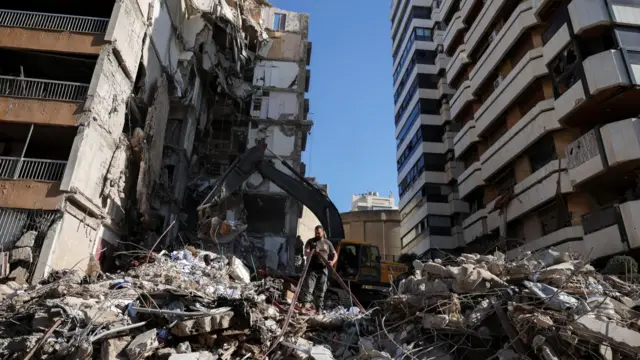
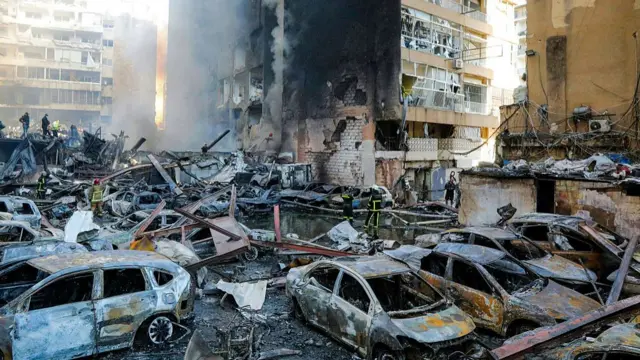
    The aftermath of an Israeli strike on Beirut, seen on ThursdayImage source, Reuters
    Image caption,

    The aftermath of an Israeli strike on Beirut, seen on Thursday

    The morning after Israel’s bombs brought horror and destruction to this city, Beirut is quiet.

    President Joseph Aoun described it as a “massacre”, and the government announced that today would be a public holiday, to mourn those who were killed.

    For 10 minutes, at around 14:00 here, the whole country came under attack.

    The Israeli military said more than 100 air strikes were carried out on what it described as Hezbollah targets. Busy, densely populated residential areas were hit, and Israel knew that this would inevitably lead to a high number of casualties.

    According to the Lebanese health ministry, at least 182 people were killed, a number that is likely to be higher, and 890 wounded.

    It is difficult to see what the long-term Israeli strategy is.

    Even Israeli military officials acknowledge what has been known in Lebanon for a long time: that Hezbollah will not be disarmed by force.

    The attacks may give Israel some military gain, but this is likely to be limited.

    Meanwhile, opponents and supporters of the group are coming together in their anger and criticism of Israel, united in their view that what happened here was unacceptable and unjustifiable.
  2. You cannot have a cake and eat it at the same time, Iranian minister tells USpublished at 07:18 BST
    Breaking

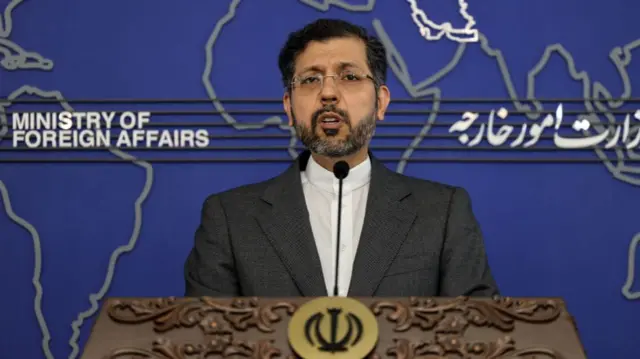
    Saeed Khatibzadeh speaks behind a wooden lectern in front of a large map of the world.Image source, Getty Images

    We can bring you some more lines now from the Today programme's interview with Iran's deputy foreign minister.

    Saeed Khatibzadeh says Iran sent a message to the Oval Office last night: "You cannot have a cake and eat it at the same time."

    He adds: "You cannot ask for a ceasefire and then accept terms and conditions, accept all the areas that a ceasefire is applied to, and name Lebanon, exactly Lebanon in that, and then your ally just starts a massacre."

    Khatibzadeh says the strikes by Israel amount to a "sort of genocide". Israel insists it is hitting the militant group Hezbollah, which is itself firing rockets into Israel.

    You can hear the full interview on BBC Radio 4 from 07:30 BST - listen live at the top of the page.

  3. Israeli attacks on Lebanon were 'grave violation" of ceasefire, Iranian minister tells BBCpublished at 07:07 BST
    Breaking

    The Israeli attacks on Lebanon on Wednesday were a "grave violation" of the US-Iran ceasefire, Iran's Deputy Foreign Minister Saeed Khatibzadeh tells the BBC's Today programme in an exclusive interview.

    We'll have more lines from that interview very soon - and you can hear the full thing on BBC Radio 4 from 07:30 BST.

  4. Iranian negotiators head to Pakistan - despite scepticism over 'repeated ceasefire violations'published at 06:53 BST
    Breaking

    An Iranian delegation is heading to Pakistan today to begin negotiations with the US on ending the war, Iran's ambassador to Pakistan has confirmed.

    They are set to meet US Vice-President JD Vance in Islamabad on Saturday.

    Reza Amiri Moghadam, the Iranian ambassador to Pakistan, posts on X that the talks will be "based on 10 points proposed by Iran". As we've reported, there is some confusion about exactly what those points are.

    Moghadam says the talks will take place "despite skepticism of Iranian public opinion due to repeated ceasefire violations by Israeli regime to sabotage the diplomatic initiative".

  5. UK to urge Strait of Hormuz reopening - and for Lebanon to be included in ceasefirepublished at 06:18 BST

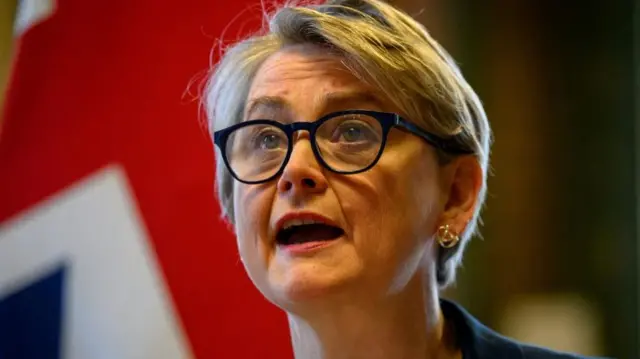
    Yvette CooperImage source, Reuters

    UK Foreign Secretary Yvette Cooper will call for the Strait of Hormuz to be fully reopened later today.

    In her annual speech on UK foreign policy priorities, Yvette Cooper will also call for Lebanon to be included in the US and Israel's ceasefire agreement with Iran.

    Pakistan - which mediated the US-Iran ceasefire - initially said Lebanon was included in the deal. But Israel said it was not and carried on with air strikes, killing 182 people yesterday, according to Lebanon's health ministry.

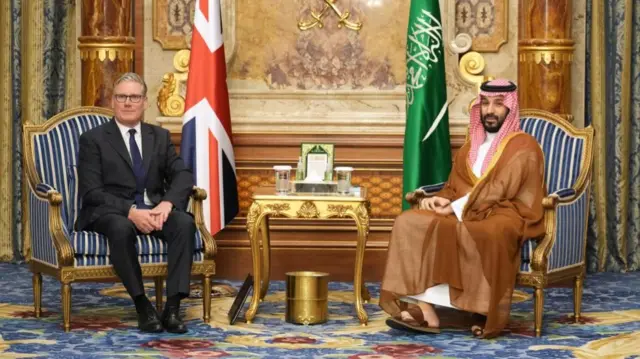
    Prime Minister Sir Keir Starmer is visiting allies in the Gulf, last night meeting Saudi Crown Prince Mohammed bin Salman, who agreed on the need for a lasting peace.

    Prime Minister Sir Keir Starmer met Saudi Arabia's Crown Prince Mohammed bin Salman in Jeddah, Saudi Arabia, on WednesdayImage source, PA Media
    Image caption,

    Prime Minister Sir Keir Starmer met Saudi Arabia's Crown Prince Mohammed bin Salman in Jeddah, Saudi Arabia, on Wednesday

  6. Oil prices rise on Thursday as ceasefire remains uncertainpublished at 05:55 BST

    A picture of petrol pumps at a gas stationImage source, Getty Images

    Oil prices nudged higher on Thursday morning trading in Asia after plunging when the US agreed to stop striking Iran for two weeks.

    Global benchmark Brent crude was up 2.2% at $96.70 (£72.18) a barrel, while US-traded West Texas Intermediate was 2.8% higher at $96.90.

    Cracks in the conditional ceasefire have started to show after Israel continued to launch strikes at Lebanon.

    Brent initially sank 15% to just under $92 a barrel on Wednesday after US President Donald Trump's announcement, though prices edged upwards slightly later in the day.

    Oil prices are still far higher than they were before the war started on 28 February.

    Read more here.

  7. What does Trump mean by Iran meeting 'REAL AGREEMENT'?published at 05:34 BST

    Accounts of the two-week ceasefire struck between the US and Iran have been conflicting.

    The disagreements centre around alternate versions of a 10-point plan that have emerged.

    Trump says "there is only one group of meaningful "POINTS" that are acceptable to the United States".

    He has made clear what he wants under what he calls the real agreement: "NO NUCLEAR WEAPONS and, the Strait of Hormuz WILL BE OPEN & SAFE."

    There have been several versions from the Iranian side.

    Iranian state-run media revealed one that included ending fighting in Iran, Iraq, Yemen and Lebanon, reopening the Strait of Hormuz, and full commitment to the US lifting sanctions.

    Later, Iran's Supreme National Security Council's 10-point plan appeared and added uranium enrichment and for Tehran to keep control of the Strait of Hormuz.

    Demands about enrichment were later dropped from the English translation of the security council's statement.

    There was no mention of the ceasefire including Lebanon in Trump's post, which has also been a key point of contention over the terms of the ceasefire agreement.

  8. Trump says US forces to stay 'in place' until 'REAL AGREEMENT' complied withpublished at 04:57 BST
    Breaking

    US President Donald Trump has just written on Truth Social, warning Iran that the "'Shootin’ Starts,' bigger, and better, and stronger than anyone has ever seen before" if the "REAL AGREEMENT" is not fully complied with. This is his post in full:

    All U.S. Ships, Aircraft, and Military Personnel, with additional Ammunition, Weaponry, and anything else that is appropriate and necessary for the lethal prosecution and destruction of an already substantially degraded Enemy, will remain in place in, and around, Iran, until such time as the REAL AGREEMENT reached is fully complied with. If for any reason it is not, which is highly unlikely, then the “Shootin’ Starts,” bigger, and better, and stronger than anyone has ever seen before. It was agreed, a long time ago, and despite all of the fake rhetoric to the contrary - NO NUCLEAR WEAPONS and, the Strait of Hormuz WILL BE OPEN & SAFE. In the meantime our great Military is Loading Up and Resting, looking forward, actually, to its next Conquest. AMERICA IS BACK!

  9. Military activity in Lebanon poses 'grave risk' to truce, UN chief sayspublished at 04:38 BST

    UN Secretary General António Guterres "unequivocally condemns the massive strikes by Israel across Lebanon on 8 April" and urges "all parties to immediately cease hostilities", a statement from his spokesperson reads.

    These strikes "resulted in hundreds of civilians being killed and injured, including children, as well as damage to civilian infrastructure", it reads.

    Guterres continues that he is "deeply alarmed by the mounting toll on civilians" and has extended his condolences to the Lebanese government.

    He warns that the military activity in Lebanon "poses a grave risk to the ceasefire and the efforts toward a lasting and comprehensive peace in the region", adding "there is no military solution to the conflict".

  10. Strait of Hormuz is key to ceasefire dealpublished at 04:21 BST

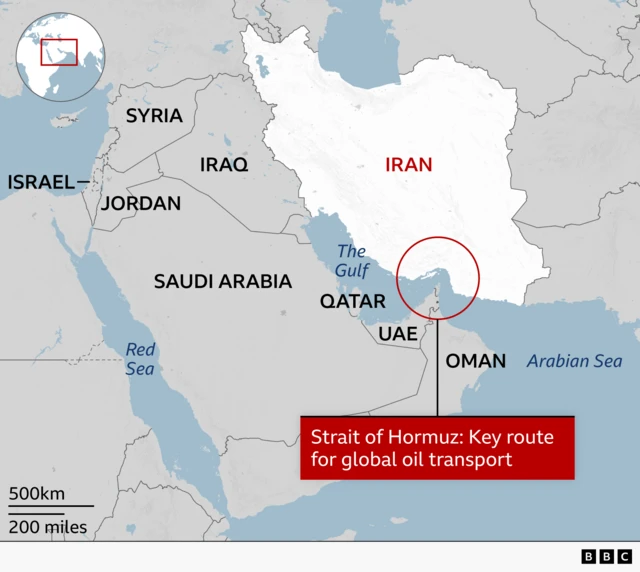
    The Strait of Hormuz, a narrow shipping route in the Gulf region, is one of the world's most important shipping routes and has been a sticking point of the conflict.

    US President Donald Trump had repeatedly threatened to strike Iranian civilian infrastructure unless it ended its blockade of the global shipping channel, with a deal struck on Tuesday night to reopen the passage through the strait as part of a two-week ceasefire between the US and Iran.

    However Iran warned on Wednesday that ships passing through the strait without the permission of the Revolutionary Guard Corps would be "would be targeted and destroyed".

    White House Press Secretary Karoline Leavitt says Trump expects for the strait to be opened "immediately", adding it has been relayed to him privately that is what is taking place and reports suggesting otherwise are false.

    This Flourish post cannot be displayed in your browser. Please enable Javascript or try a different browser.

  11. Iran tells ships how to avoid mines in Strait of Hormuz - state mediapublished at 03:48 BST

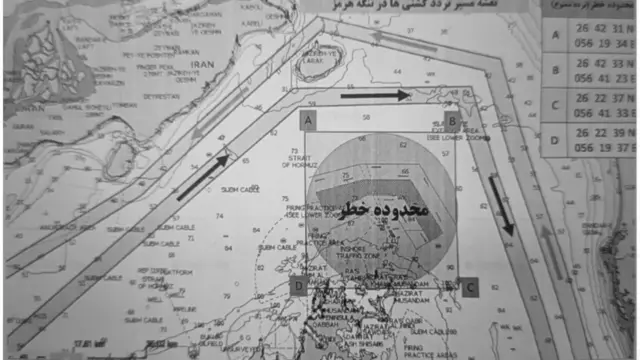
    A map with arrows marking the routes through Strait of HormuzImage source, Islamic Revolutionary Guard Corps

    Ships planning to pass through the Strait of Hormuz should take alternative routes, to "comply with the principles of maritime safety and to be protected from possible collisions with sea mines", Iran's Revolutionary Guards said in a statement cited in Iranian state media.

    The statement goes on to lay out the alternative routes, along with a map showing them. Ships entering from the Sea of Oman are to sail to the north of Larak Island, then continue towards the Persian Gulf.

    Ships bound in the other direction should exit from the Persian Gulf, pass south of Larak Island and continue towards the Sea of ​​Oman.

  12. Analysis

    Will conflict between Israel and Lebanon derail ceasefire?published at 03:10 BST

    Hugo Bachega
    Middle East correspondent in Beirut

    One of the remaining questions is: will the war between Israel and Hezbollah derail the ceasefire?

    Israel says its war in Lebanon is not over.

    Hezbollah says it has the right to respond to Israeli attacks and has fired rockets at northern Israel, as disagreement continues over whether Lebanon is part of the ceasefire.

    On Wednesday, Lebanon was hit with the heaviest bombardment by Israel in this conflict. For 10 minutes, the country was under heavy attack. The health ministry says at least 182 people have been killed and more than 800 wounded.

    At the site of the largest air strike on Beirut emergency workers were searching damaged buildings for hours. Found amid the rubble were glimpses of interrupted lives: pictures of smiling families, pieces of clothing, school homework that was left unfinished. It was difficult to believe the scale of the destruction in an area so close to the centre of capital.

    Abdelkader Mahfouz came to visit his brother who had been injured in the attack.

    "There was a lot of body parts here. Only people are getting harmed. What should the people do. We can't do anything. I wish I was a bomb so that I can blow up whoever is responsible for this. The enemy doesn’t have mercy."

    Many in Lebanon are angry with Hezbollah, saying it has dragged the country into an unwanted war. But they also blame Israel for bringing so much destruction to this country.

    Firefighters attempt to extinguish a fire following an Israeli strike at the Corniche al-Mazraa neighbourhood of Beirut on April 8, 2026. Around 2:00 pm (1100 GMT), a series of Israeli strikes slammed into the Lebanese capital without warning, triggering scenes of panic.Image source, Getty Images
  13. Hezbollah says it has attacked northern Israelpublished at 02:39 BST

    Hezbollah says it has fired rockets at northern Israel.

    The Iran-backed militia says it was in response to ceasefire violations, in a statement posted on social media.

    They have also threatened to continue attacks until "Israeli-American aggression" against Lebanon stops.

    On Wednesday, Israel launched its heaviest bombardment of Lebanon in this conflict, killing at least 182 people.

    Disagreement remains over whether Lebanon is included in the ceasefire.

  14. Israel reopens Jerusalem holy sitespublished at 02:07 BST

    Joel Gunter
    Reporting from Jerusalem

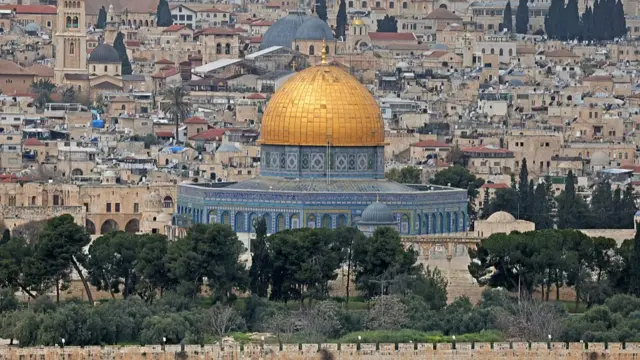
    Israeli police say Jerusalem's holy sites will reopen to visitors and worshippers following the temporary ceasefire arrangement reached in the Middle East conflict.

    The sites, including the Al-Aqsa mosque compound, Western Wall, and Church of the Holy Sepulchre, all with the Old City, are among the holiest in the world in Islam, Judaism and Christianity.

    Because of the war on Iran launched by the US and Israel six weeks ago, the sites have been closed through key religious holidays, including over Easter and parts of Passover, with only very limited numbers of clergy admitted.

    The Old City, where alleys are typically bustling with activity from residents, market-goers, tourists and worshippers, has been extremely quiet, with many shop and stall owners not opening at all.

    Police said that the holy sites would reopen from Thursday morning, with hundreds of additional officers deployed to ensure safety, and the public is encouraged to be patient if there is congestion.

    Al Aqsa mosqueImage source, Getty Images
  15. 'Nato wasn't there when we needed them', Trump sayspublished at 01:49 BST

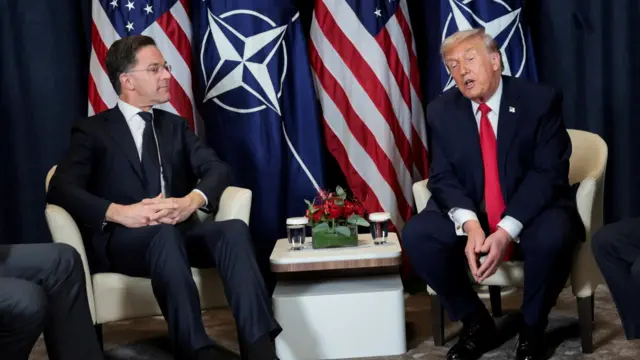
    A short while ago, US President Donald Trump posted on Truth Social for the first time since his meeting with Nato chief Mark Rutte at the White House today.

    "NATO WASN’T THERE WHEN WE NEEDED THEM, AND THEY WON’T BE THERE IF WE NEED THEM AGAIN. REMEMBER GREENLAND, THAT BIG, POORLY RUN, PIECE OF ICE!!!"

    Trump appears to be referencing his previously stated aim to annex the Danish territory into the US, a move that was opposed by many US allies in Nato.

    Rutte earlier told CNN that their meeting was "frank", and that he "absolutely" believes the world is safer after the US and Israel's attacks on Iran.

  16. Rutte's delicate balancing act with Trumppublished at 01:40 BST

    Bernd Debusmann Jr
    White House reporter

    U.S. President Donald Trump holds a bilateral meeting with NATO Secretary General Mark Rutte at the World Economic Forum.Image source, Reuters
    Image caption,

    Rutte and Trump meeting earlier this year

    Nato Secretary General Mark Rutte has described his meeting with Donald Trump as "frank" and open, despite clear disagreements.

    Rutte was at the White House for over two hours today, although we don't know long the meeting with Trump was.

    What is clear, however, is that Trump still has deep misgivings about the alliance and the member countries that he believes did not help the US enough before and during Operation Epic Fury.

    Much of Rutte's message to Trump appears to be that many European countries did not stand in the way.

    The Secretary General told CNN that he pointed out that "the large majority of European nations has been helpful with basing, with logistics, with overflights".

    "It's therefore a nuanced picture," Rutte said.

    Whether or not that point - and the Secretary General's own warm relationship with Trump - are enough for the US president remains to be seen.

    The relationship between the administration and the Nato alliance was already in a difficult place before the war with Iran, largely as a result of disagreements over Trump's plans for Greenland.

    The conflict in Iran, however, has taken Trump's grievances with Nato to new heights and created what is perhaps the greatest challenge it has faced in its history.

  17. How open is the Strait of Hormuz?published at 01:34 BST

    Map showing where the Strait of Hormuz is in the Gulf of Oman, a key route for global oil transport. The strait lies between Iran and the peninsula of the United Arab Emirates and Oman. The map also shows countries in the wider Middle East region including Saudi Arabia, Iraq, Jordan and Israel.

    It's unclear how many ships are currently able to cross through the Strait of Hormuz, amid conflicting reports about how open the narrow sea passage really is.

    • Iranian state media reports that the Strait of Hormuz remains closed after continued attacks by Israel against Iran's allies in Lebanon
    • Two Iranian outlets posted data from a vessel-tracking website showing one Panamanian-flagged ship that approached the strait before turning around, with the caption: "Strait of Hormuz has been fully closed, forcing oil tankers to turn back"
    • White House spokesperson Karoline Leavitt told reporters in her briefing that any reports suggesting that the strait is closed are false, and said there has been an "uptick" in ships passing through
    • Leavitt added that Trump is aware of these "unacceptable" false reports, and has received assurance from US officials that the passage is actually open
    • Meanwhile, commercial ship broker SSY confirmed to BBC Verify that ships in the Gulf had received a message from the IRGC saying: "The Strait of Hormuz remains closed and permission from the Revolutionary Guards is required to pass through this route. Any ship attempting to enter the sea without permission will be targeted and destroyed."

  18. The differing statements on the real '10-point plan'published at 01:33 BST

    Sakshi Venkatraman
    US reporter

    There's been a lot of confusion around a 10-point proposal submitted by Iranian leaders ahead of the ceasefire.

    Donald Trump mentioned it in his post on Truth Social announcing the ceasefire, and said it was a "workable basis on which to negotiate".

    Since then, several iterations of the plan have been surfaced.

    Iranian state-run media revealed one that included cessation of the war in Iran, Iraq, Yemen and Lebanon, reopening the Strait of Hormuz, and full commitment to the US lifting sanctions.

    Then came one from Iran’s Supreme National Security Council adding more stipulations that were supposedly agreed. They included Iran keeping control of the Strait of Hormuz, permission to continue its enrichment of uranium and no more targeting of "Islamic resistance of Lebanon".

    The part about enrichment was eventually removed from the English translation of the security council's statement.

    Trump and White House have today disputed some of those points - including statements that a ceasefire on Lebanon is not a part of the deal and that there will be no enrichment of uranium.

    "There is only one group of meaningful "POINTS" that are acceptable to the United States," Trump wrote.

    Vice-President JD Vance said there have been three iterations of the 10-point plan, one of which was "garbage" and another of which was "reasonable".

    The Speaker of Iran's Parliament, Mohammad Bagher Ghalibaf, has issued a statement saying the "denial of Iran's right to enrichment" was a violation of the 10-point plan, as was the exclusion of Lebanon from the ceasefire.

  19. Iran says three ceasefire clauses 'openly and clearly violated'published at 01:30 BST

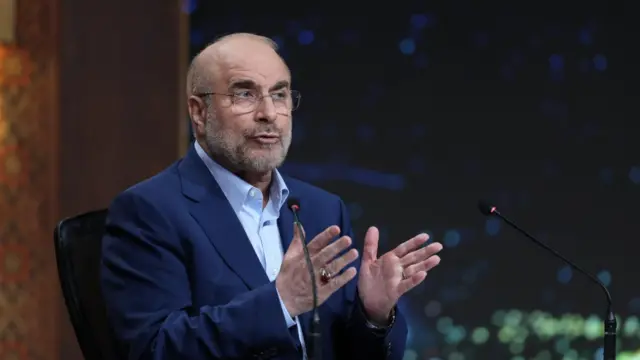
    A handout picture made available by the Iranian state TV (IRIB) shows Iranian presidency candidate Mohammad Bagher Ghalibaf during a TV debate.Image source, EPA
    Image caption,

    Iranian Parliament Speaker Mohammad Bagher Ghalibaf

    Earlier, Iranian Parliament Speaker Mohammad Bagher Ghalibaf posted on X that three clauses of Iran’s 10-point proposal have been "openly and clearly violated" and in such situation a "bilateral ceasefire or negotiations" is "unreasonable".

    Ghalibaf mentioned that Lebanon was included in the proposal, something that the White House has rejected today.

    He also mentioned a drone entering Iran’s southern Fars province. The IDF (Israel Defense Forces) had told the BBC that they were "not aware" of such an incident.

    On the third one, he has said that Iran's right to enrichment was included in the proposal, something that was included in the Persian statement of Iran's Supreme National Security Council (SNSC), read aloud last night by the presenter on state TV.

    The US and Israel's war in Iran started on 28 February, two days after the latest round of negotiations over Iran’s nuclear programme.

    Some unconfirmed reports had suggested that Trump administration was considering Ghalibaf as a potential partner and possibly even a future leader of Iran.

  20. With Lebanon still facing attacks, how sustainable is this ceasefire?published at 01:29 BST

    Nick Beake
    Reporting from Jerusalem

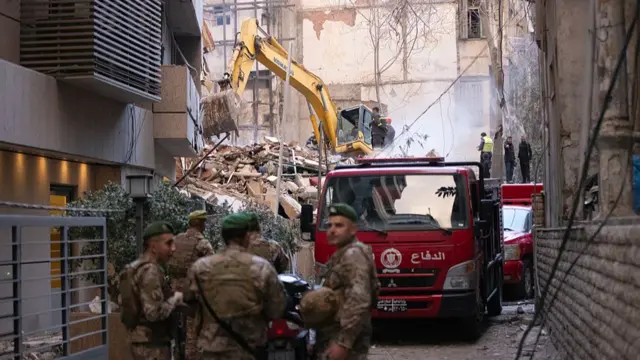
    Lebanese soldiers secure the location as rescue workers search the rubble for people buried after an Israeli attack targeted residential building near the Corniche Ain Mreisse neighborhood.Image source, Getty Images

    You wonder now just how sustainable this wider ceasefire is.

    Israel trumpeted hitting 100 targets in the space of 10 minutes in Lebanon on Wednesday. The Iranians are threatening to hit back unless the attacks stop.

    President Trump has indicated the Israelis are not breaking the terms of his Iran deal - referring to Lebanon as a "separate skirmish".

    Just a reminder: 1,500 people have been killed in Lebanon in the last six weeks, including 130 children, and more than a million people have been displaced.

    Israeli Prime Minister Netanyahu had - he thought - achieved his political ambition of a lifetime in persuading a US president to embark on a joint venture to hit Iran and topple the regime.

    Tonight he had to deny suggestions he found out only at the last minute that President Trump was stepping back and halting strikes on Tehran.

    He also vowed Israel would be ready to resume the war with Iran, if needed.

    Opposition politicians say he has failed in his war aims, was not invited to the negotiating table, and has only created a more vengeful Iran - more determined than ever to build a nuclear weapon.

    But in the short term, these continued Israeli attacks on Hezbollah in Lebanon - and the accompanying death and destruction - are putting a considerable strain on this fragile truce.