Summary

  1. Thank you for joining uspublished at 18:59 GMT 22 January

    Thank you for joining us as we have spent the day showcasing the pressures the NHS is under, and how it is coping.

    Here are some of the highlights:

    Health Secretary Wes Streeting spent two hours being grilled by local BBC radio stations, many of whom raised issues such as the pressure on staff, waiting list targets, dental care and patients receiving care in corridors, which has been highlighted as an issue across the board.

    Streeting says the NHS is broken, but it is not beaten, and that turning it around "will be a marathon".

    Other talking points throughout the day have included cancer care and waiting list targets; a diagnostic centre in a shopping centre; ambulance response times; 'AI patients' being used to train the next generation of medics; and delayed discharges leading to backlogs.

    Elsewhere there have been some positive stories, such as a woman paralysed by cancer who learned to walk again against all the odds, and paramedics have been talking about what a privilege it is to do their jobs.


  2. Hospitals in unsustainable position as norovirus cases risepublished at 18:56 GMT 22 January

    Hugh Pym
    Health editor

    The pressures on hospitals were revealed again with the latest weekly situation report from NHS England.

    The number of patients with norovirus, the winter vomiting bug, was the highest this winter and more than double what it was a fortnight before.

    General bed occupancy was close to 95%.

    Flu may have receded but the Royal College of Emergency Medicine said that in effect hospitals were full and that meant more incoming patients had to be looked after in corridors.

    The college warned this was unsustainable - a sobering thought for hospital staff who know that winter is far from over.

  3. Kindness everywhere in A&E as bed monitoring system cuts waiting timepublished at 18:48 GMT 22 January

    Mark Norman
    Health Correspondent, BBC South East

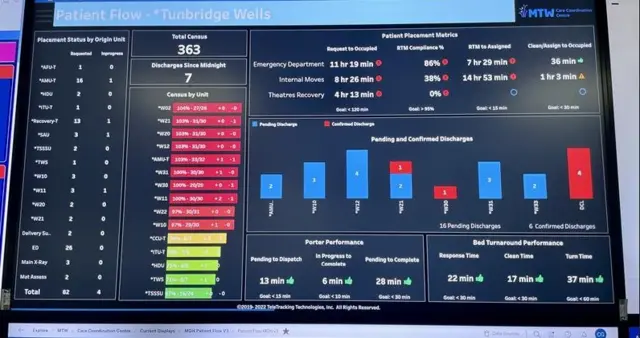
    Patient flow charts from Tunbridge Wells Lots of different coloured bars and charts.

    It’s no secret that many of our hospitals have hundreds of patients stuck in beds who are medically ready to go home.

    Several of the clinicians I spoke to today said that freeing up those beds would take a huge amount of pressure off A&E.

    While that bigger problem remains unsolved here in Maidstone, the hospital has been using software that shows, in real time, the status of every bed.

    The TeleTracking system displays how many beds are occupied, how many patients are waiting to be discharged, and whether the beds have been cleaned and are ready for someone new.

    What surprised me is how much difference it’s made. It has cut the average time A&E patients wait to be admitted by more than an hour.

    Even so, people were still waiting more than seven hours for a bed.

    The other thing that struck me was the small acts of kindness happening everywhere in A&E. A member of staff holding someone’s hand. Someone offering a cup of water and waiting as a patient sips. These moments can be easy to miss amid the noise and chaos of an emergency department — but they matter.

  4. 'We've eliminated corridor care'published at 18:40 GMT 22 January

    Laura Foster
    Senior reporter

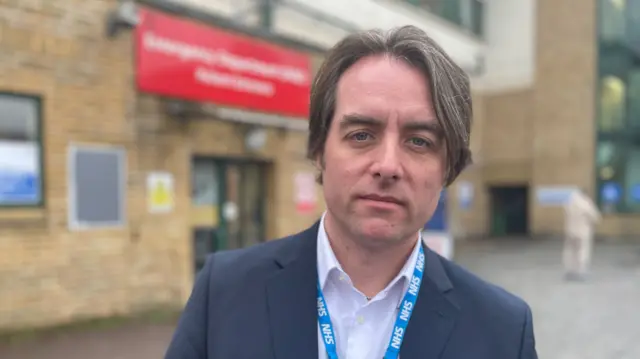
    Thom Lafferty looks at the camera - he wears a suit jacket and white shirt, and an NHS lanyard. Blurred behind him is a hospital entrance

    Things have been so busy at the emergency department at Princess Alexandra Hospital, in Harlow, that we haven't been allowed to go in today with cameras to film the pressures it's facing.

    However, it's chief executive, Thom Lafferty, told us they have eliminated corridor care: "We made a change about a month ago and we’ve managed to make it stick [even with the winter pressures]."

    He explained they’ve established a new clinical area called the cohorting area.

    It is jointly staffed by people from the hospital trust and from the ambulance service and has all the facilities needed to look after patients.

    Work to build a new hospital for Harlow is set to begin in the next decade - which Lafferty says is much needed.

  5. Hospital chef says he caters for all dietary needspublished at 18:33 GMT 22 January

    A Guernsey hospital chef says he makes meals for about 2,000 islanders a day.

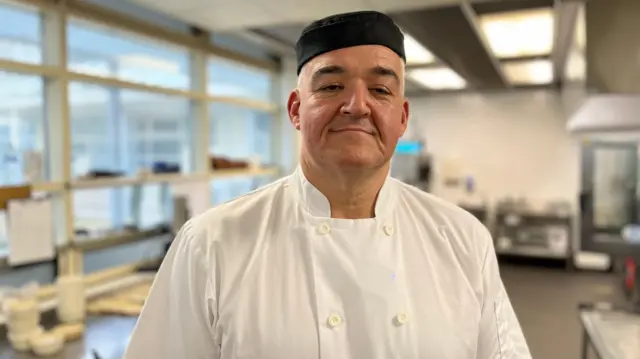
    René Bisson is one of 70 people working in the kitchens at Princess Elizabeth Hospital and says they cater for all including diabetics, dairy-free, gluten-free, low potassium food, and low fibre meals.

    But it's not just for patients in hospital as they provide dishes for people in care homes, day centres as well as for its meals on wheels service.

    Bisson says the hospital is a "very interesting place to work" and there is a "good camaraderie".

    "It's a good banter," he says.

    René Bisson is in chef's whites and a black hat in a kitchen.
  6. Hospital flu cases continue to fall in Englandpublished at 18:25 GMT 22 January

    Phil Leake
    BBC Verify data journalist

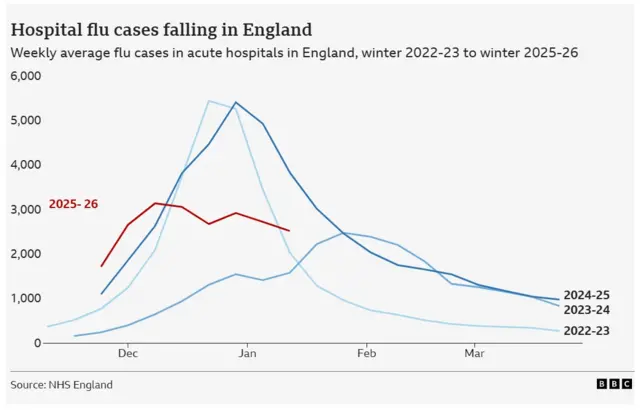
    The number of people in hospital with flu in England has fallen for the second consecutive week after a slight post-Christmas increase, according to the latest NHS figures.

    There were an average of 2,519 patients in hospital with the virus last week, down from almost 3,000 just after Christmas.

    The number of hospital flu cases was higher than in previous years at the start of the winter, with just over 3,100 weekly patients in early December.

    Hospitals in Scotland, Wales and Northern Ireland have also reported a fall in cases in January compared with December.

    A line graph showing flu cases in England since 2022 over each year - a different line for each year going over the months. It shows that flu is lower this year that previous two
  7. Does the NHS need to record data on corridor care?published at 18:17 GMT 22 January

    BBC Radio Gloucestershire

    Matthew Stewart looks at the camera - he wears glasses and a blue jacket with a royal college of nursing logo. He is in front of the BBC radio Gloucestershire banner

    A critical care nurse and member of the Royal College of Nursing has told the BBC he wants to see national recording of data on how widespread corridor care has become.

    Matthew Stewart, from Gloucestershire Royal Hospital, said it was "a whole system-wide issue that needs looking at".

    Stewart said nurses were complaining of "morale distress" as a result of treating patients in corridors.

    "People are just getting demoralised by the fact that they have to do this care - personal care, intimate procedures - with other people around. It's being normalised."

    He added staff had shown "great resilience" but it had affected their wellbeing.

    The Gloucestershire Hospitals NHS Foundation Trust said it prioritised "patient dignity, safety and staff wellbeing" across their hospitals.

    It said on "rare occasions" during exceptional demand, patients were cared for in temporary areas. It said it was working on patient flow.

    "Our commitment is clear - every patient should receive high-quality care, in the right place at the right time."

  8. 'We’re getting it right' with recovery from home schemepublished at 18:07 GMT 22 January

    Mark McAlindon
    BBC Cumbria

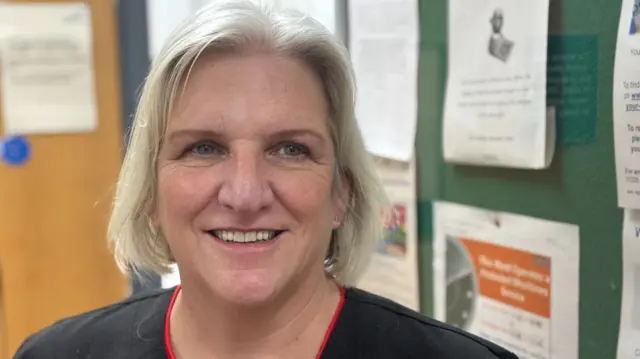
    Salli Pilcher smiles at the camera - she wears a black top in the shop, which is of her head and shoulders. Behind her is a noticeboard with various paper pinned to it.

    A scheme called Discharge to Assess means people can continue treatment and recovery at home rather than staying on wards.

    Happening in north and west Cumbria, it allows people to return home when it is safe to do so, and they receive regular visits from health and social care professionals.

    Julie Downes, from Cleator Moor, says the care she gets at home is "probably better" than on an acute ward: “Because in hospital if you need something you have to wait till somebody’s free, whereas here I can ring up the district nurses and they’ll come quite quickly. It has worked well for me.”

    Salli Pilcher, the lead community nurse at the North Cumbria Integrated Care Trust, said most patients preferred to be close to loved ones: “We take home hundreds of people on Discharge to Assess each month. We’re really proud that we have 91% of people staying at home, so that means we’re getting it right.”

    Quote Message

    Every day’s a Christmas Day, every day is a bonus for me having my wife at home. For those nurses who come here, thank you.”

    James Downes

  9. Funding shortfalls delay discharges says care bosspublished at 17:57 GMT 22 January

    A shortfall in government funding is preventing care homes from taking on the number of patients needed to ease pressure on hospital beds, the co-owner of one home says.

    Helen Thompson from Ochre Care, which runs two private homes in North Yorkshire, said current funding levels did not match the costs of support needed for many residents coming out of hospital.

    Thompson said while her company "absolutely" had capacity, funding from government was "not appropriate to the level of need".

    She said as a provider, the company received about £994 a week for each council-funded resident, but the real cost of providing care was up to £1,300 a week.

    "About 65% of our residents are not funded to the amount they need to be appropriate to their dependency, so with that, it's the privately-funded residents that subsidise the gap.”

    The Department of Health and Social Care said it was tackling the situation with a promise to boost funding by about £4.6bn by 2028-29.

    “We are also creating a National Care Service, based on higher quality of care, greater choice and control, and joined-up neighbourhood services,” a spokesperson added.

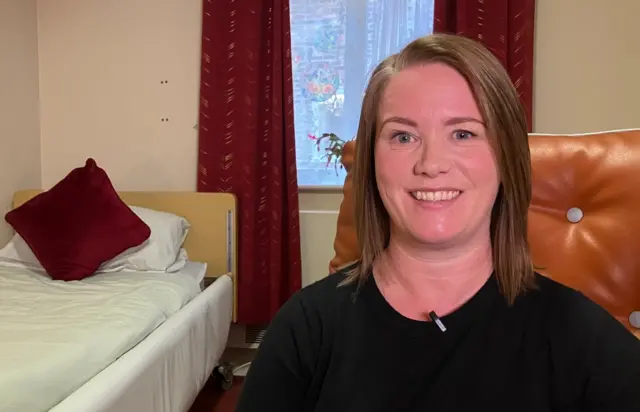
    Woman in a care home room.She has brown hair and is wearing a black top. There's a single bed behind her and it has a red cushion on it. There are red curtains around the window.
  10. Delayed discharges lead to NHS backlogspublished at 17:45 GMT 22 January

    Lauren Woodhead
    England Data Unit

    Patients who have left hospital but still require rehabilitation or recovery care often move into intermediate care settings.

    These provide short-term support and can include community hospitals and care homes, usually focused on increasing someone's independence.

    The most recent data shows significant delays in people being discharged from intermediate care, which contributes to backlogs in other parts of the NHS.

    These patients are medically ready to be discharged but are unable to leave the intermediate care setting for non-medical reasons, ranging from transport issues to unsuitable social care arrangements.

    On the first Monday of December 2025, 88% of people who were ready to be discharged remained in intermediate care beds.

    This is a slight increase on the first Monday of December 2024, when 85% remained.

    The picture is similar in trusts across England, with most NHS regions discharging between 12% and 16% of patients medically ready to leave care.

  11. Home visit service saves children from going to hospitalpublished at 17:34 GMT 22 January

    Alex Meakin

    A home visit service which is available to young patients has saved thousands of children from needing to visit hospital, says an NHS trust.

    Services based out of both Portsmouth and Southampton are available to patients under 16 who have been referred by a local GP.

    The teams focus on treating respiratory illness including bronchiolitis, asthma, chest infections and viral wheezing as well as gastroenteritis and tonsillitis.

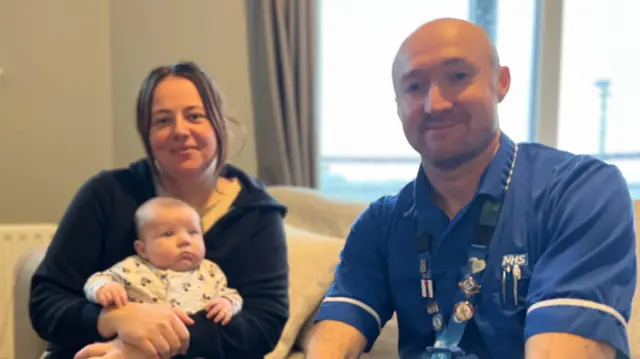
    12-week old Myles is wearing a white baby grow and is being held by his mother. His mother, Shanice, is wearing a black zip hoodie and has brunette hair. Sat next to her is Chris in blue nurses scubs. He is smiling and has very short hair.
  12. Church sees 165 donors - including Wendy, who's donating for the 78th timepublished at 17:23 GMT 22 January

    Patrick Hughes
    South of England

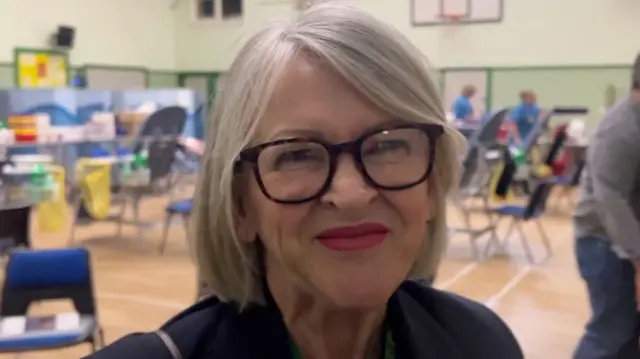
    Senior nurse Donna Blofield smiles at the camera - she stands in a community or sports hall type setting with chairs scattered and wears glasses and a smart jacket

    It's a busy day at St. James' Methodist Church in Shirley, Southampton, where the team is receiving blood donations until 19:00 GMT this evening.

    Donna Blofield, senior nurse, said they're expecting about 165 donors altogether - about the usual number.

    There have been a few first timers who said they're a little bit nervous - as well as a few long-time donors who were as cool as cucumbers. That's including one seasoned donor, Wendy, who's donating for the 78th time.

    Having a chocolate bar after giving blood, she said people should know it’s nothing to worry about - a little bit of a “sharp scratch”, but that she doesn’t find it painful.

    The first batches of blood received here today were collected at about 16:00 and delivered straight to the local hospital.

  13. No smartphone? No problempublished at 17:13 GMT 22 January

    BBC Radio Devon

    While new tech in healthcare has been welcomed by many, some people aren't as confident with it.

    The BBC's John Acres has been learning about a new project in Torbay, in Devon, aiming to help. The "health pod" based at Paignton Community Hub can be used for virtual appointments and is helping those with no internet access.

    Simon Culley, digital lead at Healthwatch Devon, said: "Virtual appointments are often offered to people sooner than face-to-face ones, but not everybody can access them and that risks creating a two-tier NHS where arguably the most vulnerable people are waiting the longest time."

    Media caption,

    An NHS Digital pod is being installed in Torbay to help those with no internet access

  14. Patients not happy with state of GP carepublished at 17:02 GMT 22 January

    Nick Triggle
    Health correspondent

    Over winter, much of the focus is on how hospitals and emergency services are coping.

    But as we have been hearing today GPs say they too are under enormous pressure.

    Over the past decade demand has increased, but there has been little increase in the number of GPs – at least until the last year or so.

    It means the number of patients per full-time GP has risen from just over 1,900 in 2015 to more than 2,200 in late 2025.

    This has come at a cost.

    More than one in five patients reported they could not get through to their GP on the day they last tried.

    And satisfaction levels are at a record low. The most recent British Social Attitudes Survey showed just 31% said they were satisfied.

  15. AI and robots helping pharmacists with growing demandpublished at 16:51 GMT 22 January

    Matt Knight
    BBC News, Essex

    As demand for pharmacists grow, AI and robotics are helping.

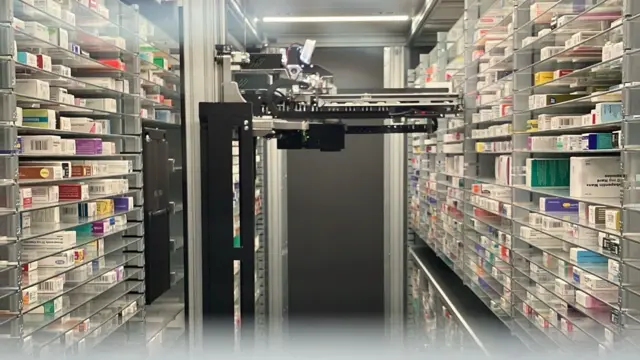
    Cross Chemist in Benfleet, Essex, is using the technology to help dispense its 11,000 medications a month and it's freeing up more time for staff.

    It uses barcode recognition to identify an item, pick it up and send it down a chute to waiting staff. Using AI, the robot is also able to automatically prioritise medication with the shortest expiry date.

    Pharmacist Hema Patel said a "good proportion" of 11,000 prescriptions don't need to be checked because "the robot and the system are doing that for us".

    A black robotic device is positioned in the middle of a room. On either side are shelves stacked with various types of medication. There is a dark grey door at the far end of the room behind the robot.
  16. Could AI patients help train the next generation of doctors?published at 16:41 GMT 22 January

    Sophie Parker
    BBC Wiltshire

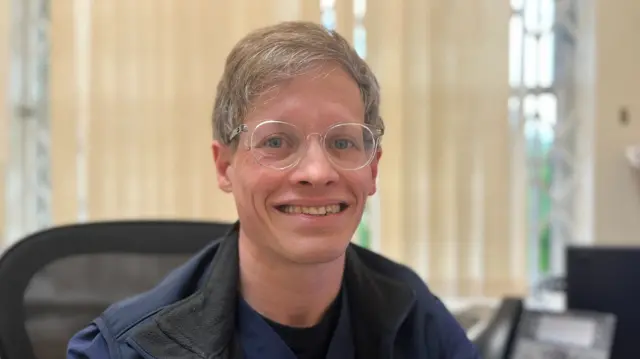
    Chris Jacobs smiles at the camera - he wears glasses and a blue top while sitting in a computer chair

    AI patients are being used to train medical students in a bid to improve their communication skills.

    Students are presented with a database of options, and can talk to and get responses from an AI patient with realistic faces and voices.

    Dr Chris Jacobs, a Swindon GP, who teaches medical students at a hospital and two universities, said: "What's special about this, it has lots of layers to it where we're creating real emotions, real patients that doctors, nurses, students can all train with in a safe fashion as many times as they need to to become more competent."

    He said students often had to practise with each other or book days with actors, but AI helped them perfect their skills.

    Dr Jacobs added poor communication between patients and staff not only meant patients did not get everything they needed, it could also cost the NHS money.

  17. Ambulance call handlers receive 'mixed responses'published at 16:22 GMT 22 January

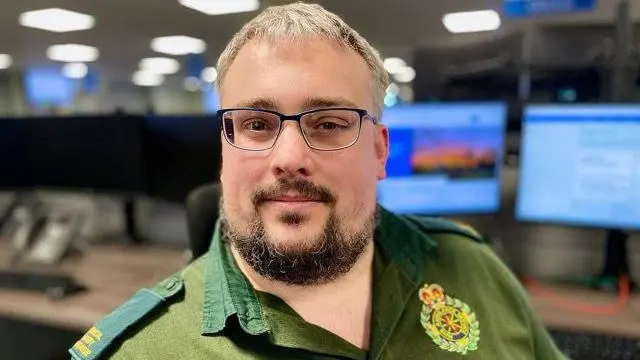
    A man with a beard and glasses in green ambulance service uniform sitting in an ambulance 999 call centre with computer screens in the background.

    Call handlers at South East Coast Ambulance Service (SECAmb) triage all 999 calls to try and provide the right response for patients, which may not always involve sending an ambulance.

    Bosses say it means ambulances go to the most "seriously ill and critically unwell patients".

    Ian Spencer, clinical safety navigator, says when they offer the alternatives - pharmacies, GPs, or urgent treatment centres - they get "a very mixed response".

    "Some people obviously see the frustration that they think it's delaying the help," he says.

    "But actually, for us, it's getting the right care to the right patients at the right time."

    Between 5 and 11 January, SECAmb said it dealt with 22,500 calls, compared to a call volume of about 3,000 in December.

    Cathie Burton, SECAmb operations manager, says they have been dealing with an "unprecedented" number of 999 calls.

    "It's really important that we do respond quickly, effectively and safely to all those calls that come in," Burton adds.

  18. Just one ambulance service meets target response timepublished at 16:08 GMT 22 January

    Ema Sabljak
    England Data Unit

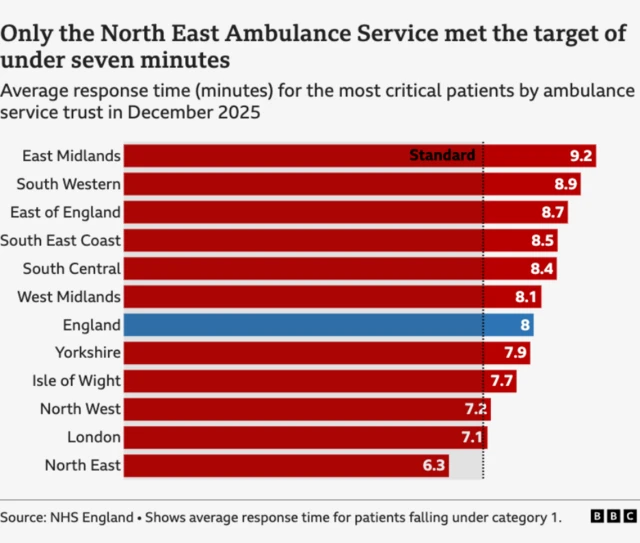
    In December, only one regional ambulance service met the target response time for the most critical patients.

    The North East Ambulance Service took on average six minutes and 20 seconds to respond to the most life-threatening calls for help – making it the only service that was faster than the seven-minute standard.

    Across England, the average response time for category one - which includes people experiencing heart attacks - was one minute over the target.

    A bar chart showing each of England's ambulances services and their average response time to the most critical calls, or category one. East Midlands is slowest, North East fastest and also the only one doing it in under the seven minute target
  19. Worst ambulance service in country faces busiest daypublished at 15:51 GMT 22 January

    Matthew Hill
    BBC West health correspondent

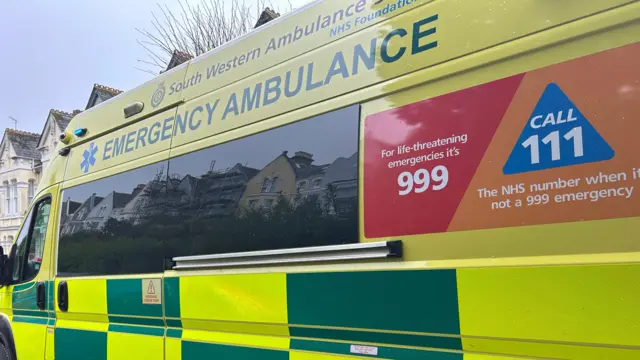
    The side of an emergency ambulance, which has a livery of yellow and green alternating panels. On the side there is a sign that reads "For life-threatening emergencies it's 999" and also "Call 111, the NHS number when it's not a 999 emergency"

    The ambulance service currently rated as the worst in the country by the NHS for overall performance faced the busiest day in its history earlier in January.

    South Western Ambulance Service NHS Foundation Trust (SWAST) said that day - which topped days during the Covid-19 pandemic - came on 1 January when it responded to 3,796 incidents.

    SWAST CEO John Martin confirmed the service had been at its highest state of alert - known as Resource Escalation Action Plan (REAP) - since November.

    This means there is less staff training so that more are available to respond to patients, as well as call-handling.

    Martin said it has been a "tough winter".

    "Since the new year it's been busy. We've responded to that well working with our partners, and as we go through these next few weeks we would hope to see that continue to improve."

  20. 'The most challenging calls always involve children'published at 15:37 GMT 22 January

    Sharon Barbour
    BBC Look North

    James Atkinson stood in front of an ambulance and smiling at the camera.

    It’s an early start for paramedic James Atkinson and crew mate Nathan Pattison at Hartlepool South station.

    The first call to come through is classified as category two – meaning it's an emergency but not immediately critical. This one is a man with chest pain. I follow in an ambulance car.

    I’m struck by how gently and quickly the crew reassure their patient, whose called David. They carry out tests and decide he needs to go to hospital.

    “I’m not frightened,” David says. “We’ve got to go some time."

    “Hopefully not today,” James replies.

    There were quieter moments, as not all patients survived.

    Before we leave I ask James about the hardest part of his job?

    “The most challenging calls always involve children," he replies.

    But he quickly adds the best thing is bringing someone back to consciousness - back to life - from cardiac arrest, and - he smiles - being able to deliver a baby.

    Read more: How North East ambulances meet urgent call targets