Summary

  • The benchmark oil price has dipped after US President Donald Trump said the war with Iran will end "very soon"

  • Oil surged past $100 a barrel on Monday - before Trump said the war was "very far ahead of schedule" and "very complete, pretty much"

  • His comments led to a fall in the oil price, which is now closer to $90 a barrel - but still well above pre-war levels

  • But Trump lacked clarity, even when pushed for detail, says our correspondent Anthony Zurcher - and the president later threatened to hit Iran "twenty times harder" if they stopped oil flowing through the Straits of Hormuz

  • Iran has reportedly said it will not allow "one litre of oil" to be exported from the region if US-Israeli attacks continue

  • Also on Monday, President Trump spoke to Russia's Vladimir Putin - and later said some oil sanctions could be lifted, without specifying on which countries

  1. London's FTSE 100 index opens up after dip in oil pricepublished at 08:03 GMT
    Breaking

    Nick Edser
    Business reporter

    Trading has just started on the London Stock Exchange and the FTSE 100 index has opened up 1.3%

    Stock markets had begun to recover last night after Donald Trump’s comments raised hopes the US-Israeli war with Iran would not be a drawn-out conflict

    In Asia, Japan's Nikkei share index closed up 2.9%, recovering some of Monday's heavy losses, while South Korea's Kospi gained 5.4%.
  2. Trump spoke to Putin - then said sanctions on some countries could be liftedpublished at 07:57 GMT

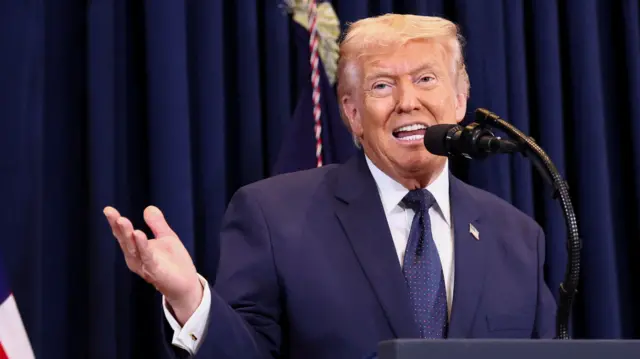
    U.S. President Donald Trump speaks during a press conference at Trump National Doral Miami in Miami, Florida, U.S., MarchImage source, Reuters

    On Monday - in his flurry of interviews and news conferences about the war - Donald Trump said the US was considering easing some oil sanctions to combat rising prices.

    Trump told reporters on Monday: "We have sanctions on some countries. We're going to take those sanctions off till this straightens out."

    "Then, who knows? Maybe we won’t have to put them on – there’ll be so much peace," he added.

    Trump told reporters in the same news conference that he had had a "very good" call with Russian President Vladimir Putin, who Trump said he believes "wants to be helpful".

    But Trump did not detail exactly which sanctions, or on which countries, he would look to lift - although the US has alreadytemporarily eased sanctions to allow India to buy Russian oil stranded at sea.

  3. Gas prices also down after oil dippublished at 07:48 GMT

    Nick Edser
    Business reporter

    Following the sharp drop in oil prices overnight, the cost of gas has also seen a significant drop this morning.

    As soon as trading got under way, UK wholesale gas prices fell more than 10% to about 123p a therm, which is well below the high of 171p it reached at one point on Monday.

    Despite the recent price spikes, gas prices remain well below the 640p-a-therm peak reached in 2022 following Russia's invasion of Ukraine.

  4. Gulf nations report more attacks overnightpublished at 07:42 GMT

    Smoke and flames rise following a drone attack on the UAE consulate in ErbilImage source, Reuters
    Image caption,

    Smoke and flames rise following a drone attack on the UAE consulate in Erbil

    As the US and Israel continue air strikes on Iran, with Israel also hitting Lebanon, apparent retaliatory strikes from Iran continue to be intercepted by Gulf states:

    Saudi Arabia says it intercepted a ballistic missile and five attack drones overnight.

    The Kuwaiti military says it successfully intercepted and downed six drones.

    Following the death of a 29-year-old woman in an attack on Bahrain's capital Manama late on Monday, Bahrain has sounded its warning sirens, while urging residents to shelter.

    The United Arab Emirates (UAE) defence ministry announced early on Tuesday that it was continuing to intercept "missile and drone threats" from Iran and has deployed air defence systems and fighter jets.

    The UAE also said its consulate in Erbil, northern Iraq, was targeted with a drone, causing damage but no injuries.

  5. Power cuts for some Iranians following overnight explosionspublished at 07:33 GMT

    Ghoncheh Habibiazad
    Senior reporter, BBC Persian

    Iran's national energy company Tavanir has acknowledged that, following explosions overnight in Tehran and nearby Alborz provinces, there were "damage to parts of the power network facilities".

    In a statement reported by local media, it said a "number of customers in these regions experienced a temporary power outage" but that "electricity was restored in less than two hours".

    Earlier some of those living in these two provinces told the BBC about electricity outage.

  6. Oil prices go up, down, up - but are still much higher than before the warpublished at 07:22 GMT

    Dearbail Jordan
    Business reporter

    To say oil prices have been rising and falling in the 11 days since the US-Israel war with Iran began would be a vast understatement.

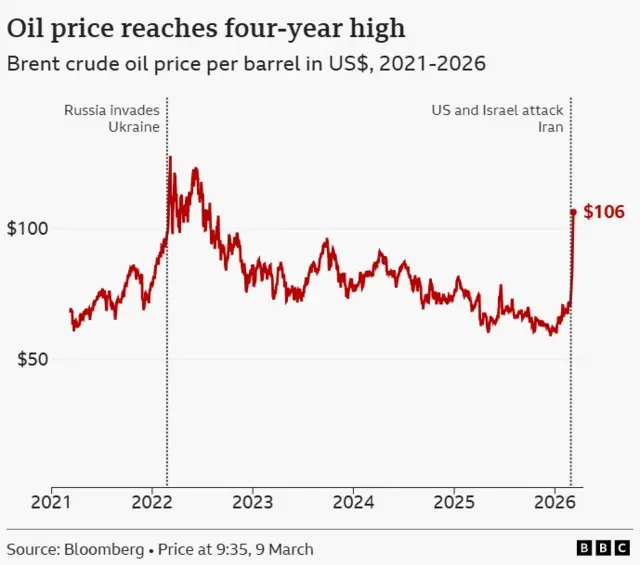
    On Monday, Brent crude came within a whisker of $120 a barrel - the highest since Russia’s full-scale invasion of Ukraine four years ago.

    Prices then slid back to $83 as Donald Trump announced that the war is "very complete" yesterday evening. They have since ticked back up to $93 a barrel on Tuesday as the US president said: "We have won in many ways but not enough."

    Where do oil prices go now? Who on earth knows.

    But at the current rate, Brent crude is still $20 higher than it was before the conflict began on 28 February when it was trading at $73.

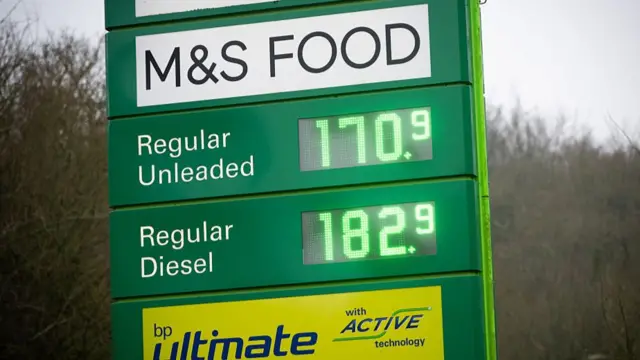
    And drivers and businesses in the UK are already feeling that via higher petrol and diesel prices.

    Petrol prices at Winchester Services on the M3 on MondayImage source, Getty Images
    Image caption,

    Petrol prices at Winchester Services on the M3 on Monday

  7. US embassy in Beirut urges citizens to leave country or 'shelter in place'published at 07:01 GMT

    The US embassy in Beirut is urging its citizens to "shelter in place" if they are not leaving Lebanon.

    In a security alert issued this morning, the embassy says US citizens "should strongly consider" leaving the country on Middle East Airlines flights departing Beirut Rafic Hariri airport, if they believe it is safe to do so.

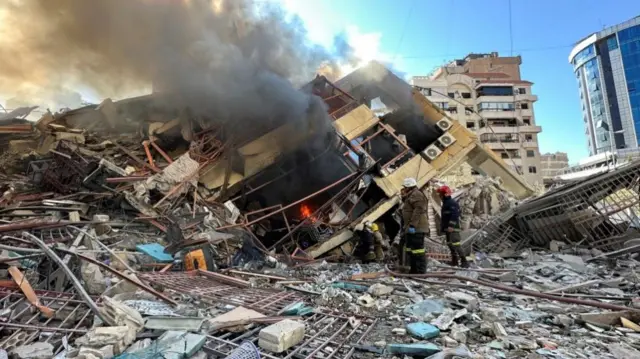
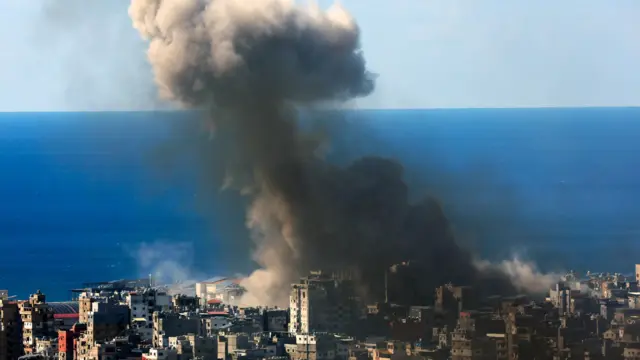
    Beirut and parts of southern Lebanon have been under consistent bombardment from Israel over the past week, which says it is targeting the Iran-backed militant group Hezbollah.

    Members of the Lebanese Civil Defence inspect a damaged building after an Israeli strike on Beirut's southern suburbs on MondayImage source, Reuters
    Image caption,

    Members of the Lebanese Civil Defence inspect a damaged building after an Israeli strike on Beirut's southern suburbs on Monday

  8. Israel again orders evacuation of southern Lebanon as it continues air strikespublished at 06:52 GMT

    An Israeli airstrike targets the Dahiyeh neighborhood of southern Beirut, Lebanon, 09 March 2026Image source, EPA
    Image caption,

    Israel carried out a number of strikes against Lebanon on Monday

    Israel has ordered the urgent evacuation of southern Lebanon as it continues to hit the area with air strikes.

    Israel Defense Forces (IDF) spokesman Avichay Adraee says Israel is acting "forcefully" against Hezbollah south of the Litani River due to the group's activities in the region.

    "We reiterate our urgent appeal for you to evacuate your homes immediately and head immediately north of the Litani River," he writes on X.

    On Monday, the IDF said it carried out a series of strikes in Lebanon against Al-Qard Al-Hassan Association (AQAH) targets, a financial association linked with Hezbollah.

    The Lebanese health ministry said yesterday that 486 people had been killed since Israel began its offensive earlier this month.

  9. Analysis

    After a tumultuous day in the markets, Trump's comments seemed to have the desired effectpublished at 06:35 GMT

    Anthony Zurcher
    North America correspondent

    President Donald Trump and his administration have so far offered mixed messages and contradictory explanations on the joint US-Israeli military campaign against Iran.

    And Monday - the 10th day of an operation that has rattled allies and shaken markets - typified this confusion around the war's timeline and ultimate goals.

    After a tumultuous morning during which US stock market indexes dropped and oil prices surged, the American president began speed-dialing reporters in an apparent effort to soothe nerves.

    His comments, however, were lacking in clarity even when he was pushed for more detail.

    "I have a plan for everything, okay?" he told a reporter from the New York Post when asked about spiking oil prices. "I have a plan for everything. You'll be very happy."

    To CBS News, he said the war "is very complete, pretty much". "We're very far ahead of schedule," he added. You can see a summary of his comments in our previous post.

    His telephone spree, at least in an economic sense, had the desired effect. Stock markets rallied, and the price of a barrel of oil – which had reached $120 earlier in the day - dropped below $90.

    Just days ago, Trump said that he would not stop the war until Iran's "unconditional surrender".

    But after his comments on Monday, it appeared as though an end to a military operation that has roiled the Middle East and led to the near complete shutdown of shipping traffic through the Straits of Hormuz could be in sight.

  10. What Trump said about Iran on Mondaypublished at 06:00 GMT

    Media caption,

    Trump says Iran war will be over 'very soon', but not this week

    From interviewing with several news outlets to speaking at a Republican conference to delivering a formal press briefing, Trump made several comments Monday about the US war with Iran.

    Here is a timeline of Trump's remarks throughout yesterday:

    • He told CBS News "I think the war is very complete, pretty much", and said the US was "very far ahead of schedule"
    • Speaking to NBC, he left open the prospect of acquiring Iranian oil, saying "certainly people have talked about it"
    • In an interview with the New York Post, he said the administration was "nowhere near" making a decision on whether to order US troops into Iran
    • Speaking to Republican lawmakers, Trump said the US was drawn into a "short-term" military operation in Iran to "get rid of some very evil people"
    • He went on to say: "We've already won in many ways, but we haven't won enough"
    • Trump told the New York Post he is "not happy" with Iran's new supreme leader, Mojtaba Khamenei, but at his press briefing later did not make clear who he wants to take his place - or how that will be achieved
    • At his press briefing, Trump reiterated that the operation in Iran has been a "tremendous success", but also added that he wants to ensure Iran cannot develop nuclear weaponry "for a very long time" - a much bigger task
    • The US still has targets in Iran, Trump told reporters, but they could be taken out "in one day"
    • Still, he said the war will be over "very soon"
    • Later, in a post on Truth Social, Trump said "Death, Fire, and Fury will reign upon" Iran, if it stops the flow of oil through the Strait of Hormuz
  11. Trump says deadly school strike still under investigationpublished at 05:52 GMT

    On Monday Trump was asked if the US will accept any responsibility for a strike which hit a primary school near a military base in Minab, killing 168 people, 110 of whom were children.

    The president responded by saying that Tomahawk missiles, which are made in America and are the type that appears to have been used in the strike, are used by several countries, including Iran.

    Later, it was put to Trump that he is the only person in the administration seemingly suggesting that another country could have acquired a US-produced missile and struck the school.

    Neither Israel nor Iran are known to possess Tomahawks, experts previously told the BBC.

    "I just don't know enough about it," Trump said, adding again that the deadly strike is under investigation.

    He added: "Whatever that report shows, I'm willing to live with that report."

    You can read BBC Verify's investigation on the circumstances around the strike here.

  12. Iran's new untested leader faces an existential battlepublished at 05:39 GMT

    Lyse Doucet
    Chief international correspondent

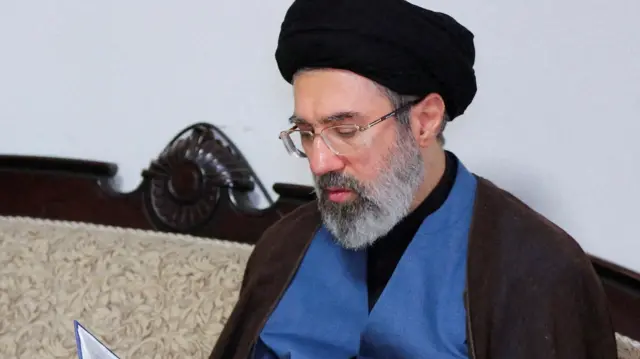
    Mojtaba KhameneiImage source, Reuters

    A leader who has never been fully tested takes the helm in Iran when its theocracy faces its greatest test in five decades.

    Continuity and connections have pulled Mojtaba Khamenei, 56, to the top after the assassination of his father, Ayatollah Ali Khamenei, in the first salvos of this war.

    But Iran's third supreme leader since its 1979 revolution takes charge as the Islamic Republic confronts an existential battle.

    For those who still mourn the loss of the many thousands killed in that crackdown on those protests, a harsh, hardline regime seems set to become even harsher.

    Mojtaba Khamenei worked for decades in his father's shadow; he knows all the details about how the deep state works when it confronts external threats and internal upheaval.

    And this war is no longer just a political fight; it's intensely personal. It's also about revenge.

    Mojtaba Khamenei lost not just his father in the Israeli strike on the supreme leader's compound, but also his mother, Mansoureh Khojasteh Bagherzadeh, his wife Zahra Haddad-Adel, as well as a son, on that fateful Saturday morning.

    Trump is warning that Mojtaba Khamenei "won't last long". He is in Israel's sights too, with Defence Minister Israel Katz calling him "an unequivocal target".

    So Khamenei may still remain in the shadows for a while. It will deepen the mystery around this reclusive cleric.

  13. Will we see petrol prices fall?published at 05:34 GMT

    The fall in oil prices on Tuesday is a moment of respite for global markets, but it is not a return to normal yet, especially for drivers at the pump, industry analysts told the BBC.

    Petrol prices are fast to rise but slow to fall because sellers will want to sell the fuel they have already bought at a higher cost before reducing charges, said Alberto Bellorin from InterCapital Energy.

    "The relief at the pump will take much longer to materialise," he said.

    Park Kee Hyun from the S Rajaratnam School of International Studies said "uncertainty remains high" despite the drop in oil prices on Tuesday.

    Fuel prices will remain "volatile" as companies will charge a premium for shipments to account for any risk of the situation worsening, said Park.

    Prices of US-traded crude and Brent have both fallen by more than 6% on Tuesday after surging since the start of the conflict.

    Read more here.

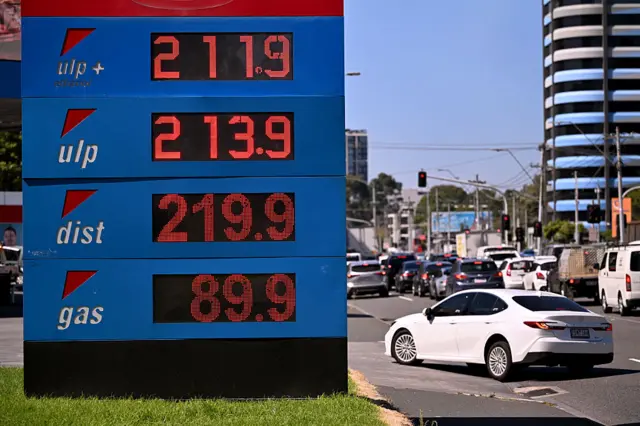
    sign outside a fuel station in Melbourne on 10 March shows the soaring price of petrol and diesel prices due to the Middle East conflictImage source, Getty Images
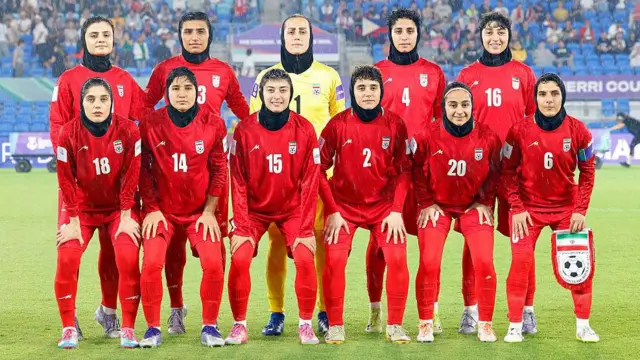
  14. Five members of Iranian football team granted humanitarian visas in Australiapublished at 05:24 GMT

    Five members of the Iranian women's football team have been granted humanitarian visas in Australia amid fears for their safety after the team declined to sing the national anthem ahead of their match against South Korea last week.

    This prompted criticism in Iran, with one conservative commentator accusing the team of being "wartime traitors" and pushing for harsh punishment.

    Immigration Minister Tony Burke said the women "were moved to a safe location" by Australian police. He said other squad members had been told they are welcome to stay in the country.

    "They want to be clear they are not political activists. They are athletes who want to be safe," he said, adding that talks had been going on over several days.

    Iran's team pose for a group photo before the AFC Women's Asian Cup Australia 2026 match between Iran and the Philippines in Gold Coast on March 8, 2026. They are wearing red team kit and black hijabs. The goalie wears a yellow top. They are smiling for the cameraImage source, AFP via Getty Images
    Image caption,

    Five members of the Iran women's football team are understood to be claiming asylum

  15. Trump warns of 'death, fire, and fury' if Iran disrupts global oil passagewaypublished at 05:05 GMT

    Late on Monday, US President Trump issued another warning to Iran about disrupting shipping in the Strait of Hormuz.

    "If Iran does anything that stops the flow of Oil within the Strait of Hormuz, they will be hit by the United States of America TWENTY TIMES HARDER than they have been hit thus far," Trump said in a post on his social media platform Truth Social.

    About 20% of the world's oil passes through the strait and the war has severely reduced sea traffic and sent global oil prices soaring.

    "Additionally, we will take out easily destroyable targets that will make it virtually impossible for Iran to ever be built back, as a Nation, again — Death, Fire, and Fury will reign upon them — But I hope, and pray, that it does not happen!" he said.

  16. Trump comments may have eased oil price surge, but havoc remainspublished at 05:04 GMT

    Faisal Islam
    Economics editor

    Monday was the most volatile day of oil trading in world history. The oil price spiralled to $115 (£86) a barrel at one point early in the day, but word soon emerged of an emergency meeting of the G7 finance ministers.

    Reports suggested there could be a 300 million-barrel release of emergency stockpiles co-ordinated by the International Energy Agency.

    The speculation alone was enough to temper the rise in prices a bit, but they remained much higher than pre-conflict levels.

    Then, however, word emerged of what sounded like a pivot away from a long-run war by US President Donald Trump, and the oil price went into freefall, dipping below Friday's close. When Monday's trading day started in Asia the oil price was hovering around $90.

    The spiral up can be of little surprise of course when millions of barrels of crude oil are shut in to the Gulf, and when most Gulf countries are now - at best - reporting a slowing of their production, and at worst declaring force majeure shutdowns - a clause freeing them from liability for failure to supply due to events outside their control.

    Read more here.

    Line chart showing spike in oil prices during Russia's invasion of Ukraine compared to the US and Israel's strikes on Iran
    Image caption,

    Line chart showing spike in oil prices during Russia's invasion of Ukraine compared to the US and Israel's strikes on Iran

  17. Oil prices fall as Trump threatens Iran with 'fire and fury' over Strait of Hormuzpublished at 05:01 GMT

    Ten days since the US and Israel launched strikes on Iran, the conflict's impact has widened significantly, with Iran retaliating, Israel striking Lebanon, and oil prices surging. Iranian officials have selected the late supreme leader's son as his successor, but Trump has signalled Mojtaba Khamenei does not have his support. Previously, US President Donald Trump said he wanted a say in the selection of Iran's new leader.

    Here is a roundup of key developments in the war:

    • Speaking in Florida on Monday, Trump said although the US has had many military victories in Iran and the war would be completed soon, the US is "going to go further". "We've already won in many ways, but we haven't won enough," Trump told Republican lawmakers
    • The Iran Revolutionary Guard Corps has responded to Trump's comments that the war in Iran would end soon, saying that they will "determine the end of the war". Tehran will not allow "one litre of oil" to be exported from the region if the US and Israeli attacks continue, the IRGC says, according to Reuters.
    • Trump describes the war as "an excursion" from his policy priorities but says it is important because he believes Iran was going to attack the US and Israel first
    • The US president, however, does acknowledge the war's economic and social impacts at home, saying the tumbling stocks will rise again soon and that US personnel deaths were unavoidable
    • His comments come on the same day Trump had a phone call with Russian President Vladimir Putin and as the US military publicly identified a seventh service member death since the war began late last month. The total US death toll has risen to eight
    • Across the Middle East, deaths have also been reported in Bahrain, the United Arab Emirates, and Lebanon. The Israeli military have continued to launch strikes inside Iran
    • The UK chancellor says inflation is likely to rise in Britain as the country signals support for the release of oil reserves by G7 member countries to help counter rising oil prices
    • French President Emmanuel Macron has been in Cyprus. The UK and other European nations have announced they are sending more military assets to Europe's southern front
    • And finally, players of Iran's women's national football team who are currently in Australia have been granted humanitarian visas to stay