Summary

  1. First week of war cost US $11.3bn, military officials tell lawmakerspublished at 11:48 GMT

    American military officials have told Congress that the first week of the war with Iran has cost the US around $11.3bn (£8.4bn), the BBC's US partner CBS News reports., external

    The figure is a low-end estimate and does not include the build-up costs of moving military assets ahead of the first strike on 28 February, it says.

    Democratic Senator Chris Coons told reporters on Wednesday: "I expect that the total operating number is significantly above that."


  2. Analysis

    US-Israeli forces zeroing in on banks and militia checkpointspublished at 11:37 GMT

    Lyse Doucet
    Chief international correspondent

    In the past 24 hours there’s been a sharper focus in US-Israeli targeting. They’ve been zeroing in on national infrastructure and security forces.

    Yesterday, Iran's oldest bank, Bank Sepah, was struck by an air strike in Tehran. It’s said to play a key role paying the salaries of Iran's military and the Islamic Revolutionary Guard Corps.

    And it’s the crucial run-up to the Persian New Year on 21 March - when salaries and bonuses are paid. That matters to the families of security forces but also for Iranians preparing for this important holiday.

    The Foreign Minister Abbas Araghchi warned of retaliation; major international banks in the Gulf states, including Citibank and HSBC, temporarily closed their offices.

    And in Tehran last night there were more drone strikes on small street checkpoints of the Basij, a volunteer militia which has played a key role in brutally suppressing protests.

    There have been repeated US-Israeli pledges that they'd “create the conditions” for Iranians to take to the streets.

    Some would welcome that possibility. But we're hearing from residents that it's also amplifying their anxiety and fear as this war intensifies all around them.

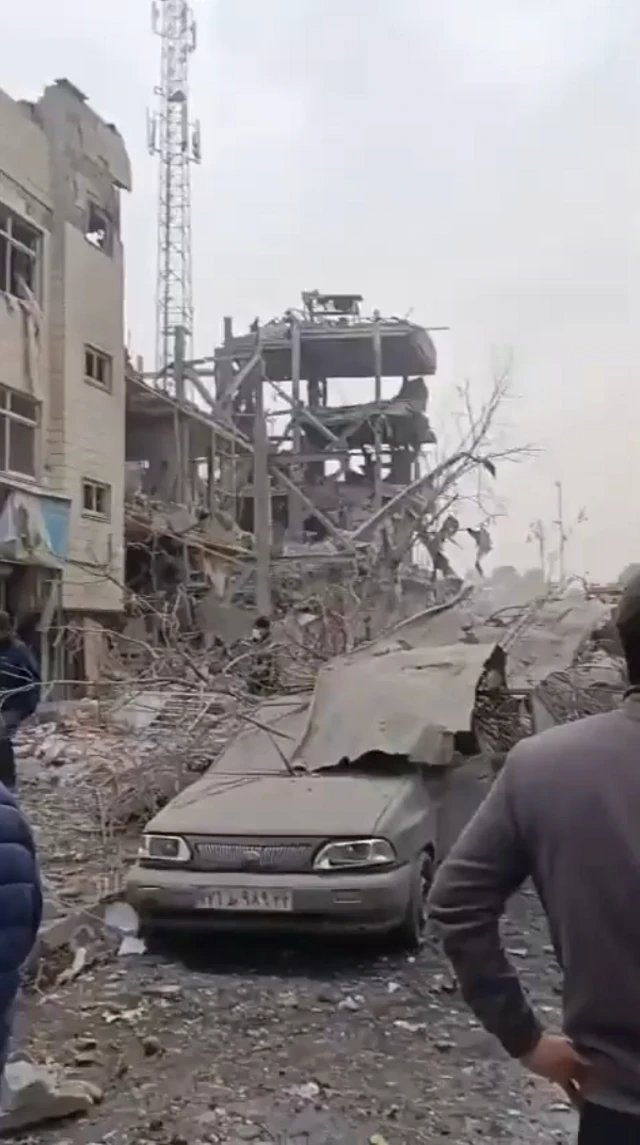
    A screengrab from a video on social media, taken on 10 March, which the BBC has verified. It shows a destroyed Basij building near Mehrabad airport in Iran. It shows a car that has been mashed up with rubble and a building in the background that has been gutted by a strikeImage source, Supplied
    Image caption,

    A screengrab from a video on social media, taken on 10 March, which the BBC has verified. It shows a destroyed Basij building near Mehrabad airport in Tehran

  3. The war is choking supplies of a niche yellow powder critical to global techpublished at 11:26 GMT

    Esme Stallard
    Climate and science reporter

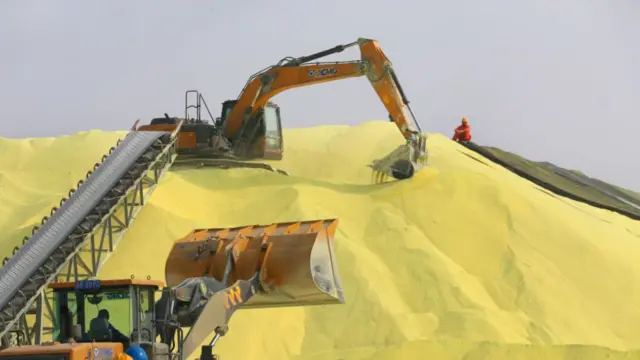
    Two cranes dig a large pile of yellow powderImage source, Getty Images

    Much of the commentary over the last week on the Strait of Hormuz has focused on the impact on global oil trade.

    But blocking this waterway has also stopped supplies of sulphur and sulphuric acid.

    It's probably not an element you've thought about before, but it's used in fertiliser, semiconductors - the computer chips used in all electronic tech from mobile phones to electric vehicles - nickel refining, and copper smelting (one of the most-used metals in the world).

    About half of global sulphur that is transported by ship goes through the Strait of Hormuz. The Gulf region is one of the largest global manufacturers because sulphur is a byproduct of a particular type of oil, known as sour crude oil.

    Last week, prices in China - which takes a lot of global sulphur supply - jumped by 15%, according to commodity analysts Argus.

  4. Photos show damage to tankers hit near Iraqpublished at 11:19 GMT

    Earlier, we reported that two shipping tankers were hit by an "unknown projectile" near Iraq.

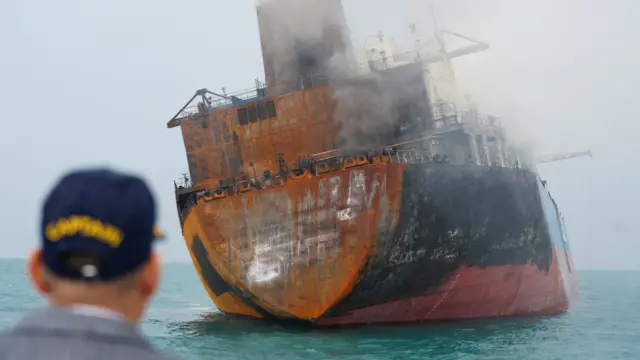
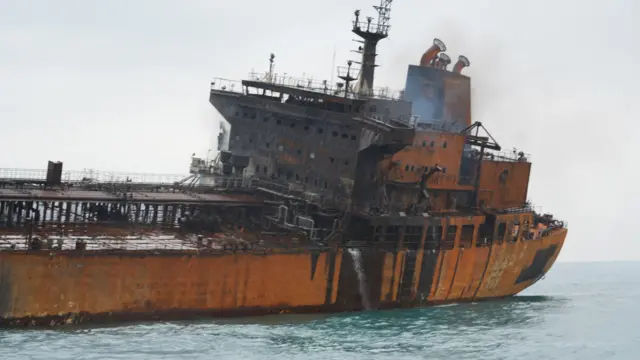
    Fresh photographs taken on Thursday show smoke rising from one of the damaged tankers, which leans to one side in the water.

    A tanker carrying Iraqi fuel oil damaged after catching fire in Iraq's territorial waters, following unidentified attacks that targeted two foreign tankersImage source, Reuters
    A tanker carrying Iraqi fuel oil damaged after catching fire in Iraq's territorial waters, following unidentified attacks that targeted two foreign tankersImage source, Reuters
  5. Iranians receive text messages warning them against protests and urging unitypublished at 11:07 GMT

    Ghoncheh Habibiazad
    Senior reporter, BBC Persian

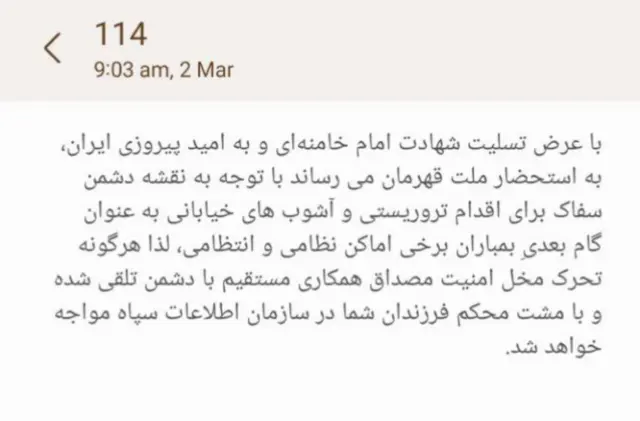
    A message sent to Iranians, warning them that disrupting "security" will be regarded as co-operation with the "enemy"Image source, Supplied
    Image caption,

    A message sent to Iranians, warning them that disrupting "security" will be regarded as co-operation with the "enemy"

    BBC Persian has seen several screenshots of mass text messages sent to people inside Iran since the start of the war on 28 February.

    The messages vary, but include warnings against any upcoming protests and calls for people to unite against the “enemy”. Some were signed by organisations such as the IRGC - Iran’s Islamic Revolutionary Guard Corps.

    One message, signed by the IRGC’s Intelligence Unit on 2 March, says that “considering the enemy’s plan for street riots… any movement that disrupts security will be regarded as an example of direct cooperation with the enemy.”

    A man in Karaj, a city near Tehran, says: “I don’t watch state TV that often and every time I watch it I hear the same things. The worst thing is that you can’t block some of these numbers to stop receiving texts from them."

    Iran earlier this year saw a wave of nationwide anti-establishment protests, that started in late December, prompting the deadliest crackdown in the Islamic Republic's history. The US-based Human Rights Activists News Agency (Hrana) said it had confirmed the killing of at least 7,000 people during that wave.

    Iran Police Chief Ahmadreza Radan warned two days ago on state TV that Iranians who might protest on the streets against the establishment are doing so “at enemy’s bidding” and they will be treated as the “enemy”.

    His comments came after Israeli Prime Minister Benjamin Netanyahu issued a direct message to the Iranian people, urging them to stand up against the establishment.

  6. Analysis

    What equipment are US and Israeli forces using for strikes?published at 10:59 GMT

    Chris Partridge
    BBC News weapons analyst

    The US and Israeli military have released dozens of videos of strikes on Iranian equipment and facilities in this war.

    Many of the weapons used include GBU-31 JDAMs - 2,000lb penetrating munitions better known as 'bunker-busters'.

    Often these are delivered using satellite guidance, but on Wednesday night we saw evidence of how the US military also use laser-designation for placing bombs on target.

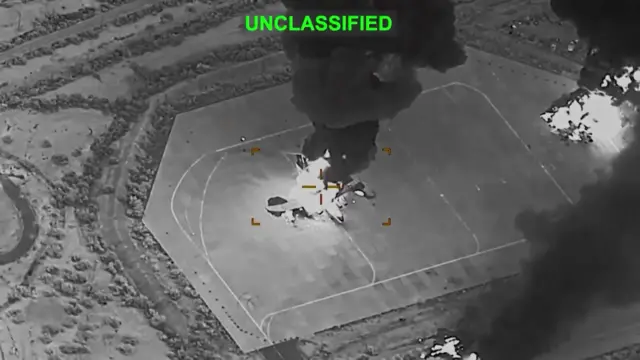
    This morning US Central Command (Centcom) released a video of strikes on Iranian aircraft at an airbase.

    In the video we clearly see the laser hitting the top of the targets. The laser sits in a pod on the attacking aircraft and is pointed at the target by the pilot(s).

    Black and white footage showing target aiming at plane on tarmac. The plane is in flames with smoke rising above it. The word 'unclassified' is at the topImage source, Centcom

    The munitions - likely GBU-24s / GBU-54s - once released from the attacking jet, home in on the laser spots by moving control surfaces on the weapon. With the bomb dropped from many thousands of feet, accuracy here is within one or two metres.

    Laser-designation is also useful as it can track moving targets. But it is not always best.

    Cloud and other atmospheric conditions can greatly degrade the targeting effectiveness, which is where GPS guidance comes in. There are weapons which have both laser and GPS targeting too, so the most appropriate targeting method can be used.

  7. Iranian site was used to 'advance critical capabilities' for nuclear weapons - IDFpublished at 10:50 GMT

    More now from the Israel Defense Forces (IDF), which says it has struck a "nuclear weapon development compound" during strikes in the "past days in Tehran".

    It says: "The ‘Taleghan’ compound was utilized by the regime to advance critical capabilities for developing nuclear weapons."

    The site was used to develop explosives and conduct experiments for a "covert nuclear weapon development programme" in the 2000s, the IDF says.

    In a statement on Telegram, the IDF says previous strikes on Iran's nuclear facilities in June 2025 had caused "significant damage" to the programme.

    "As such, the IDF has recently identified that the regime has taken steps to rehabilitate the compound after it was struck in October 2024", it says.

    For context: Iran has repeatedly denied it is seeking to produce a nuclear weapon and says its programme is only for peaceful purposes, though the country is the only non-nuclear-armed state to have enriched uranium at near weapons-grade level.

  8. Israel says it has struck Iranian 'nuclear weapon development compound'published at 10:29 GMT
    Breaking

    The Israeli military says it has struck a "nuclear weapon development compound" in Tehran, Iran, during attacks in "the past days".

    We'll bring you more on this in a moment.

  9. BBC Verify

    What we know about the ships attacked in the Gulf overnightpublished at 10:22 GMT

    By Shruti Menon

    BBC Verify has been using ship-tracking data to get more details on three vessels attacked in the Gulf overnight.

    Two oil tankers were struck near Basra, in Iraqi waters.

    The first, Safesea Vishnu, is US-owned and sails under the Marshall Islands flag, according to ship-tracking website Marine Traffic. It was heading for India.

    The second, Zefyros, is Greek-owned and Maltese-flagged and was heading to another Iraqi port, officials said.

    A third vessel, the China-owned, Liberia-flagged bulk carrier Source Blessing, was also attacked according to the UK body that monitors shipping in the Gulf (UKMTO). It was struck closer to the Strait of Hormuz, near the United Arab Emirates.

    At the time, it was transmitting “China Owner” on its tracking system, a signal some vessels have used during this conflict in an attempt to avoid being targeted by Iranian forces.

    Safesea Vishnu was struck by a “white-coloured unmanned speed boat carrying explosives” which “rammed into it, resulting in a major fire onboard”, Indian authorities said.

    One person was killed on Safesea Vishnu and the rest of the crew were rescued. There were no reported injuries on the other vessels and their crews are understood to be safe.

  10. Fresh attacks in Iran, Lebanon and across Middle East - a recappublished at 10:16 GMT

    Smoke rises in the aftermath of Israeli strikesImage source, Reuters
    Image caption,

    Smoke rises in the aftermath of Israeli strikes on Beirut on Thursday

    With the US-Israel war with Iran now in its 13th day, strikes across the region continue. Here's the latest:

  11. In the US, Democrats demand answers on deaths at girls' school at start of warpublished at 09:50 GMT

    Tom Bateman
    US State Department correspondent

    Media caption,

    Watch: US Tomahawk missile hits military base near Iran school

    Democrats in the US Senate have written to Defence Secretary Pete Hegseth demanding answers about the strike on a girls' school in Iran at the start of the war, that Iranian officials say killed 168 people - including around 110 children.

    US media has reported that US military investigators believe American forces were likely responsible, but have not reached a final conclusion. The Pentagon has said it is investigating.

    The letter is from nearly every Democrat in the Senate. It asks Hegseth a series of detailed questions about the strike in Minab – starting with whether the US carried it out.

    It questions whether old or faulty target analysis could have led to the girls' school building being hit, and highlights Hegseth's vow that there would be no "stupid rules of engagement" in the war, asking if he had complied with rules to prevent the commission of war crimes.

    The strike, if a US role was to be confirmed, would amount to one of its worst single cases of civilian casualties in decades of US conflicts in the Middle East.

    US President Donald Trump has said without citing evidence he believes Iran carried it out, despite video showing a US Tomahawk missile hit the Iranian military base near to the school (see above).

    Asked by the BBC about the strike, Hegseth said last week the US did not target civilians and was investigating it - you can see the exchange below. The Pentagon has been approached for comment about the Senators' letter.

    Media caption,

    From Wednesday 4 March: Tom Bateman asks Pete Hegseth about reports of strike on Iranian girls' school

  12. Military in Beirut dealing with unexploded ordnance after deadly Israeli strikespublished at 09:35 GMT

    Alice Cuddy
    Reporting from Beirut

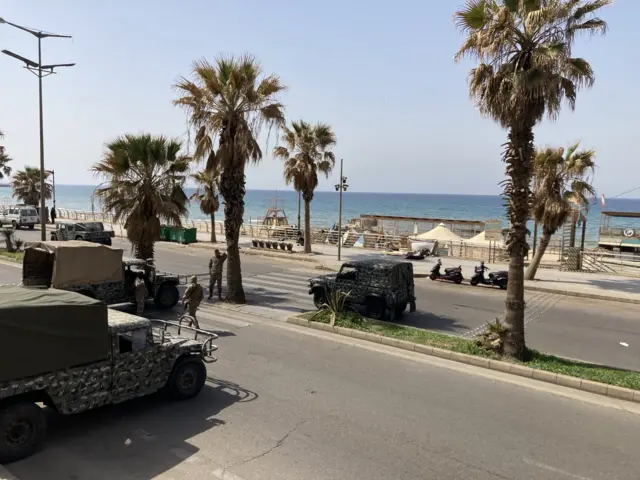
    Four military vehicles on the coast of Beirut, Lebanon, which have camouflage pattern and palm trees growing either side of the roads and with the sea in the background

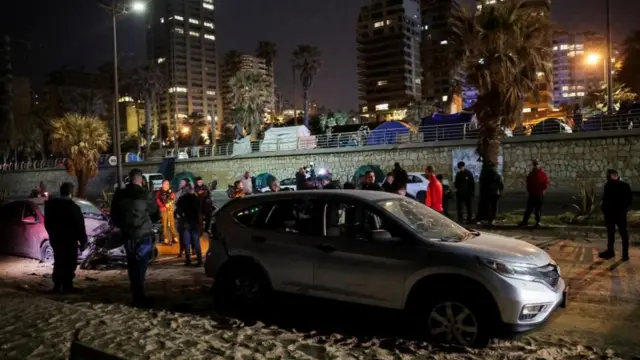
    I’m at the seafront in the Lebanese capital Beirut, where Israeli strikes hit overnight.

    A large area has been cordoned off as officials inspect the scene here today. One military official tells me personnel were still working to deal with unexploded ordnance.

    As we have been reporting, Lebanon's health ministry says at least eight people have been killed here after what appeared to be a direct hit on a car, with reports of a second strike after people had gathered to help, causing further casualties.

    One man who has been displaced from his home in southern Lebanon and is now staying in the area says he was woken from his sleep by the sound of explosions.

    "When I came this morning to see what had happened I saw military and journalists here," he says.

    The Israeli military has not yet commented on the strike, which locals say came without warning.

  13. Israel carrying out 'wide-scale wave' of attacks on Iranpublished at 09:18 GMT
    Breaking

    The Israeli military says it has begun a "wide-scale wave" of attacks on Iran.

    The strikes are targeting Iranian regime infrastructure across the country, the Israel Defense Forces says in a post on Telegram.

  14. Drones target Kuwait International Airport, state media reportspublished at 09:10 GMT

    Several drones have targeted Kuwait International Airport, according to the country's state news wire service citing the Public Authority for Civil Aviation.

    In a post on X it says the attack caused "material damage without any human injuries".

  15. Sixteen reports of attacks on vessels since war began - UKMTOpublished at 09:03 GMT

    Black smoke rises from a large container shipImage source, Royal Thai Navy
    Image caption,

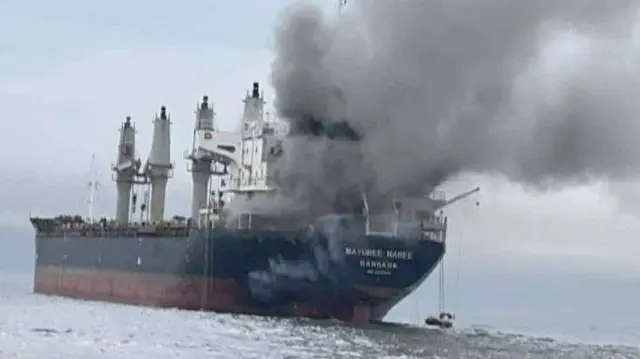
    A Thai-flagged vessel was struck yesterday

    As we've been reporting, three more cargo ships were attacked in the region overnight, according to the UK Maritime Trade Operations (UKMTO) Centre.

    Since the war began on 28 February, there have now been 16 reported attacks on vessels in the Gulf, Strait of Hormuz and Gulf of Oman, according to its latest update.

    There have also been four reports of "suspicious activity" during the conflict, the UKMTO says.

  16. UN humanitarian chief says he 'lost three colleagues' on Wednesdaypublished at 08:51 GMT

    It's "really rough right now," the UN's humanitarian chief tells the BBC, as the organisation continues in its response to the war in the Middle East and conflicts elsewhere.

    Tom Fletcher tells BBC Radio 4's Today programme that he lost three colleagues on Wednesday, describing it as "an incredibly tough day for our humanitarian colleagues". He doesn't specify where they were working.

    "We're outraged, we're grieving for them, and in their honour we're getting on with it. We'll meet the moment but it's really really rough right now," he says.

    Fletcher adds: "The UN was built for moments like this so we will get out there and we'll deliver, but we're doing at a time when we're under-resourced, over-stretched and when they're literally killing us."

  17. Alarms sound in Bahrain, interior ministry sayspublished at 08:37 GMT

    The Bahrain interior ministry says alarms in the country have been activated.

    In a post on X it says: "We urge citizens and residents to remain calm, head to the nearest safe place, and follow the news through official channels."

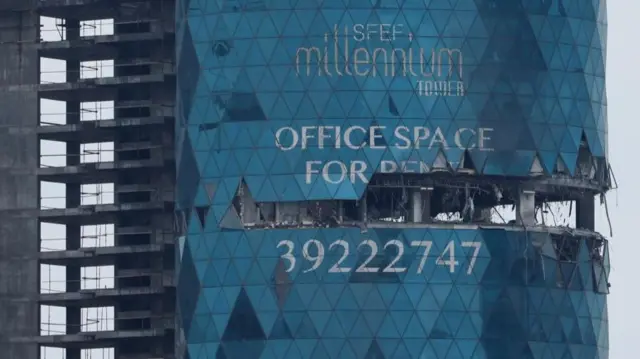
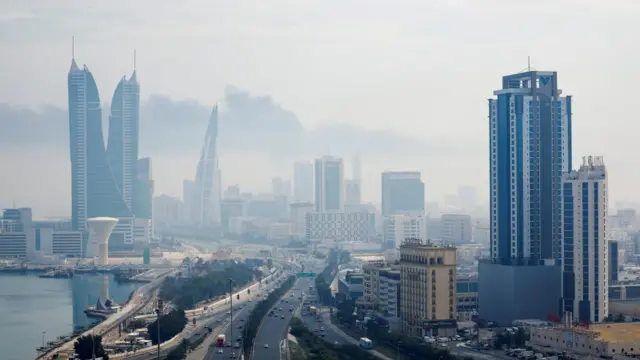
    It is not clear what area the siren is being sounded in or why. In our previous post we shared a picture of smoke rising over the country's capital, Manama - while a picture earlier this week showed damage to a high-rise tower.

    This picture, taken on Tuesday, shows damage to a tower in Manama, BahrainImage source, Reuters
    Image caption,

    This picture, taken on Tuesday, shows damage to a tower in Manama, Bahrain

  18. Damage from overnight strikes seen across Middle Eastpublished at 08:26 GMT

    We can now share some pictures taken across the Middle East today, after the region saw a wave of strikes overnight.

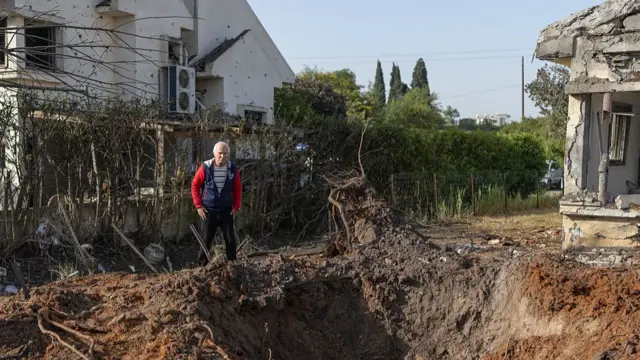
    A man looks at the damage after a house was hit by a rocketin central IsraelImage source, AFP via Getty Images
    Image caption,

    A rocket, reportedly fired by Iran-backed militant group Hezbollah, hit near Kfar Yona, central Israel

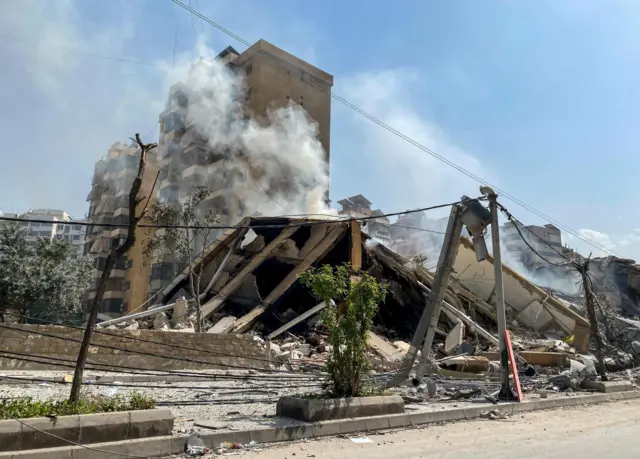
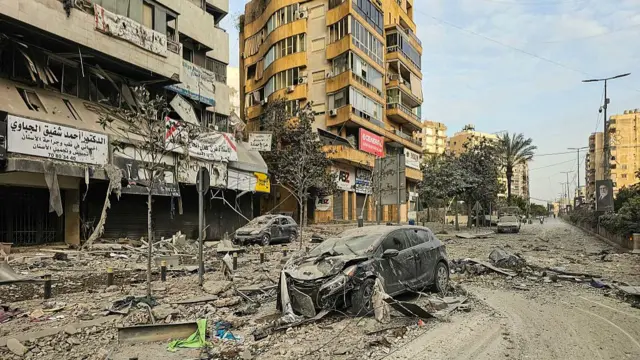
    Debris litters a street in the aftermath of overnight Israeli airstrikes in Beirut's southern suburbsImage source, AFP via Getty Images
    Image caption,

    An overnight Israeli strike on central Beirut's seafront killed at least eight people, our correspondent reported earlier

    Smoke rises over Bahrain's capital ManamaImage source, Reuters
    Image caption,

    Smoke was seen rising over Bahrain's capital, Manama, this morning following a reported Iranian drone strike

  19. Missile hits Italian base in northern Iraq, defence ministry sayspublished at 08:10 GMT

    Hugo Bachega
    Middle East correspondent reporting from Erbil, northern Iraq

    Italy’s defence ministry says a missile struck an Italian base in the city of Erbil, in the semi-autonomous Kurdish region of Iraq, overnight, without causing any casualties.

    The ministry did not say who it believed it was behind the attack. Italy has about 300 soldiers in Erbil, training Kurdish forces.

    Erbil, where a US military base is also located, has been a key target of Iran’s retaliatory strikes and Iranian-backed militias since Israel and the US launched a war against Iran.

  20. Israel issues new evacuation warning in Lebanon after deadly strikespublished at 08:03 GMT

    Israel has issued an urgent warning for residents in Qasr Naba, in Lebanon's Baalbek region, to evacuate the area.

    The Israeli military "will attack military infrastructure belonging to the terrorist Hezbollah in the near time frame," Israel's Arab media spokesperson Avichay Adraee says.

    The warning comes after the Israeli military carried out a series of strikes on Beirut overnight. During this wave of strikes, it says it hit 10 Hezbollah buildings in southern Beirut.

    Our correspondent in Beirut, Wyre Davies, reported earlier that eight people had been killed in a strike on Beirut's seafront.

    The aftermath of a strike on Beirut's seafront, pictured earlier todayImage source, Reuters
    Image caption,

    The aftermath of a strike on Beirut's seafront, pictured earlier today