Summary

  1. BBC Verify

    Verified videos show oil tanks on fire at Bahrain airportpublished at 14:43 GMT

    Media caption,

    Plumes of smoke seen at Bahrain airport

    By Peter Mwai

    We’ve verified video showing a dark plume of smoke rising from the main airport in Bahrain following a reported Iranian drone strike overnight.

    The drone is reported to have hit fuel storage tanks at the airport, causing a huge fire.

    We matched the buildings seen in the footage with satellite imagery to confirm it was filmed from the north of the airport, and the smoke lines up with the location of the fuel tanks.

    Bahrain’s ministry of interior says the fire in the Muharraq governorate - an area that includes the airport - has now been contained.

    Residents were told last night to remain at home “as a precaution” but have been told they no longer need to.

  2. What do we know about the health of Iran's new supreme leader?published at 14:29 GMT

    Ghoncheh Habibiazad
    Senior reporter, BBC Persian

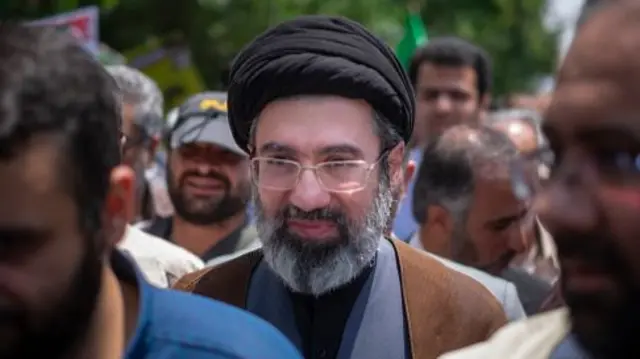
    Mojtaba Khamenei walks during a demonstration in Tehran in May 2019Image source, Getty Images
    Image caption,

    Mojtaba Khamenei pictured during a demonstration in Tehran in May 2019

    The fact that Mojtaba Khamenei has not yet been seen on state media has led to widespread speculation on social media, particularly among the Iranian diaspora, about whether Iran’s new supreme leader has been injured, or even whether he is still alive.

    What we know so far is limited.

    Iran’s state TV news channel has referred to him as a “veteran of the Ramadan war”, without providing any further confirmation as to whether he has been injured. Reuters has reported that he was “lightly injured”, citing an unnamed Iranian official.

    In addition to his father, the late Supreme Leader Ayatollah Ali Khamenei, Mojtaba Khamenei’s mother and wife were also killed in the US-Israeli strikes.

    We have yet to see him in public, or in videos or photographs on state media, even though it has now been almost four days since he became Iran’s third supreme leader on 8 March.

    Iran’s supreme leader is elected indirectly by the Assembly of Experts, a constitutional body consisting of 88 members responsible for both the election and supervision of the supreme leader.

    One thing that caught my attention in Mojtaba Khamenei’s first message was his claim that he learned he had become the supreme leader of Iran via the country’s state TV channel.

    "I learned about the result of the vote of the esteemed Assembly of Experts at the same time as you and through the Islamic Republic’s television,” Khamenei said in his message, which was read aloud a presenter.

  3. Banks and financial districts targeted by Iranian strikespublished at 14:20 GMT

    Nick Beake
    Europe correspondent reporting from Dubai

    Iran is hitting out in many directions to try to damage sectors crucial to the West, targeting oil, shipping and banking. Dubai is one of the places in the firing line.

    A drone came down near the international financial district earlier. It didn’t injure anyone, but has provided a symbol for how business and banking here is being impacted by the war.

    Tehran says it will hit western banks in retaliation for US-Israeli attacks on Iranian banking.

    Citibank has said it is temporarily shutting most of its branches in the United Arab Emirates, with staff now working remotely. Other banks and businesses across the region have taken similar measures already.

    There was no alert in Dubai when this morning’s drone flew through - an indication of how some incoming Iranian fire can pass under the radar.

    Donald Trump has claimed repeatedly that he’s on the verge of victory but Iran is inflicting pain - financial and otherwise - on the US and its Gulf allies, which find themselves engulfed in a war he started.

  4. Trump says US makes 'a lot of money' when oil prices go uppublished at 14:01 GMT

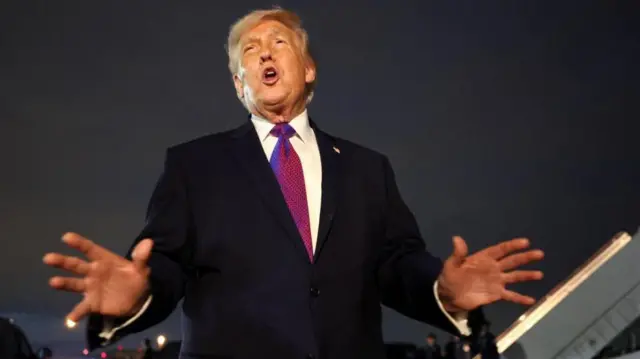
    Donald Trump, speaking to reporters in Maryland last nightImage source, Reuters
    Image caption,

    Donald Trump, speaking to reporters in Maryland last night

    Around the same time as the supreme leader's statement was broadcast by Iran, we also heard from Donald Trump, who writes on social media that the US stands to profit from soaring global energy prices.

    He says on his Truth Social platform: "The United States is the largest Oil Producer in the World, by far, so when oil prices go up, we make a lot of money.

    "BUT, of far greater interest and importance to me, as President, is stoping [sic] an evil Empire, Iran, from having Nuclear Weapons, and destroying the Middle East and, indeed, the World. I won’t ever let that happen!"

  5. New attacks on ships preceded supreme leader's Strait of Hormuz statementpublished at 13:58 GMT

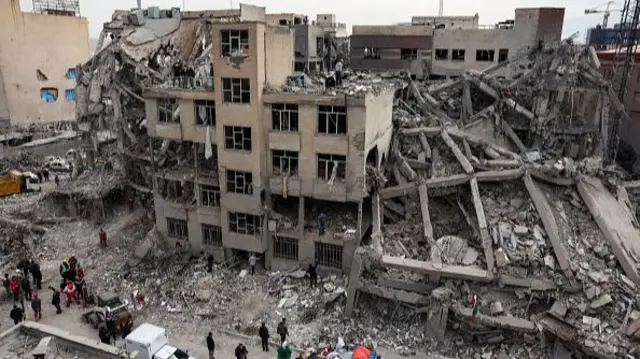
    Iranians collect belongings from the rubble of a damaged residential building in TehranImage source, Getty Images
    Image caption,

    Iranians collect belongings from the rubble of a damaged residential building in Tehran

    In the last few minutes, a statement purportedly from Iran's new Supreme Leader Mojtaba Khamenei, who has not been seen in public since succeeding his father, has been read out on state-controlled television.

    It includes a vow to continue blocking the Strait of Hormuz and says the regime will "avenge the blood" of those killed in US and Israeli attacks.

    Three more civilian cargo ships were attacked in the Gulf earlier, while oil prices hit almost $100 a barrel.

    One person was killed on a US-owned tanker off the coast of Iraq, which was reported to have been hit by an unmanned speed boat carrying explosives. Photos show the extent of the damage. Another tanker was attacked while heading to an Iraqi port. Both ships reported fires on board.

    A Chinese vessel was struck by an unidentified projectile near the Strait of Hormuz. All crew members have been evacuated

    Separately, Iran has continued missile attacks against neighbours including Bahrain, Oman, Dubai and Qatar.

    Inside Iran, people living in Tehran have told the BBC that the war is taking a physical toll on their health, while the BBC's chief international correspondent Lyse Doucet writes that the US and Israeli forces are zeroing in on Iran's national infrastructure and security forces.

    Elsewhere, US military officials have told Congress the first week of the war cost $11.3bn.

  6. First public message of the new supreme leader of Iran read on state TVpublished at 13:37 GMT

    Ghoncheh Habibiazad
    Senior reporter, BBC Persian

    Mojtaba Khamenei was named as Iran's new supreme leader on 8 March.

    He’s the successor to his father, Ayatollah Ali Khamenei, who was killed on the first day of the war with the US and Iran, on 28 February.

    Since his appointment, he has not been spotted on state TV, and his message was read aloud by the presenter.

    Mojtaba is the second son of Ali Khamenei and, although he had long been regarded as one of the frontrunners to succeed him, he has kept a low profile and has been seen as exercising influence from behind the scenes.

    In addition to his father, Mojtaba Khamenei’s mother and wife were also killed in the US-Israeli strikes.

    Iran's state TV news channel has referred to him as a “veteran of the Ramadan war”, without giving any further confirmation as to whether he has been injured.

    Reuters has reported that he was “lightly injured”, according to an unnamed Iranian official.

  7. Khamenei: Iran will 'avenge' citizens killed in warpublished at 13:30 GMT

    Mojtaba Khamenei says Iran will not hesitate to "avenge the blood of Iranians" who have been killed.

    He says this is especially true in the case in Minab, where a US strike near a school killed 168 people, including around 110 children.

    Iran says the school was hit by a US missile. US Defence Secretary Pete Hegseth told the BBC's Tom Bateman last week that they are investigating.

  8. Iran should continue targeting Strait of Hormuz - Khameneipublished at 13:26 GMT
    Breaking

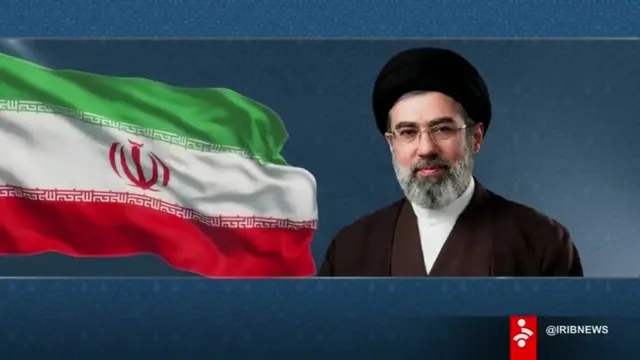
    Graphic showing new Iranian supreme leader next to Iranian flag which was displayed as the statement was read out.
    Image caption,

    The graphic displayed on Iranian state television as the statement from the new supreme leader was read by a presenter

    The message from Iran's new leader Mojtaba Khamenei is being read by a presenter on Iranian state TV.

    In comments translated by BBC Persian, Khamenei says that the "lever of blocking the Strait of Hormuz" should still be used by Iran.

    He then says that Iran has a policy of "friendship" with neighbouring countries, but advised them to close American bases, which he says Iran will continue to target.

  9. Statement from Iran's new supreme leader read on state TVpublished at 13:21 GMT
    Breaking

    A statement from Iran's new Supreme Leader Mojtaba Khamenei is currently being read out on state television. It is the first we have heard from the new leader, after he was selected to succeed his father, Ayatollah Ali Khamenei.

    Our colleagues on BBC Persian are listening. We'll bring you the key lines as soon as we get them.

  10. Iranian missiles launched towards Israel, says IDFpublished at 13:15 GMT

    The Israel Defense Forces (IDF) says it has detected Iranian missiles being launched towards its territory.

    "The IDF has identified that a short time ago, missiles were launched from Iran toward the territory of the State of Israel. Defense systems are operating to intercept the threat," the IDF says in a statement.

  11. 'I don’t have anything called a routine' - war takes physical toll on Tehran residentspublished at 13:04 GMT

    Ghoncheh Habibiazad
    Senior reporter, BBC Persian

    As the war goes on, some Iranians I've been talking to tell me that the anxiety they have experienced is having physical effects on their bodies.

    It’s still very difficult to contact those inside the country, but some manage to connect to the internet momentarily.

    “I have been on my period for 10 days straight now. I wanted to go out today but heard the explosions and stayed at home in my bed," says a woman in her 20s currently in Tehran.

    "My sleep gets disrupted by explosions, so I usually wake up tired. I sometimes walk around the house."

    One man in his 30s says: "I don’t have anything called a routine anymore. I can’t go cycling or running outside.

    "Yesterday I finished a one kilometre run inside my flat, just swinging from the bedroom to the hall and the kitchen. I also have back pain from sitting at home all day."

    Another man in Tehran, also in his 30s, tells me: “My stomach has been messed up. I have diarrhoea and vomiting. Every time they hit, I get a headache, which happens quite frequently."

  12. IDF issues new warning to residents in southern Beirut suburbspublished at 12:56 GMT

    The Israeli Defence Forces (IDF) have issued an "urgent warning" to those in the southern suburbs of Beirut to evacuate immediately.

    In a post on X, Arab media spokesperson Avichai Adraee says the warning applies to the neighbourhoods of Haret Hreik, Ghobeiri, Laylaki, Hadath, Burj al-Barajneh, Tahwitat al-Ghadir, and Chiyah.

    He writes: "The IDF reiterates that Hezbollah's terrorist activities compel the IDF to act against it forcefully. The IDF does not intend to harm you."

    He tells residents to not return to these neighbourhoods "until further notice".

  13. BBC Verify

    Satellite imagery 'shows bunker-buster damage' at Iran nuclear-linked sitepublished at 12:48 GMT

    By Alex Murray

    New satellite imagery has revealed damage at one of Iran’s major weapons facilities.

    The imagery - from US firm Vantor - was captured on Wednesday and shows the Taleghan 2 site at Parchin, which has been previously linked to Iran’s nuclear programme by the UN’s International Atomic Energy Agency (IAEA).

    The facility was previously targeted by Israeli air strikes in October 2024 which appeared to have destroyed one building which has since been rebuilt.

    According to US think tank the Institute for Science (Isis), the new imagery shows “three large bunker-buster penetration holes entering the top of the facility”.

    Isis added the damaged area is where a “suspected high explosive containment vessel suitable for nuclear weapons development-related testing may have been”.

    In 2016 the IAEA found evidence of uranium particles at the site, external raising questions about whether there had been nuclear activity there.

    This Flourish post cannot be displayed in your browser. Please enable Javascript or try a different browser.

  14. Man describes 'panic' after Israeli strike on Beirut beachpublished at 12:42 GMT

    Alice Cuddy
    Reporting from Beirut

    We’ve been speaking to people at the scene of the overnight strike by the beachfront here in the Lebanese capital Beirut.

    Mohamad Ali says he fled from his home in Beirut’s southern suburbs when the war began and headed further north into the capital, looking for safety.

    “We were sleeping here peacefully and didn’t feel anything until something exploded and we woke up in a panic,” he says. “They said one strike had happened so we went back to sleep, thinking the targeting was over, but then the second strike happened - people started saying that civilians were being targeted and everyone started running,” he adds.

    Mohamad says he grabbed two of his children and rushed them away from the area.

    He says schools that have been transformed into displacement centres in the city are already full, leaving few options for people who have fled from their homes.

    “Where should we go? There’s nowhere to go,” he says.

    Israel has not yet commented on the strike but says its military action in Lebanon is targeting the Iran-backed group Hezbollah. Over the weekend, the Israeli military said it had targeted Iranian commanders at a central Beirut hotel. The Iranian government condemned the strike, calling it a "cowardly terrorist assassination of four diplomats”.

  15. Another hectic day on the oil marketspublished at 12:34 GMT

    Nick Edser
    Business reporter

    After climbing above the $100-a-barrel mark earlier on Thursday, the price of Brent crude oil has now slipped back to about $97.40 – although that’s still rise of nearly 6% for the day.

    The increase comes despite the International Energy Agency (IEA) saying on Wednesday it would release a record 400 million barrels of oil.

    Bill Farren-Price, senior research fellow at the Oxford Institute for Energy Studies, tells me the IEA’s move had a limited impact as it had been widely expected and "it is a sticking plaster on a much bigger problem”.

    He adds: "The problem is we're losing about 20 million barrels a day of supply from the Gulf and 400 million is a lot but, in the context of a global market that consumes over 100 million barrels of oil per day, you can see the scale of the challenge."

    The Strait of Hormuz, the shipping route crucial to global energy supplies, is effectively closed over concerns that vessels could be attacked.

    Earlier this week, the boss of Saudi Arabia's Aramco, the world's ‌biggest oil exporter, warned of "catastrophic consequences" for the oil market if the strait remained blocked.

    This Flourish post cannot be displayed in your browser. Please enable Javascript or try a different browser.

  16. US navy 'not ready' to escort tankers across Strait of Hormuzpublished at 12:31 GMT

    Dearbail Jordan
    Business reporter

    US Energy Secretary Chris Wright says that his country’s navy is not ready to escort oil tankers through the Strait of Hormuz.

    He wasn’t saying that on Tuesday. In fact, 48 hours ago, he declared on social media that the US Navy had successfully escorted a tanker through the key waterway.

    Oil prices dropped at the good news, only for the tweet to disappear minutes later before the White House confirmed that no, the navy had not accompanied a vessel carrying oil through the strait.

    And oil prices shot up again.

    On Thursday, Wright told CNBC: “It’ll happen relatively soon but it can’t happen now. We’re simply not ready. All of our military assets right now are focused on destroying Iran’s offensive capabilities and the manufacturing industry that supplies their offensive capabilities.”

  17. First message from new Iranian supreme leader expected soon - state TVpublished at 12:22 GMT
    Breaking

    Ghoncheh Habibiazad
    Senior reporter, BBC Persian

    Iranian state TV says the first message from new Supreme Leader Mojtaba Khamenei will be published soon.

    In a post on Telegram, it says: “This strategic message, which was issued in seven important sections, contains special points regarding the martyred leader of the revolution, the role and duties of the people, the armed forces, the executive bodies and the resistance front and the countries of the region and confronting the enemies.”

    It is not apparent at this point whether this message is in a video or as a written statement - or when it will be released.

  18. Map plots reported shipping attacks in Gulf region since start of warpublished at 12:18 GMT

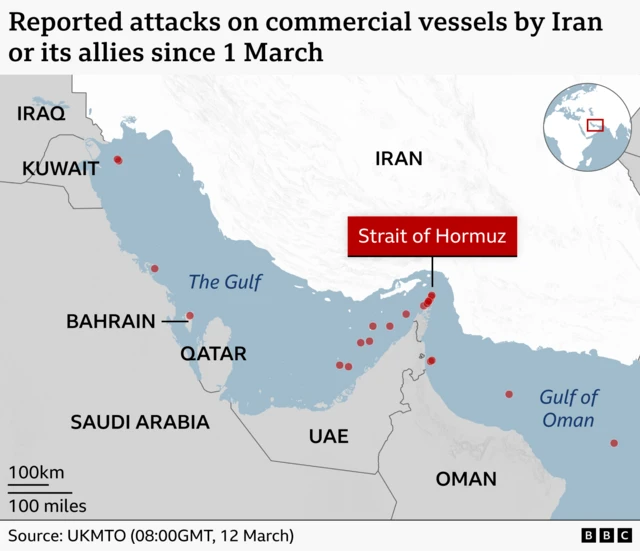
    A map of the Middle East showing The Gulf and the Strait of Hormuz, with Iran to the east and the states of Iraq, Kuwait, Saudi Arabia, Bahrain, Qatar, UAE and Oman running anti-clockwise around the west coast to the Arabian Sea. The map shows reported attacks on commercial shipping since the start of the Iran war. Around 20 attacks are plotted with a clear cluster at the narrowest point of the strait and another looser cluster off the coast of UAE where the strait opens out into The Gulf. There are four other attacks scattered across The Gulf all the way to the coast of Iraq and Kuwait in the northwest. There are also two attacks reported in the Gulf of Oman in east before it opens out into the Arabian Sea.

    In recent days there's been a growing number of reported attacks on ships in the Gulf region.

    Three ships were hit by "unknown projectiles" overnight. Two occurred near Iraq, while the third took place near the UAE.

    Iran has previously said it will "not allow even a single litre of oil" heading for the US, Israel and their partners to pass through the Strait of Hormuz - a key artery for the movement of global energy supplies.

    Usually, about 20% of global oil and gas passes through the narrow shipping lane in the Gulf. Following the outbreak of the war, the oil price has soared.

  19. Iranian forces attacked US-owned ship in Gulf, state media reportspublished at 12:11 GMT
    Breaking

    The Islamic Revolutionary Guard Corps (IRGC) was responsible for an attack on a US-owned vessel in the Gulf on Thursday morning, Iran's semi-official Fars news agency reports.

    Fars, which is affiliated to the IRGC, says the American vessel was hit this morning in the north of the Gulf.

    Two oil tankers were struck near Basra, in Iraqi waters. One of them, the Safesea Vishnu, is US-owned and sails under the Marshall Islands flag.

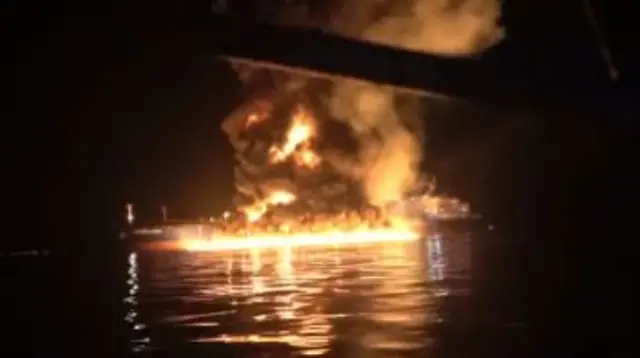
    Fars has shared a video that it says shows the moment the Safesea Vishnu was attacked. In the video, a massive explosion occurs on a ship on the water during the middle of the night.

    Indian authorities earlier said the Safesea Vishnu was struck by a “white-coloured unmanned speed boat carrying explosives” which “rammed into it, resulting in a major fire onboard”. One person was killed and the rest of the crew were rescued.

    Fars says the ship "failed to comply" with warnings from the IRGC.

    A ship at sea at night, engulfed by flames, with a large cloud of black smoke rising. Another ship is in close proximityImage source, Fars
    Image caption,

    A video shared by the Fars news agency purports to show the moment the ship was attacked

  20. First week of war cost US $11.3bn, military officials tell lawmakerspublished at 11:48 GMT

    American military officials have told Congress that the first week of the war with Iran has cost the US around $11.3bn (£8.4bn), the BBC's US partner CBS News reports., external

    The figure is a low-end estimate and does not include the build-up costs of moving military assets ahead of the first strike on 28 February, it says.

    Democratic Senator Chris Coons told reporters on Wednesday: "I expect that the total operating number is significantly above that."

    For context: The US defence budget for 2026 is around $900bn (£670bn) - in the 2025 fiscal year the US government spent around $7tn.