Summary

  • The latest job figures show London now has the highest rate of unemployment among young people in the UK

  • The capital's youth unemployment rate has risen to 24.6%, with 135,000 of 16 to 24-year-olds out of work between November and January this year

  • BBC London is spending the day looking at the issues facing young people in the capital who are looking for work

  • One 18-year-old student says she had to apply for 100 jobs before finding work in a pub, while a graduate with a first class master's degree says he's been rejected from 500 jobs

  • An expert from jobs site LinkedIn gives his top tips for how young people people can find work

  • The government says it is working to create job opportunities for young people

  • As well as following our online coverage, tune in to BBC Radio London throughout the day or watch BBC London on BBC One at 18:30

  1. What we've learnt about youth unemploymentpublished at 15:22 GMT 19 March

    Our live online coverage looking at youth unemployment in London is coming to an end.

    To recap, London has the highest rate of unemployment among 16 to 24-year-olds in the UK, at 24.6%.

    The new data released by the ONS shows an additional 10,000 young people were unemployed between November and January, compared to October to December last year.

    Young people have told us that they have had to apply for hundreds of jobs in order to secure employment, with one student making 100 applications before being offered a role as a waitress in a pub.

    They have also spoken about feeling stereotyped as being “lazy”, and feel their employment prospects are “bleak”.

    The government says more is being done to get young people into work, with business grants available for companies who employ young people and take on apprentices.

    And employment experts have encouraged young people to become as AI literate as they can, and focus on their people skills, “because AI cannot beat them”.

    At 15:30, you can catch a special panel discussion on Radio 5 Live where Matt Chorley will speak with under 25-year-olds about issues like jobs and housing.

    For more coverage of this issue, you can continue to listen to BBC Radio London throughout the day or tune into BBC London on BBC One at 18:30.


  2. 'I learnt everything I know working in a restaurant'published at 15:07 GMT 19 March

    Connie Bowker
    BBC London

    Hulya Cicek in a grey jumper.
    Image caption,

    Hulya Cicek has been working at a restaurant for the past three years

    While we've heard from many people struggling to find work, 19-year-old Hulya Cicek says she's managed to hold down a job at a restaurant since she was 16.

    The student, who is studying health and social care at Capital City College, says she's "learned everything I know, in work and out of work, in that job.

    "At 16, I didn't really know how to speak to people, I just had loads of anxiety - but now because of this job I'm able to communicate."

    The 19-year-old says if she did not have a job, she would be "very spoilt", and may have dropped out of education.

    "I'd be completely dependent on my family, I wouldn't be able to stand on my own two feet," she says. " I don't know if I've even be in college.

    "Realising how hard it is to make money, made me realise I need to go to university."

  3. 'I am approaching thousands of job applications - there is nothing out there'published at 14:54 GMT 19 March

    Lauren Stanley
    BBC London

    A red graphic with the words: Your Voice

    We've heard from some of you about your experiences in the job market. One masters student at Imperial College London - who wanted to remain anonymous so as not to risk getting a job - got in touch via the BBC's Your Voice.

    She tells us: "I have been emailing partners and HR at more than 100 firms a month since September; that doesn't include actual job applications."

    She says that despite studying a STEM subject at one of the world's best universities, she has sent "hundreds... approaching thousands" of applications and outreach emails to employers in the sector but has "heard nothing back".

    She continues: "As of now, none of my 100+ classmates, that I know of, have secured any employment to begin when our course ends in September.

    "This sentiment is universal among all my friends who have gone on to study at the UK's top universities. My peers are people studying cancer research, astrophysics and engineering... there's just nothing out there."

    You can get in touch with your experiences by emailing hello.bbclondon@bbc.co.uk.

  4. Charity calls for a youth allowancepublished at 14:49 GMT 19 March

    The Institute for Public Policy Research says there is a risk that young people who face long-term unemployment could experience "lasting damage to earnings, health and life chances".

    "Allowing young people to leave education and drift straight into the welfare system risks permanently scarring a generation," a spokesperson for the charity says.

    "The government should introduce a youth allowance for 18 to 24-year-olds, conditional on training or job search and backed by an extended youth guarantee so every young person is offered education, an apprenticeship or paid work experience.”

    We heard from Pat McFadden, secretary of state for work and pensions, earlier who said the government was bringing forward a "new package" of support to reduce youth unemployment.

  5. 'Go to every talk and workshop'published at 14:42 GMT 19 March

    Gem O'Reilly
    BBC London

    Manuela Gutierrez completed her course at Capital City College in 2019 and now works in compliance.

    She advises young people to take every opportunity they can.

    “I used to go for everything and I was curious,” she says. “I would go to every talk, every workshop - CV writing, LinkedIn - it’s all key to your development.”

  6. 'I have been rejected from 500 jobs'published at 14:25 GMT 19 March

    Meghan Owen
    BBC London work and money correspondent

    Theo dal Pozzo stands outside in a patterned shirt and leather jacket.
    Image caption,

    Theo has a first class master's degree in computer science

    Theo dal Pozzo, 23, has a first class master's degree in computer science but is struggling to find work.

    "I've applied for over 500 jobs and I've been rejected from all of them," he tells the BBC..

    "There's so many people applying to so many jobs using AI and the job listings are being scanned by AI - CVs, everything. It feels very difficult to differentiate myself from other people."

    ChatGPT, and other coding tools, are being blamed for a collapse in tech job openings, particularly for younger software developers and engineers.

  7. Youth unemployment or NEET?published at 14:15 GMT 19 March

    Lauren Stanley
    BBC London

    Today’s ONS data looks at 16 to 24-year-olds who are unemployed. This could be people who are at college or university, but do not have a job and are looking for work.

    This is different to another type of data collected by the government which looks at those not in employment, education or training, also known as NEET.

    The latest quarterly data, external on this was released by the ONS in February this year and shows almost one million 16 to 24 year-olds nationally were not earning or learning, a slight decrease on the previous quarter, but still a significant number.

    As a recap, today's figures show London now has the highest rate of youth unemployment in he UK.

  8. 'I use AI to find jobs that suit my skillset'published at 14:02 GMT 19 March

    Connie Bowker
    BBC London

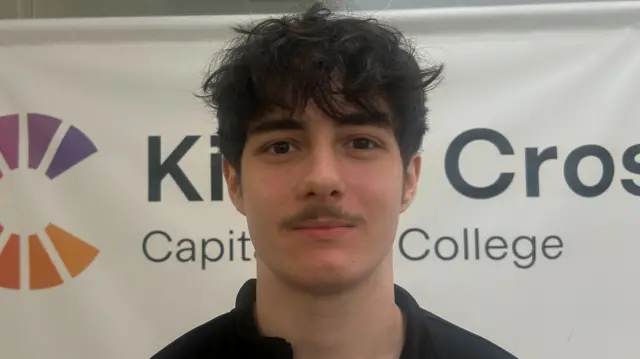
    Rio Ndou in a black top. He has dark hair and a moustache.
    Image caption,

    Rio says he's worried that AI is "taking over" potential roles for young people

    Back to Capital City College where Rio Ndou, a sport and exercise science BTec student, says he's been using AI to find jobs that would be suitable for him.

    "Young people need to learn more about how to research jobs, like asking AI what kind of job would be good for me," he says.

    "It's something I've done and I feel like it's given me a lot more of a holistic view of roles I want to get into.

    "I feel like if students push themselves a bit more, be a bit more disciplined, doing the research, that will set them up a lot better."

    While he may be using AI to help find work, he also worries that it is "taking over" potential roles for young people.

    "It's not got much personality," he say. "There are certain jobs where you need to be really good at communicating and being sympathetic - artificial intelligence doesn't have that."

  9. Analysis: Many reasons why finding a job is currently so hardpublished at 13:44 GMT 19 March

    Meghan Owen
    BBC London work and money correspondent

    A young man looks at a phone with his hand on his head as he sits in front of a computerImage source, Getty Images

    Each young person I have spoken to trudging through the job market treacle has something in common, but with a slightly different story.

    There are a myriad of reasons as to why it is difficult to find work at the moment.

    The legacy of Covid still lurks. At a time when so many young people should have been getting work experience, honing their skills, and their self-confidence, many were stuck at home feeling isolated and anxious. Many feel they missed an entire chapter that should have equipped them for the world of work.

    AI is creeping into every sector, changing the game of job applications, and jobs themselves. Young people grew up being told if they work hard and apply themselves, they will do just fine. But in an ever-changing world, doing just this might not be enough.

    Businesses are also struggling to hire. The minimum wage for younger people has gone up, many are struggling with recent tax rises, and many roles in the hospitality and retail sectors no longer exist.

    But I am struck by the relentless optimism and perseverance of the young people I speak to. They are tech-savvy, open-minded, and determined not to be beaten by a gloomy job market.

  10. 'I looked for a job but it took all summer'published at 13:27 GMT 19 March

    Gem O'Reilly
    BBC London

    From left: Mya and Sahara sit at a table with a book open in front of them.

    Sahara, a student at Capital City College in King’s Cross, describes today's youth unemployment figures for London as “quite upsetting”.

    “After finishing GCSEs, a lot of young people are told to go out and look for jobs,” she says. “I looked the entire summer for a job and only at the very end did I get the opportunity.”

    Maya, who is also a student at the college, says she hopes to start her own hair salon in the future.

    “People need to give young people more of an opportunity to work,” she says.

  11. 'We coach young people who have faced a string of rejections'published at 13:09 GMT 19 March

    Lauren Stanley
    BBC London

    One of the places where people struggling to find work can find help is at charities like the Spear Programme.

    The organisation coaches 16 to 24-year-olds to help them gain long-term employment and says it's helped almost 12,000 people in the 20 years since it began, with more than 70% of those who have completed the programme successfully finding employment or education within a year.

    Julie Evans, from the charity, tells BBC London that "with the right support, young people can thrive and become successful and loyal employees".

    “Most young people start on the Spear Programme after months of being out of work and a string of job rejections," she says.

    "Some struggle to look anyone in the eye or have the confidence to talk to people. Our coaches challenge their mindset as well as working on practical skills.”

  12. Top Tips: How can young people find work?published at 12:47 GMT 19 March

    Lauren Stanley
    BBC London

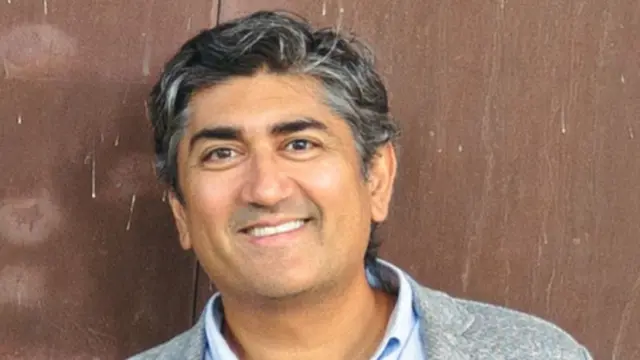
    Aneesh Raman in a shirt and blazer.Image source, Handout
    Image caption,

    LinkedIn's chief economic opportunity officer, Aneesh Raman, said job hunters should focus on their people skills

    Lots of people of all ages who are looking for work head to social jobs site, LinkedIn.

    Speaking to BBC London, staff from the site say that while competition for roles is “fierce”, many are creating opportunities rather than just waiting for them.

    For example, they point to how the number of young people adding "founder" to their LinkedIn profile jumped 60% year on year.

    Gen Z, those born between 1997 and 2012, are also twice as likely as millennials, born between 1981 and 1996, to freelance or launch their own business in the UK, according to LinkedIn.

    The site's chief economic opportunity officer, Aneesh Raman, gives this advice:

    • AI literacy: Know what it is, what it does, what tools you should be using, and the ways those tools can help you be more impactful
    • Focus on people skills: Those are your core survival skills right now, because AI cannot beat them
    • Show your achievements: Your degree still matters, but employers increasingly want evidence that you can build, experiment and solve problems
    • Do not obsess over long-term plans: Instead have a today plan. For decades we told people to map out their careers years in advance but jobs that will exist five or 10 years from now are still being invented
  13. Well-paid jobs for young Londoners 'is a top priority' for mayorpublished at 12:33 GMT 19 March

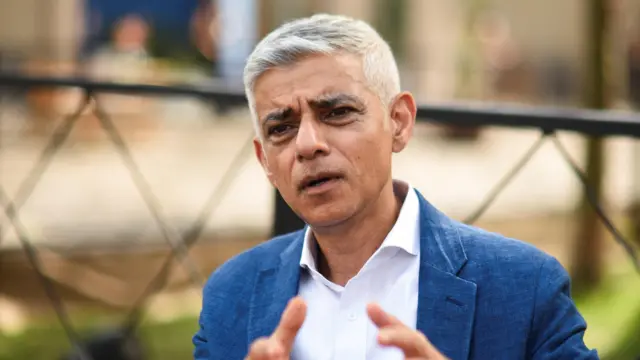
    Sadiq Khan wearing a white shirt and a blue jacketImage source, Reuters

    We've heard from Sadiq Khan's spokesperson who says "supporting young Londoners into good, well-paid jobs" is one of the top priorities for London's mayor.

    “It’s a challenging time as businesses are facing soaring costs and unemployment is at its highest level in five years, with sectors like hospitality and retail affected by rising employment costs and the impact of Brexit. AI is also already having an impact on the jobs market," they say.

    Speaking about Khan's efforts to help the situation, they point to how the mayor launched his Inclusive Talent Strategy, external in October "with £147.2m of investment to implement a bold new workforce plan for the capital.

    "The mayor has also announced that City Hall will be offering free AI training for Londoners."

    They add: “The rise in unemployment in London is a concerning trend and the Mayor will work with the government and continue to do all he can from City Hall to build a better, more prosperous London for everyone."

  14. 'Young people should have the chance to do something they love'published at 12:22 GMT 19 March

    Gem O'Reilly
    BBC London

    Morgan, chef apprentice, and Andrew Green, CEO of Craft Guild and Chefs.
    Image caption,

    Chef apprentice Morgan (left) says training to become a chef has been a "tremendous experience"

    Morgan is doing an apprenticeship at Capital City College in King's Cross to become a professional chef.

    He tells BBC London: “I’ve had such a tremendous experience. Everyone who is young like me should have the chance to do something that they love to do.”

    The college aims to link the students here with employment opportunities and works in partnership with companies offering advice and training.

    Andrew Green is chief executive of Craft Guild and Chefs and works with the college.

    He says: "We need to ensure that industry works with colleges so we can ensure that the skillset is fit for purpose.

    "We work with the college to ensure that their curriculum is fit for modern day purposes."

  15. Increase in young people reporting a work-limiting health conditionpublished at 12:08 GMT 19 March

    Lauren Stanley
    BBC London

    Today’s ONS data looks at 16 to 24-year-olds who are unemployed.

    This is different to the data which measures the same age bracket who are not in education, employment or training (NEET). However, research regarding NEET figures and health gives some interesting context.

    According to a, externalnalysis published on Sunday by the independent charity, The Health Foundation, external, between 2015 and 2025 the share of NEET young people reporting a work-limiting health condition rose from 26% to 44%.

    David Finch, from charity, says that "while young people in London are on average healthier than the rest of the UK, over a quarter of the young people who are not earning or learning report a work-limiting health condition.

    “In London, having a work-limiting health condition means these young people are almost three times as likely not to be earning or learning than young people without such health conditions," he says.

    "It is therefore crucial to take a preventative approach to help young people transition from education into employment."

  16. 'People think we're lazy but we're trying'published at 11:53 GMT 19 March

    Connie Bowker
    BBC London

    Adele Blossom in a black top.
    Image caption,

    Adele Blossom says young people are trying to prove themselves

    Adele Blossom, a student at Capital City College, believes the public opinion of young people is wrong.

    "I feel like we're constantly trying to prove ourselves to everyone that we are hard working," the 20-year-old says.

    "Young people have a reputation, people think we're lazy, and we don't want to commit to things, but we are trying.

    "There are people within all age groups who are unmotivated but the generalisation that it's just our generation is wrong. We definitely do want part time jobs and get work experience."

    She is currently studying a BTec in health and social care and is to planning to go to university in September to study adult nursing.

  17. Watch: Government is introducing more support for young people - McFaddenpublished at 11:40 GMT 19 March

    Pat McFadden, secretary of state for work and pensions, says the government is bringing forward a "new package" of support to reduce youth unemployment.

    "This is a long-term problem, not something that's just happened in recent months," he says.

    He says the support on offer includes a hiring bonus of £3,000 for a business that will take on a young unemployed person and £2,000 for a small business that takes on an apprentice.

  18. A week in the life of an unemployed graduatepublished at 11:27 GMT 19 March

    As part of the BBC London's coverage, 22-year-old business management graduate Charlotte kept a record of what her week looked like as she attempted to find work:

    Monday: Applied for 20 jobs on LinkedIn

    Tuesday: Updated CV. Applied for 15 jobs with a tailored CV and bespoke cover letters

    Wednesday: Went to a job fair. Received a phone call about a job interview. Applied for 10 jobs on LinkedIn

    Thursday: Waited for feedback on CV from course leader. No responses from other jobs applied for. Applied for 20 more jobs. Researched company and prepared for job interview

    Friday: Attended an interview, which was very brief as other candidates were being interviewed afterwards and was told next steps would be sent. Received a response from a graduate role that asked for an interview, which was set for next Wednesday. Received one rejection email from another role. No responses from the other applications. Applied for 12 jobs on LinkedIn

    Saturday: Applied for six jobs, each one taking an hour to complete

    Sunday: Reached out to friends in the construction industry to see what could do to stand out and asked if they knew of any job openings. Practised answering interview questions

  19. 'I've applied for 500 jobs in two months since graduating'published at 11:19 GMT 19 March

    Meghan Owen
    BBC London work and money correspondent

    Charlotte in a white t-shirt. She has brown hair and wears sunglasses on her head. She stands outside.
    Image caption,

    Business management graduate Charlotte is on universal credit while she job hunts

    Charlotte is a business management graduate who is trying to find work.

    She says in the two months since graduation she applied for about 500 jobs but without any success.

    "It's a little difficult being a graduate right now," she says. "You have to work 10 times harder to work for a role that 10 years ago you could have got very easily straight out of university.

    "It's quite upsetting because I've worked really hard for the last three years to achieve a 2:1 just to be rejected for not having experience."

    The 22-year-old is now on universal credit as she seeks a job.

    When asked whether it was possible to get an entry level job in retail or hospitality, Charlotte says she does not want to compromise on her goal because those roles offer "no progression".

    Find out more here.

  20. London's youth unemployment rises as overall UK rate fallspublished at 11:12 GMT 19 March

    Jonathan Fagg
    BBC England Data Unit

    This Flourish post cannot be displayed in your browser. Please enable Javascript or try a different browser.

    The ONS figures released today show youth unemployment has risen in London with almost one in four young people aged 16 to 24 unemployed between November and January.

    However, this is the opposite to the overall UK rate for youth unemployment, which has declined from October 2025.