

EXPLORE EPISODE FOUR - 28 to 25
Local Navigation

Bringing to life spectacles of natural wonder on our doorstep
No.27
Butterflies
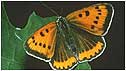
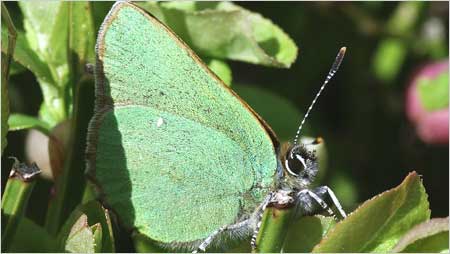
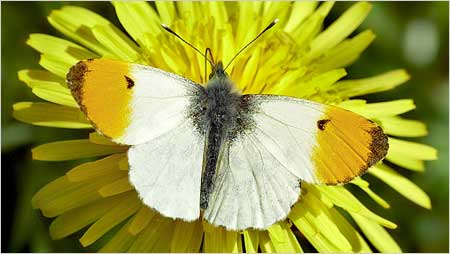
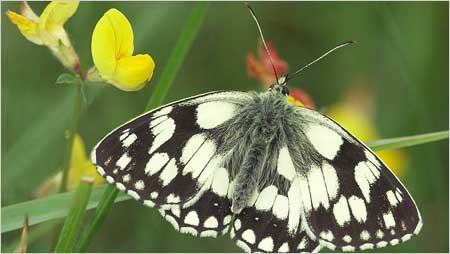
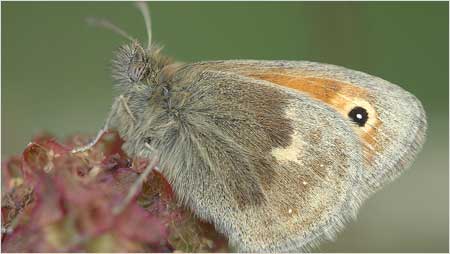
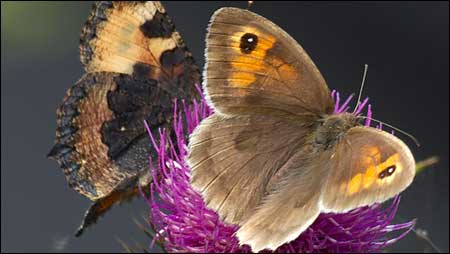
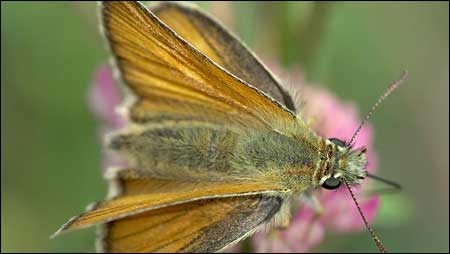
Butterflies boast have some of the most vivid colours of any of the UK’s animals.
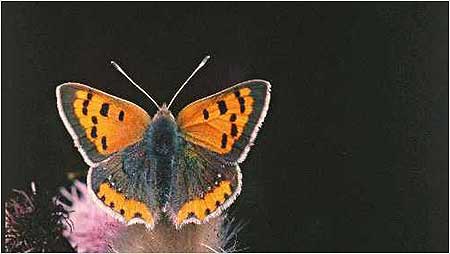
The colouring of a butterfly’s scales can also result from a pigment which results in spectacular reds, yellows, whites and browns. It can also result from effects created by the way light hits the butterfly’s wings in the case of blues, greens and iridescent colours. The tiny ridges on the butterfly’s scales refract the light in a similar way to a prism creating a rainbow from sunlight.
There are 56 species of butterfly in Britain and Ireland but many are under threat from environmental change and the destruction of their habitats.
The British Swallowtail is the biggest native butterfly in the UK with distinctive markings including pale yellow wings with black veins and blue edges. Its patterns are made up of a mass of tiny scales, which overlap like tiles on a roof. Look out for its distinctive red spot and forked tail.
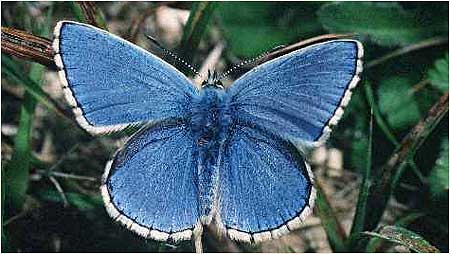
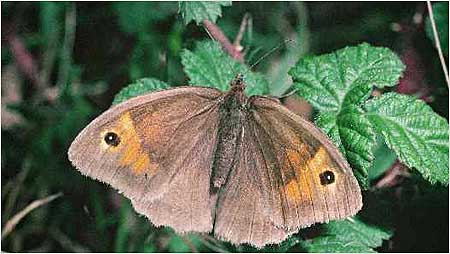
The Common Blue is the most widely distributed blue butterfly in Britain, and is found mainly in grasslands. The male has blue wings with a white fringe and brownish border whilst the female is a brown colour with a blueish body and patterned border.
The Silver Studded Blue butterfly is similar to the Common Blue, but is rarer and bluer – it's found largely on heathland. The male is silvery-blue whilst the females are brown with a distinctive metallic spot on their wing.
The Purple Emperor is another stunner - the male has a purple sheen. Its larvae hibernate on willow buds or in forked tree branches and then pupate hanging from leaves.
Butterflies don’t live very long - on average between 20-40 days - although some can live for up to six months.
Web links
The BBC is not responsible for the content of external internet sites.
Photo credits
Natural England/Peter Wakeley and Jaybee from North East Wildlife
Photo gallery
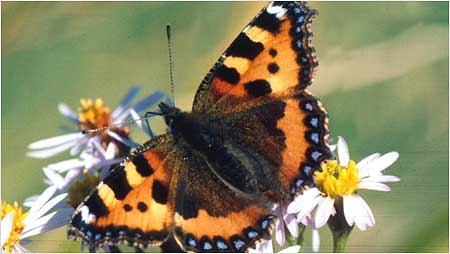
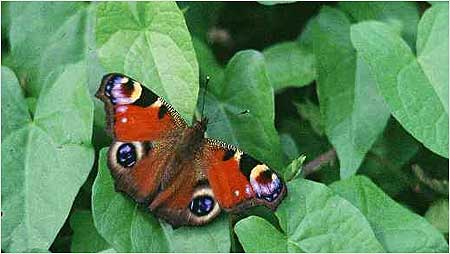
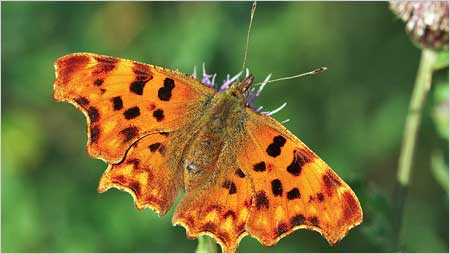
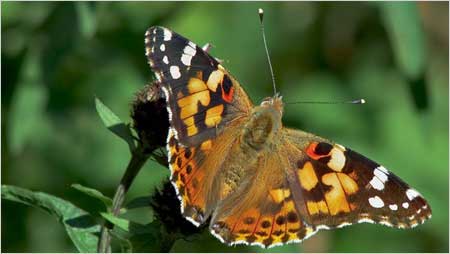
Watch and Listen
Surround yourself in a cloud of summer butterflies with presenter Sanjida O'Connell at the Great Orme in Wales:
Help playing audio/video
Tips
Tips for viewing this species:
- Choose the right time and place. Check the weather forecast and look for warm, calm days. Butterflies need a calm warm day and like the warmth of the sun. They find it difficult to cope with windy conditions because they are quite small.
- Make sure you know the difference between butterflies and moths. The majority of butterflies have thin, filament-like antennae that are club shaped at their ends. In contrast moths tend to have feathery or unclubbed antennae – with a few notable exceptions.
- Select a habitat renowned for its attractiveness to butterflies – grassland, woodland clearings, heathland, and coastal dunes are good places to look.
- Don’t forget to look in your own back garden. The purple Buddleia is a well known butterfly magnet as is rotting fruit left on the ground.
- It’s rare to get mass gatherings of butterflies in the UK due to habitat loss but there are a few areas where it's possible to see a cloud of butterflies. The Great Orme in Wales is renowned for its spectacular butterfly displays especially the south side of the reserve - look on the bramble bushes.
- The late afternoon is a good time to see butterflies gathering to roost on sheltered bushes or grassy tussocks.
- Some butterflies have a restricted geographic distribution. The Swallowtail is restricted to the Norfolk Broads, Kent and southern England. The Purple Emperor can only be seen in southern England. Check the Butterfly Conservation website for species’ range and take a butterfly guide with you on your nature trips.
- Don't forget to look for caterpillars in the summer in gardens. The Garden Tiger caterpillar is covered in black and red hairs whilst the Comma has black bands with hairy spines and mimics bird droppings.
Habitat
Butterflies like sheltered grasslands, meadows, and heathland but can also be found in coastal areas, woodland clearings, parks and gardens.
It’s rare to get mass gatherings of butterflies in the UK mainly because of habitat loss. The Great Orme in North Wales is one of the last places in the UK where you can see a rare butterfly spectacle. Sometimes there are half a million butterflies in an area of just 60 hectares. There have been local reports of clouds of butterflies and people barricading themselves in their houses to hide from tens of thousands of caterpillars!
The Great Orme is a good place for butterflies because the grassland isn’t heavily grazed or cut. The south west facing slopes are best as they are sheltered and sunny.
Butterflies roost together because there’s a shortage of suitable sites. Attracting a mate is a very competitive business – the males show off by holding onto the best perches to impress the females.
Adult butterflies feed on nectar from any available flower but the caterpillars of each species have their own food plant. The Silver Studded Blues will only lay their eggs on Birds Foot Trefoil, Common Rockrose and sometimes wild Thyme which the caterpillars eat when they emerge.
The caterpillars turn into a chrysalis and then into butterflies with a little help from their friends - ants! The caterpillars generate pheromones to attract ants which protect them from parasites until the adult butterfly is ready to emerge. The caterpillars produce a sugary substance from a honey gland which the ants can't resist!.
No. 28 - Roosting bats
Seventeen species of bats can be found in Britain from two main families - find out about their roosting habits.
Best places to see - Dalby Forest (North Yorkshire), Cheddar Caves, Crom (Northern Ireland).
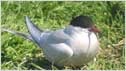
No. 26 - Arctic Terns
The Arctic Tern is a maritime bird which visits the British Isles when it can often be seen dive bombing passers by!
Best place to see - Farne Islands (Northumberland).
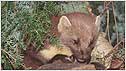
No. 25 - Pine Martens
ThePine Marten is a slender, colourful and shy creature with a red-brown coat and long chocolate coloured bushy tail.
Best place to see - Highlands (Scotland).


Also on Nature's Top 40
BBC Nature & Wildlife
More from bbc.co.uk nature

BBC iD
BBC iDBBC navigation
BBC links

BBC © 2014The BBC is not responsible for the content of external sites. Read more.
This page is best viewed in an up-to-date web browser with style sheets (CSS) enabled. While you will be able to view the content of this page in your current browser, you will not be able to get the full visual experience. Please consider upgrading your browser software or enabling style sheets (CSS) if you are able to do so.
